 Get matched
How long a water heater lasts in California
Describe your water heater job, and a local pro who handles it gets in touch.
A gas water heater in California usually lasts somewhere between 8 and 12 years. Tank units tend toward the shorter end of that if the water coming in is hard, since mineral buildup wears on the tank and the heating element over time. Most homes here heat with gas, so what's heating your water is probably a gas tank, though some homes run electric or a heat pump water heater instead, and those hold up differently.
If yours is getting close to that range, or past it, you don't have to guess at what's left in it. The number on the paper won't tell you as much as someone looking at the unit itself can.
You don't have to spend your weekend calling around to find out who does that. Once you send the details through, that part isn't on you anymore. A contractor who installs water heaters in your area gets your information and reaches out to you directly, so you're not the one chasing quotes or sitting on hold.
Power here is some of the most expensive in the country, which matters more than people think when a water heater is on its way out. A unit that's struggling to hold its temperature, or one with a pilot light that won't stay lit, is often working harder than it needs to, and that shows up on the bill before it shows up as a full breakdown. Catching that early, before you're stuck with no hot water on a random morning, is the difference between choosing a new unit on your own schedule and being forced into one.
Whatever you find when you check yours, the next step is the same. Someone who installs these for a living can tell you whether you're looking at another few years or whether it's time to plan for a replacement, and that conversation starts once you reach out.
A gas water heater in California usually lasts between 8 and 12 years. Most homes here heat with gas, so that range covers most of the state. The tank itself is what gives out. Years of heating and cooling cause the metal to expand and contract, and eventually the glass lining inside cracks, lets the steel underneath rust, and the tank starts to leak. Hard water speeds this up, since the minerals settle at the bottom and make the burner work harder to heat the same amount of water. Once a unit passes 10 years, a slow leak at the base or a pilot light that won't stay lit usually means the tank is on its way out rather than something worth repairing. Replacing it before it fails in place saves you a wet floor and a scramble to find a plumber on short notice.




A local pro for your water heater installation

Once you send the form, finding a pro is off your list.
Sending the form costs nothing.


Tank or Tankless: Which Lasts Longer
Tank
- Costs less upfront and is simpler for a contractor to install in a day.
- Lasts 8 to 12 years, shorter if the water coming in is hard.
- Keeps 30 to 50 gallons hot at all times, so it draws gas or power even when nobody's using hot water.
- A failing tank can leak or rupture, and water damage to the closet or garage floor is often the first sign something's wrong.
- Replacement is usually a straight swap if the gas line and venting already fit the space.
Tankless
- Heats water only when a tap calls for it, so there's no standing tank to fail from the inside out.
- Often runs 15 to 20 years, close to double what a tank unit lasts.
- Costs more to install, since gas lines, venting or electrical sometimes need upgrading to match the unit's demand.
- Needs the flow sensor and heat exchanger checked periodically, especially where the water is hard.
- Takes up far less floor or wall space, which matters in a smaller utility closet or garage.

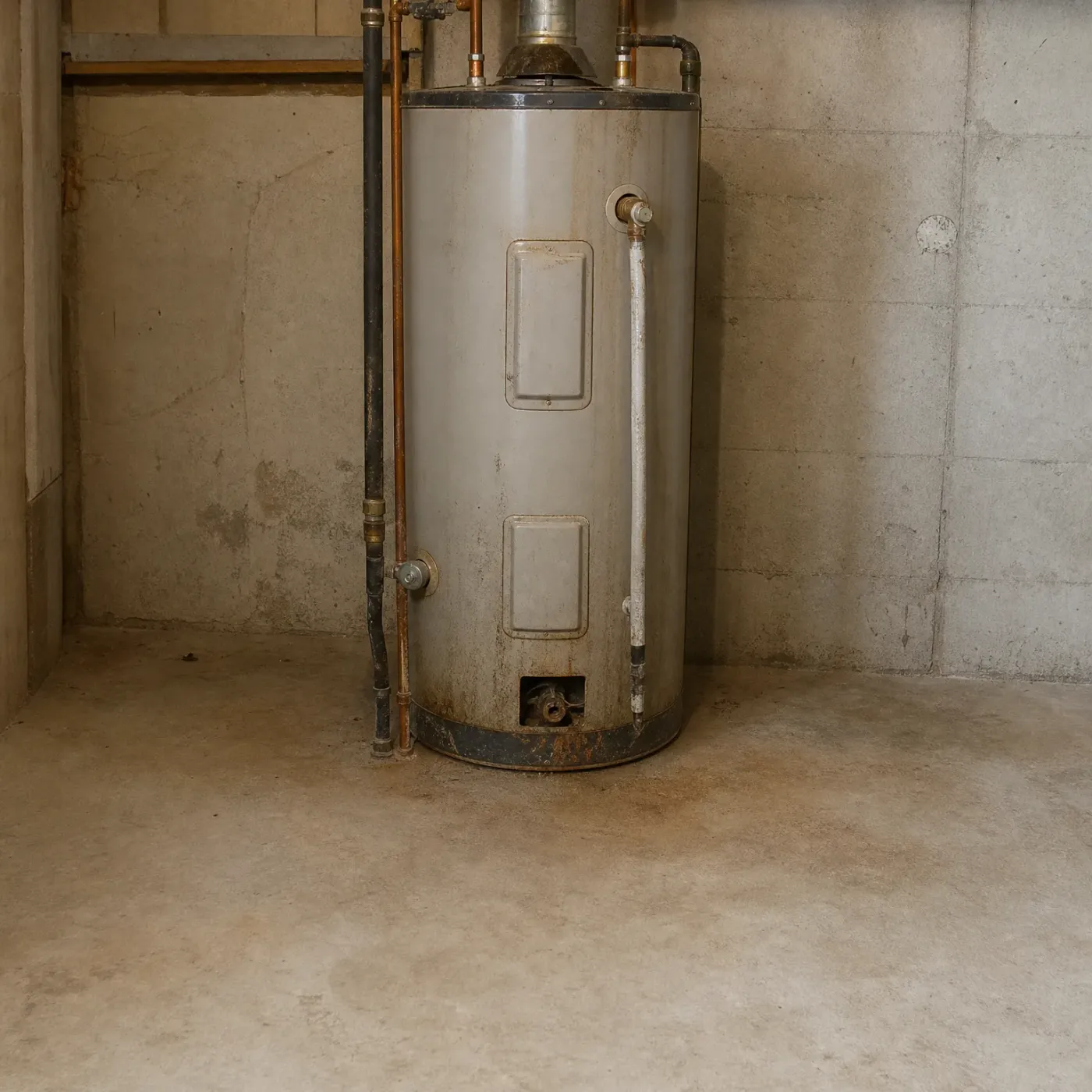
Sediment settles at the bottom of the tank and hardens into scale.
The heating element or burner has to work through that layer.
The tank's glass lining wears thin and exposes bare metal.
Rust eats through the steel until the tank starts to weep.
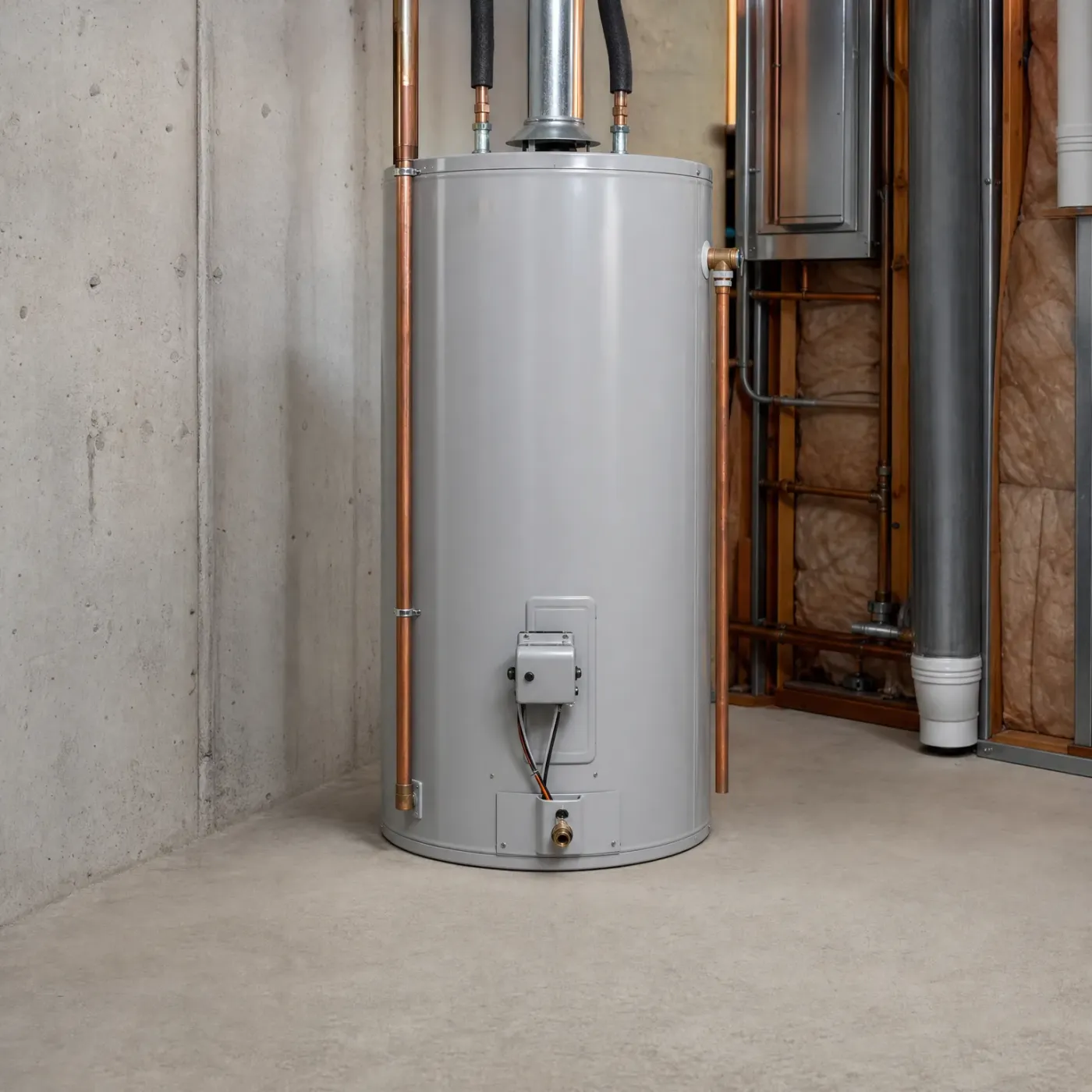
61% of homes statewide heat with gas
With gas heating most homes in the state, your water heater is almost certainly gas too. That means a tank built to last 8 to 12 years, and a schedule worth tracking once it passes year eight.
ACS 2020-2024 5-year B25040

A gas water heater here runs about 8 to 12 years
That's the range for most homes in California, since most run on gas, and it holds unless your water is hard enough to scale the tank early. Past year eight, a rusty base, lukewarm water, or a tank that won't stop making noise are signs worth taking seriously rather than waiting out.
When a water heater is close to done, the useful thing isn't a diagnosis, it's a contractor who already knows this equipment and can look at your specific setup. Once you put in a request, that search is off your plate. A contractor who serves your area gets in touch, and from there it's a conversation about your tank, not a project you have to manage alone.

Get the right pro for your water heater
After you send the request, you're done searching.