





How often to flush a water heater in California

Fill out one form instead of calling around for a water heater tune-up.

Fill out one form

How often should I flush my water heater in California?

You've got a water heater that's probably been running quietly for years, and you've heard flushing it keeps it working right. You want to know how often that actually needs to happen, since the answer isn't the same everywhere. California's water isn't uniform either, so what applies in one house might not apply in yours, and you'd rather know the real schedule than guess.

Once a year is the standard, though your water supply may call for more often

Sediment settles to the bottom of the tank as water heats, and over time it builds into a layer that makes the burner or heating element work harder to reach the same temperature. Flushing the tank once a year clears that layer out. If your home is on well water, or your water supplier serves an area known for harder water, sediment builds faster and flushing every six months keeps the tank from losing efficiency between services. Gas water heaters are especially prone to sediment buildup around the burner at the bottom of the tank, which can lead to popping or rumbling sounds as it heats. If you've never had the tank flushed, that buildup may already be there.

A smiling woman with dark shoulder-length hair in a cream V-neck sweater sits at a marble counter with a glass of red wine, with a kitchen and softly lit living room behind her.
A woman in a dark green sweater laughs while seated at a marble kitchen island with a glass of red wine, with open shelving, cabinets and a living room visible behind her.
A woman with long dark hair in a cream knit sweater laughs while looking off to the side, seated at a counter with a glass of red wine, in a dimly lit living room with a sofa, lamp, framed pictures and houseplant behind her.
A smiling woman with long dark hair in a beige sweater sits at a marble kitchen counter with a glass of red wine, with a dimly lit living room behind her.

Why does your water heater sound different lately?

California water runs hard enough that sediment builds up at the bottom of the tank, and you can usually hear it before anything fails. A tank that used to run quiet starts popping, rumbling or crackling when the burner kicks on. That's water working its way through a layer of sediment. You might notice hot water running out faster than it used to, or the tank taking longer to heat a full load. Some owners see rust-colored water at the tap, or less hot water pressure than before. Left alone, that sediment layer makes the burner work harder to heat the same amount of water, and over years it can shorten the life of the tank itself.

  1. Water and loosened sediment drain out through the hose.

  2. Sediment settles and hardens at the bottom of the tank.

  3. Heat has to pass through that layer to reach the water.

  4. The burner or element runs longer to make up for it.

Flush It Yourself or Call a Plumber

Flush it yourself

  • You'll need to shut off the gas or power to the heater before you start, so the burner or element doesn't fire on a near-empty tank.
  • A garden hose hooked to the drain valve runs the water outside or to a floor drain, and you'll stand there until it runs clear.
  • Old drain valves are plastic and strip or crack easily, and if that happens you're now looking at a valve replacement instead of a flush.
  • You won't know what the sediment looked like compared to last time, or whether the anode rod underneath still has life left in it.
  • If the water heater is in a closet or an attic, you're working in a tight space with a hose and a tank full of hot water.
  • Skipping a step, like not opening a hot tap somewhere in the house first, can leave air trapped in the line afterward.

Have a local plumber do it

  • Someone who flushes water heaters all over California knows what the sediment looks like in hard water areas and what it means when it's heavier than usual.
  • A local plumber checks the anode rod and the drain valve while the tank is open, so a weak part gets caught before it fails on its own.
  • You're matched with one licensed plumber for the job, not a handful of companies calling to bid on it.
  • The gas or power shutoff, the hose, the draining and the refill all happen as one visit instead of an afternoon you have to carve out.
  • If the drain valve is old and seized, a plumber has the part on hand to swap it instead of stopping the job halfway through.
  • You get a read on the water heater's condition from someone who works on this equipment every season, not just a tank that's been drained.
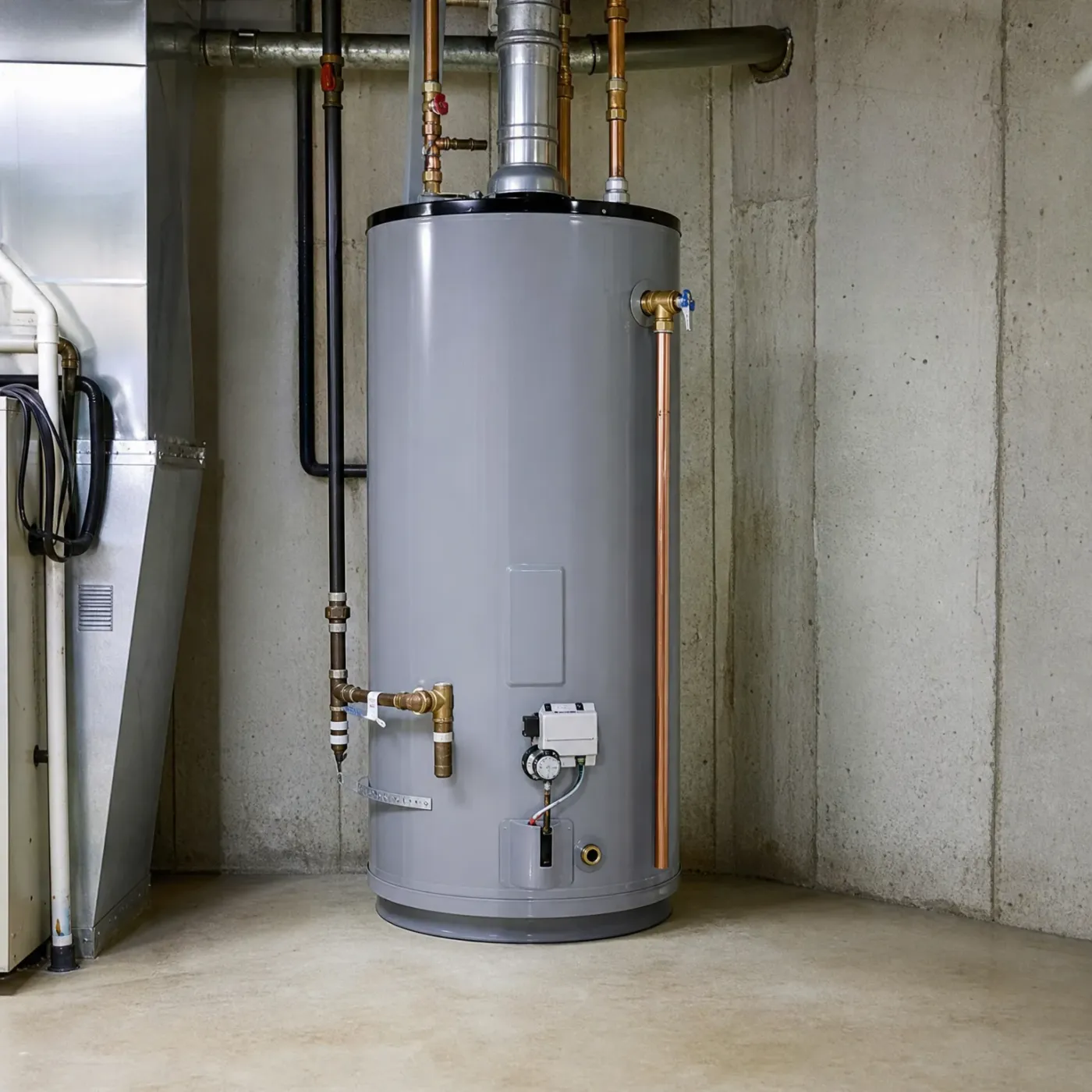
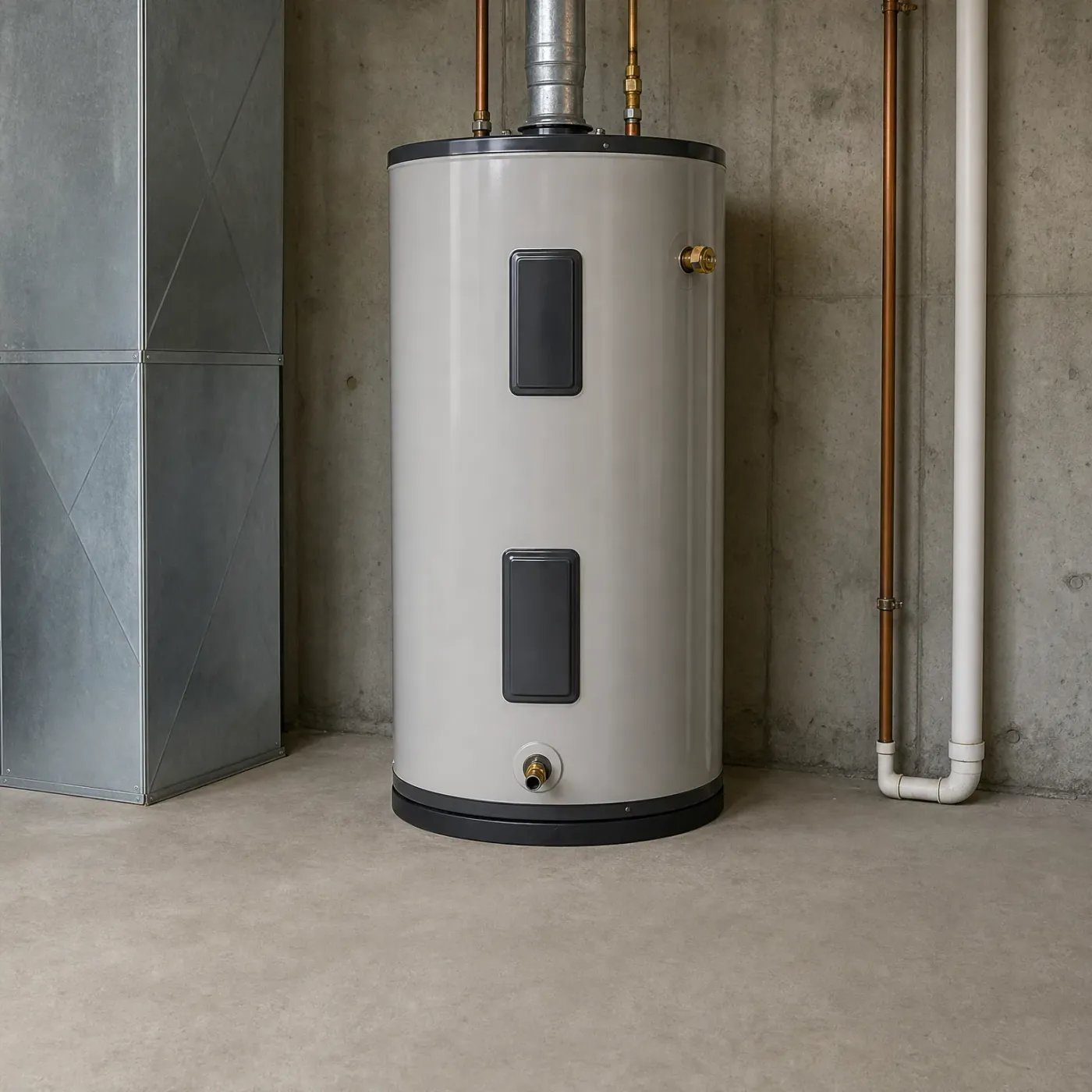
A cylindrical beige water heater with two dark access panels stands on a concrete floor against a concrete wall, with copper and white pipes to the right and sheet-metal ductwork to the left.

Flushed on schedule

This is a tank that gets drained before sediment has a chance to harden. The access panels and drain valve stay easy to reach, the copper lines run clean, and the burner only works as hard as it needs to. A tank kept up this way earns its full years of service.
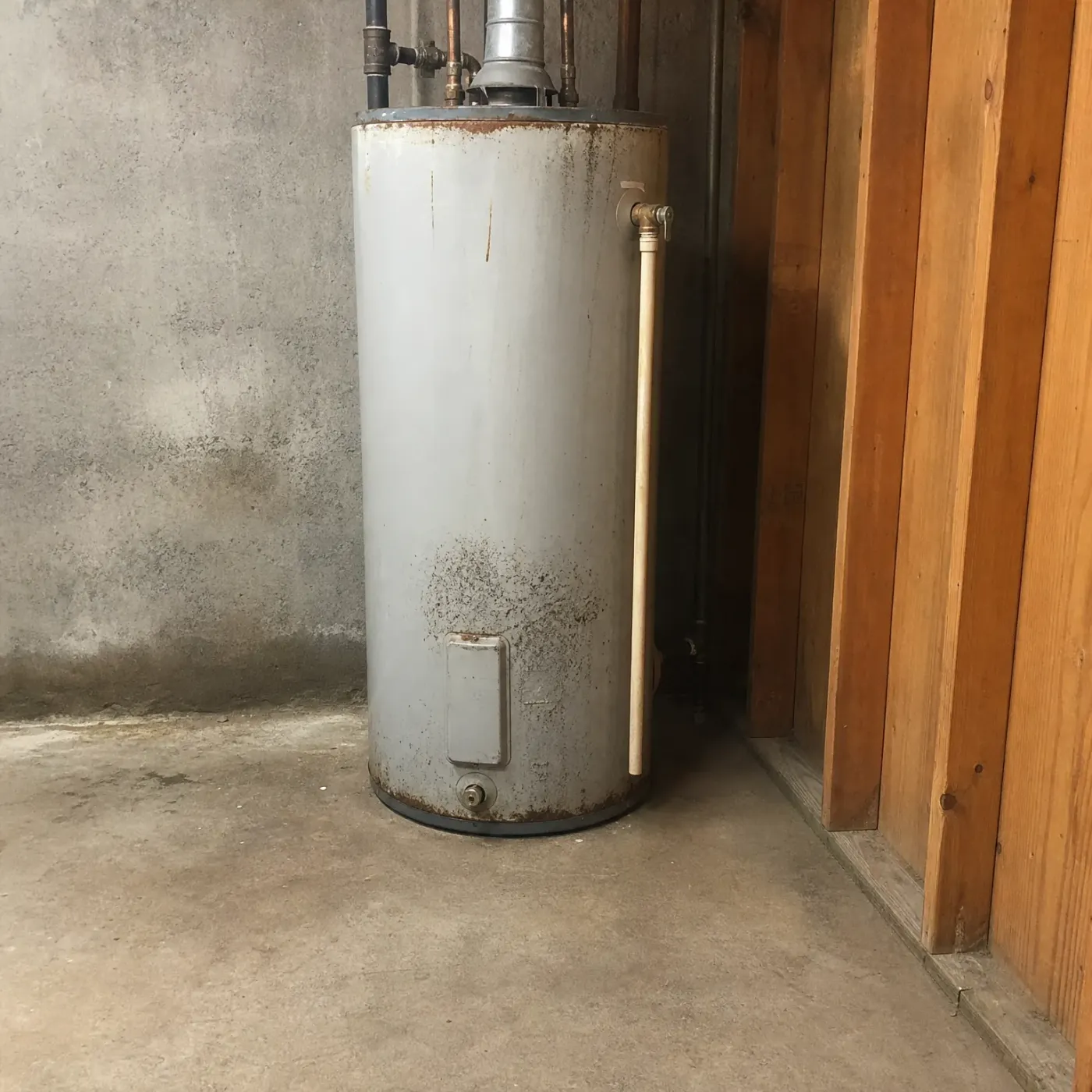
A rusting gray cylindrical water heater with copper pipes and a drain tube stands on a concrete floor against a concrete wall beside vertical wood paneling.

Left alone too long

Rust has worked through the steel here, and the soot staining near the base points to a burner that's been fighting through packed sediment for a long time. Once corrosion shows on the outside like this, flushing won't reverse it. Tanks that reach this point are usually replaced, not serviced.

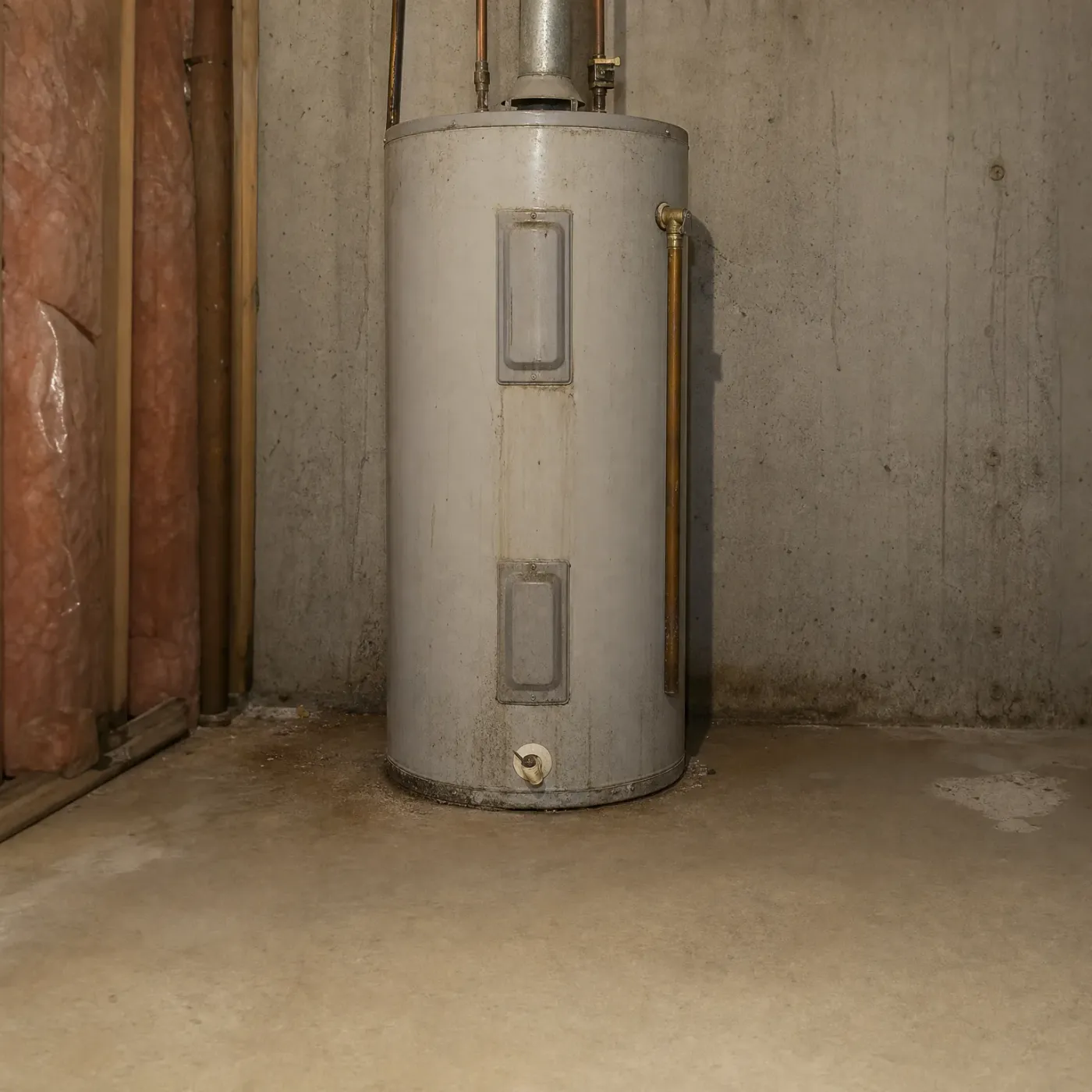
A gray cylindrical water heater with two access panels and copper piping stands in the corner of a concrete-walled basement next to exposed pink insulation.
Before you get your water heater maintenance
A large gray cylindrical gas water heater stands in a concrete-walled basement corner, connected to copper and black pipes and a metal flue, with ductwork at left.
After you get your water heater maintenance

No phone calls to make

A licensed local pro takes the request for your water heater tune-up.

You only hire the pro if you want to.

A tank with an inch of sediment at the bottom takes noticeably longer to heat the same amount of water, because that layer sits between the burner and the water itself.

Gas keeps running longer to push heat through it, and in a state where power costs what it does here, that extra burner time is the part of the bill you can actually prevent.

61% of homes statewide heat with gas

Most houses here heat water with a gas burner under the tank, not an electric element inside it. Sediment sits right on top of that burner plate, so the heat has to push through it before it ever reaches the water. That's what makes flushing worth doing on a gas tank specifically.

ACS 2020-2024 5-year B25040

A smiling bearded man in a navy crewneck sweater sits at a dinner table with a glass of red wine, plates and glasses in the foreground, in a dimly lit room with a lamp and framed picture behind him.
A woman in a dark gray sweater reclines on a light sofa with eyes closed and a slight smile, under a textured gray blanket with an open book resting on her lap, with a lit table lamp and plant in the background.

Once a year, one call

  • Once a year keeps sediment from hardening in the bottom of your tank and holds down your gas bill.
  • A contractor who flushes tanks all over California every week knows what hard water does here before they even open the panel.
  • Matching with one local, licensed contractor means one visit, one person to explain the noise to, not a round of calls to compare.
  • Skipping the flush doesn't break the heater outright, it just makes the burner work harder and the tank age faster.
  • Someone who services this equipment every season spots a failing drain valve or a cracked anode rod while they're already under the tank.

Once a year is the answer. California water leaves enough behind that waiting longer lets sediment harden instead of just settling, and a tank that's already crusted at the bottom takes real work to bring back. Flushing on that schedule keeps the burner doing what it's supposed to do instead of fighting through a layer of scale every time it fires.

Finding someone to do it is the part that usually eats an evening you didn't plan to spend that way. You'd be looking up contractors, calling a few, explaining the same noise or the same question twice, then sitting with quotes trying to figure out who actually knows tanks and who just answers phones. A match here skips that. You get one contractor, local, licensed, someone who's probably under three or four water heaters a week in towns with the same hard water as yours. They're not guessing what's at the bottom of your tank. They've seen it that morning in someone else's garage.

That also means while they're down there with the panel off, they're looking at the drain valve and the anode rod, not just running water through a hose and leaving. A valve that's starting to seize or a rod that's down to wire gets caught before it turns into a bigger job. One visit, one person who already knows what hard water does to a tank, and you're not repeating yourself to a second or third company to get there.

A modern two-story house with dark siding and stone base at dusk, with lit soffit lights, a path of large rectangular pavers set in dark gravel, planting beds, a lawn, and an orange and blue sunset sky above distant trees and water.

Water Heater Maintenance

One form, no calling around

Step 1 of 3: Equipment
  • A dimly lit living room corner with a beige upholstered sofa holding a dark green cushion and a chunky knit throw, beside a wooden sideboard with a lit ceramic table lamp, a small potted plant, and a wooden bowl, with a framed artwork on the wall and a mug on a book in the foreground.
    • A local pro who services water heaters gets in touch about the tune-up.
    • A local pro who knows water heaters gets your details and gets in touch.
  • A round wooden coffee table holding a round stone vase of green foliage, a lit candle in a glass container, and a small dark bowl, with a beige sofa, cushions and knit throw behind and a window at left.
    • Send the form, and lining up the water heater tune-up stops being yours to chase.
    • Send the form and the water heater tune-up stops being something to remember.
  • Sunlit living room with a wooden coffee table holding a ceramic vase of leafy branches and a carved wooden tray with two stacked books, in front of a beige sofa with tan and green cushions and a potted plant near a window.
    • One form replaces the calls you'd make to find a water heater pro.
    • Answer a few questions instead of calling shop after shop.
  • Interior corner with a lit ceramic table lamp and wooden bowl on a wood sideboard, a framed picture and branch-filled vase behind, a knit throw over an upholstered chair, and a lit candle in a glass holder, stoneware mug and round planter of green foliage on a wooden table in the foreground.
    • The pro who reaches out is licensed in California.
    • Only one pro gets your request, so you hear from one company.