Profile view of a bearded man wearing a dark green baseball cap and a dark gray T-shirt against a plain light background.

Is a heat pump water heater worth it in California

Step 1 of 3: Equipment

Is a heat pump water heater worth it in California?

You're paying some of the highest electric rates in the country, and most homes around you heat water with gas. So before swapping in a heat pump water heater, you want to know if running it on electricity actually makes sense, or if you'd just be trading a cheap-to-run gas tank for an expensive-to-run electric one.

Yes, because it uses a fraction of the electricity a standard electric water heater does

A heat pump water heater pulls heat from the air around it instead of generating heat directly, so it uses much less electricity than a standard electric tank to do the same job. That matters more in California than almost anywhere else, since your electric rates are high enough that a straight electric water heater would cost a lot to run. Against a gas water heater the comparison is different, since gas is usually the cheaper fuel here. Where the heat pump model tends to win is if your gas water heater is near the end of its life and you're deciding what replaces it, or if you want to get off gas entirely. The mild air where you live also helps the unit pull heat efficiently most of the year.

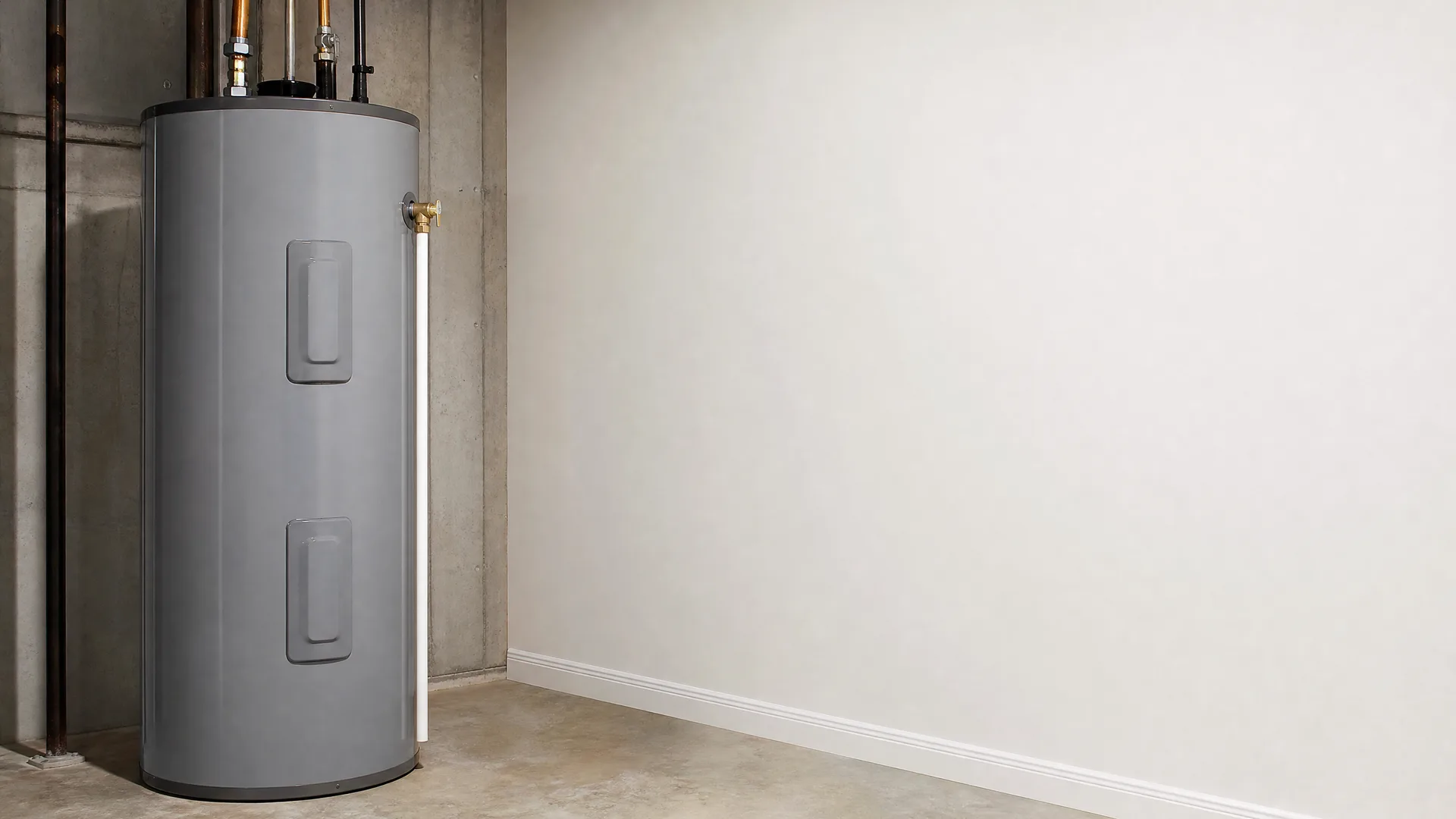
A gray cylindrical electric water heater with two access panels stands in a corner of a room with a concrete floor, connected to overhead pipes and a white drain pipe, beside a plain light-colored wall.

How a heat pump water heater works

A heat pump water heater pulls heat from the air around the tank and moves it into the water, instead of burning gas or running a resistance element. That's why it uses less power to heat the same amount of water. It needs space around it, usually a garage or utility room with enough air volume, since it's cooling that space down a few degrees while it runs.

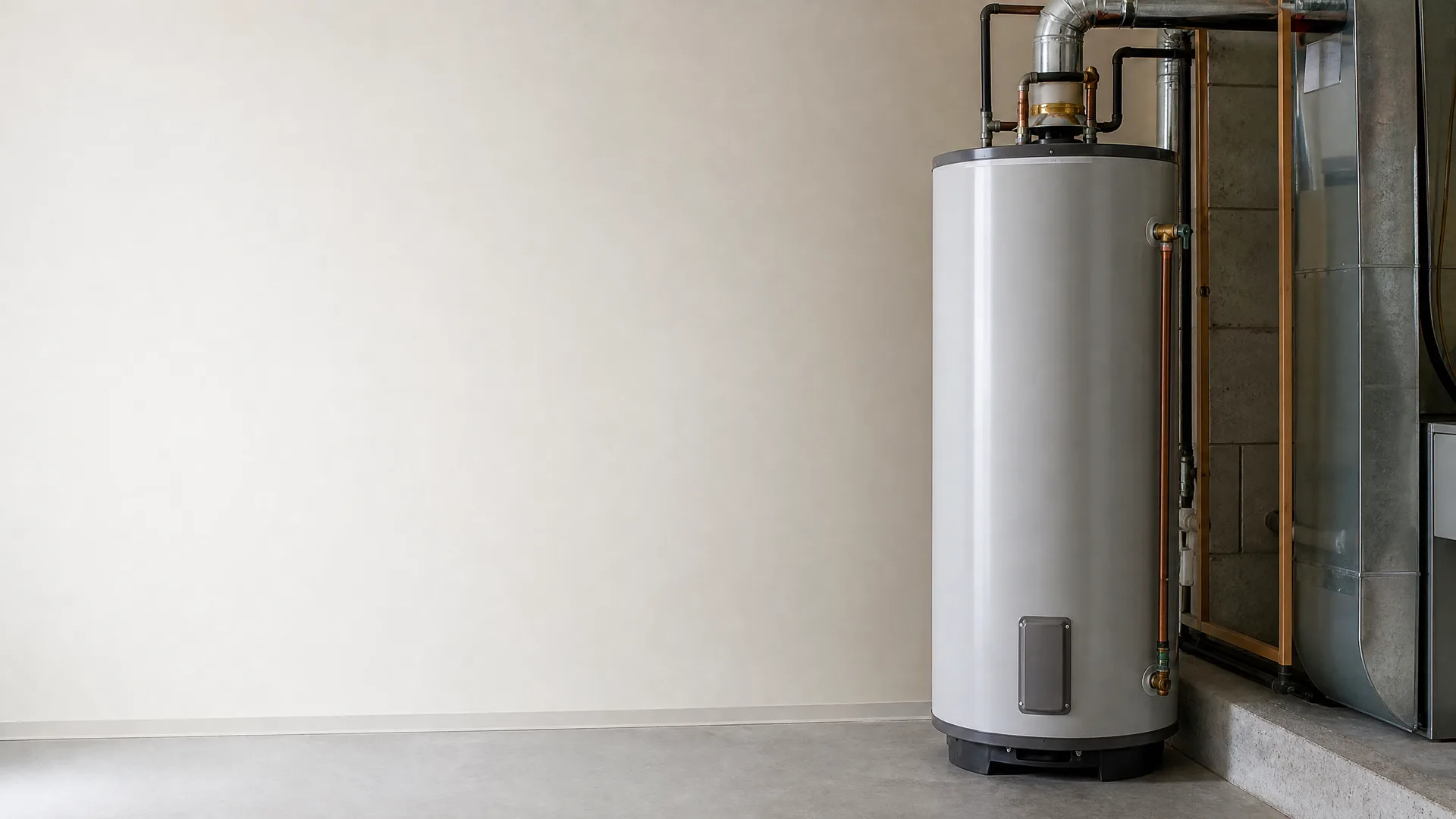
A tall cylindrical water heater with copper and metal pipes at its top stands against a plain beige interior wall on a concrete floor, beside ductwork and a raised concrete step.

Where that savings actually comes from

Since power here runs expensive, the gain isn't from electricity being cheap to use. It's from the unit needing less of it per gallon heated than a gas unit needs in gas, or than an electric resistance tank needs in power. Your mild summers mean the surrounding air stays warm enough most of the year for the heat pump to draw from without much strain.

What's your water heater costing you right now?

If you're heating water with an electric tank now, you already see it on your bill every month, and in California that line item runs higher than almost anywhere else in the country. If it's gas, the water heater itself is cheap to run, but you're still paying California gas rates for everything else, and a gas tank left too long starts showing it: slower recovery, a pilot that won't hold, water that doesn't stay hot through a shower. Either way, a tank that's struggling doesn't fail quietly. It fails during a shower, or it floods a closet, and by then you're not choosing a water heater, you're replacing one in a hurry.

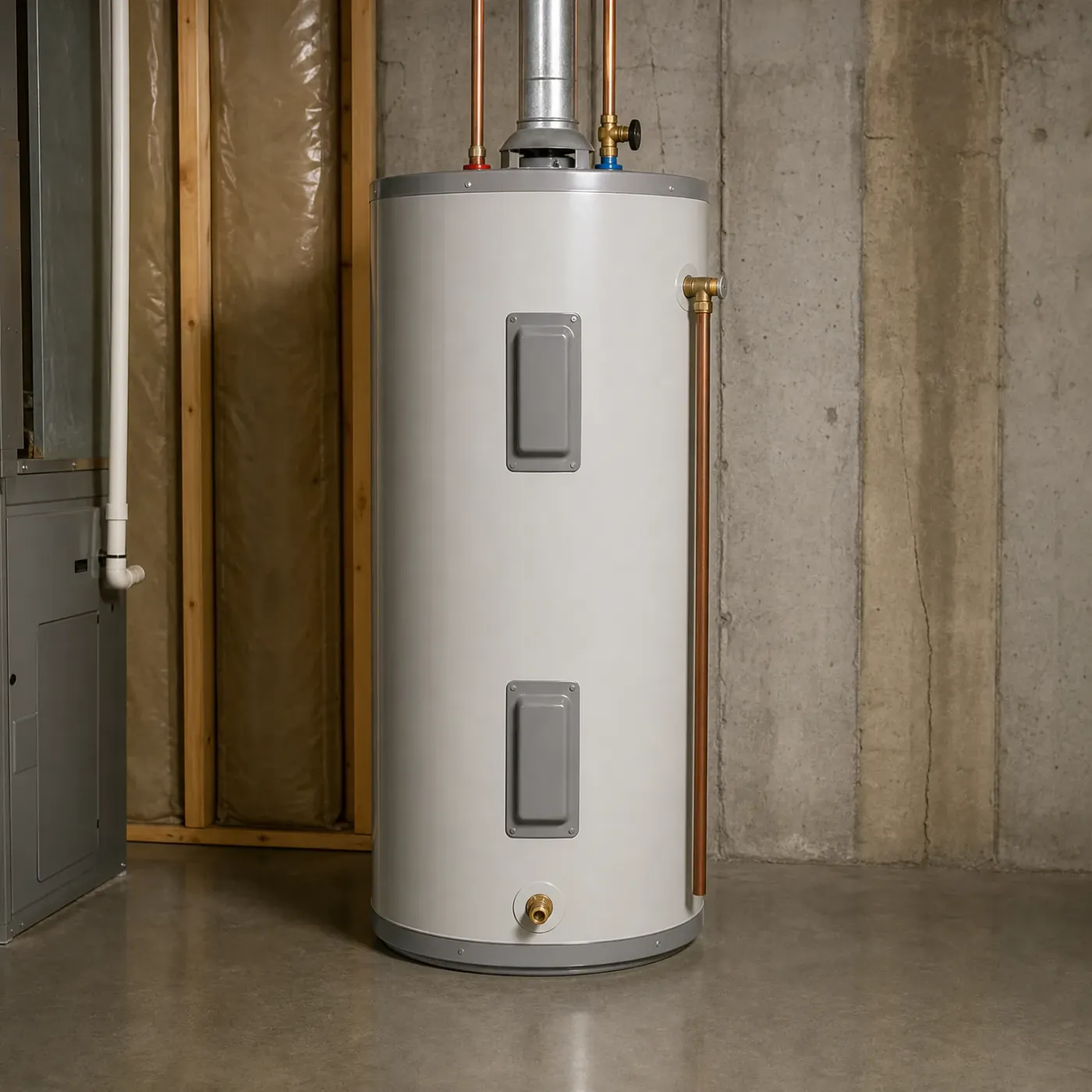
A white cylindrical water heater with two access panels, copper supply pipes and a metal flue, standing on a concrete floor against a concrete wall beside insulated wood framing and a gray electrical panel.

A tank that's still doing its job

Supply and discharge lines are tight, the flue vent sits clean at the top, and both thermostat panels are intact. A heat pump water heater can go in a space like this without much rework, and it will draw heat from the surrounding air for as long as this tank would have run anyway.
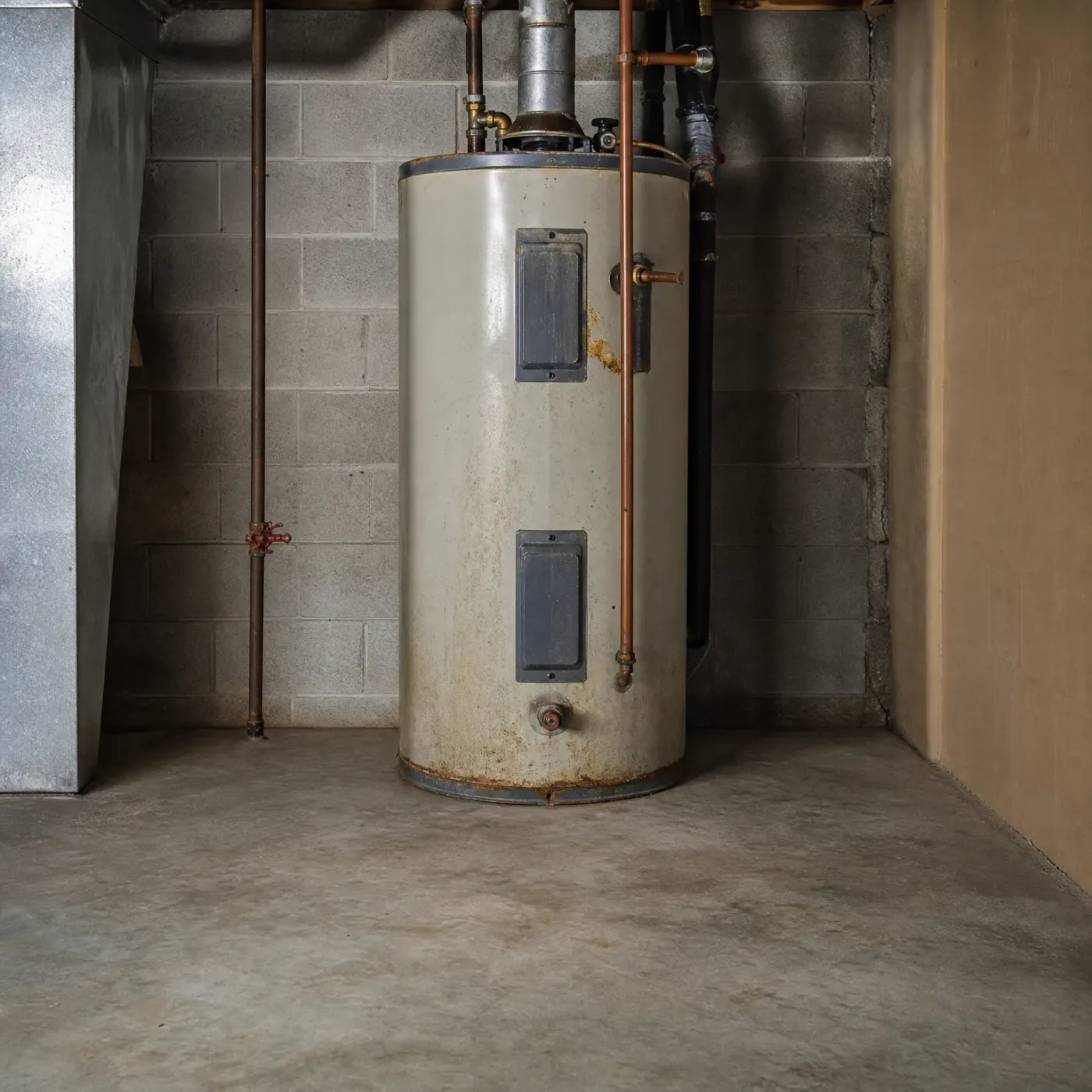

An aging cream-colored water heater with rust streaks and two access panels stands on a concrete floor against a concrete block basement wall, with copper and black pipes running up to the ceiling and a metal duct at left.

A tank on borrowed time

Rust has worked across the whole exterior and the panels show their age. Once a tank looks like this, you're choosing between replacing it with the same kind of unit or switching to a heat pump water heater while you already have the plumbing opened up.

A woman in a cream knit sweater sits in an armchair with her eyes closed and a slight smile, beside an open window showing orange autumn foliage, with a mug, books and a lit candle on a small side table.
An older man with gray hair and a beard leans back on a beige sofa with his eyes closed, in a sunlit room with potted plants, a wicker chair and large windows behind him.

A local pro for your water heater installation

Skip collecting and comparing quotes for the new water heater.

No charge to send it. You decide if you hire them.

The Mechanics Behind the Savings

  • The compressor moves heat from the air into the tank the same way a refrigerator moves it out, just reversed.
  • A fan pulls air across an evaporator coil, and that heat gets concentrated and transferred into the water through a condenser coil wrapped around the tank.
  • Most units carry a backup electric resistance element for recovery during heavy use or cold snaps.
  • The compressor and fan sit on top of the tank, which is why these units need more clearance overhead than a standard tank.
  • Exhaust air comes out several degrees cooler than it went in, since the unit is pulling heat out of it rather than adding any.
  • A control board decides when to run the compressor alone versus switching over to the backup element.

A heat pump water heater doesn't make heat the way a gas burner or an electric element does. It moves heat that already exists in the air around it. The compressor is the engine of that process, working the same way a refrigerator's compressor does, except a refrigerator is pulling heat out of a box and this unit is pulling heat out of the room and pushing it into your water. A fan draws air across an evaporator coil, and that heat gets carried through a condenser coil wrapped around the tank, where it transfers into the water itself. That's the whole job, done without a flame and without an element running most of the time.

Most units still have a backup electric element inside, and it kicks in when someone runs three showers back to back or the house needs a lot of hot water fast. The control board is what makes that call, switching between compressor-only operation and the backup element depending on demand.

The hardware needs room to work. The compressor and fan sit on top of the tank, so the space has to allow for more overhead clearance than a standard tank ever needed. And the air coming out the other side of that fan will feel cooler than when it went in, because the unit just pulled the heat out of it. None of this is a flaw. It's the tradeoff for not burning gas or running a resistance element around the clock.

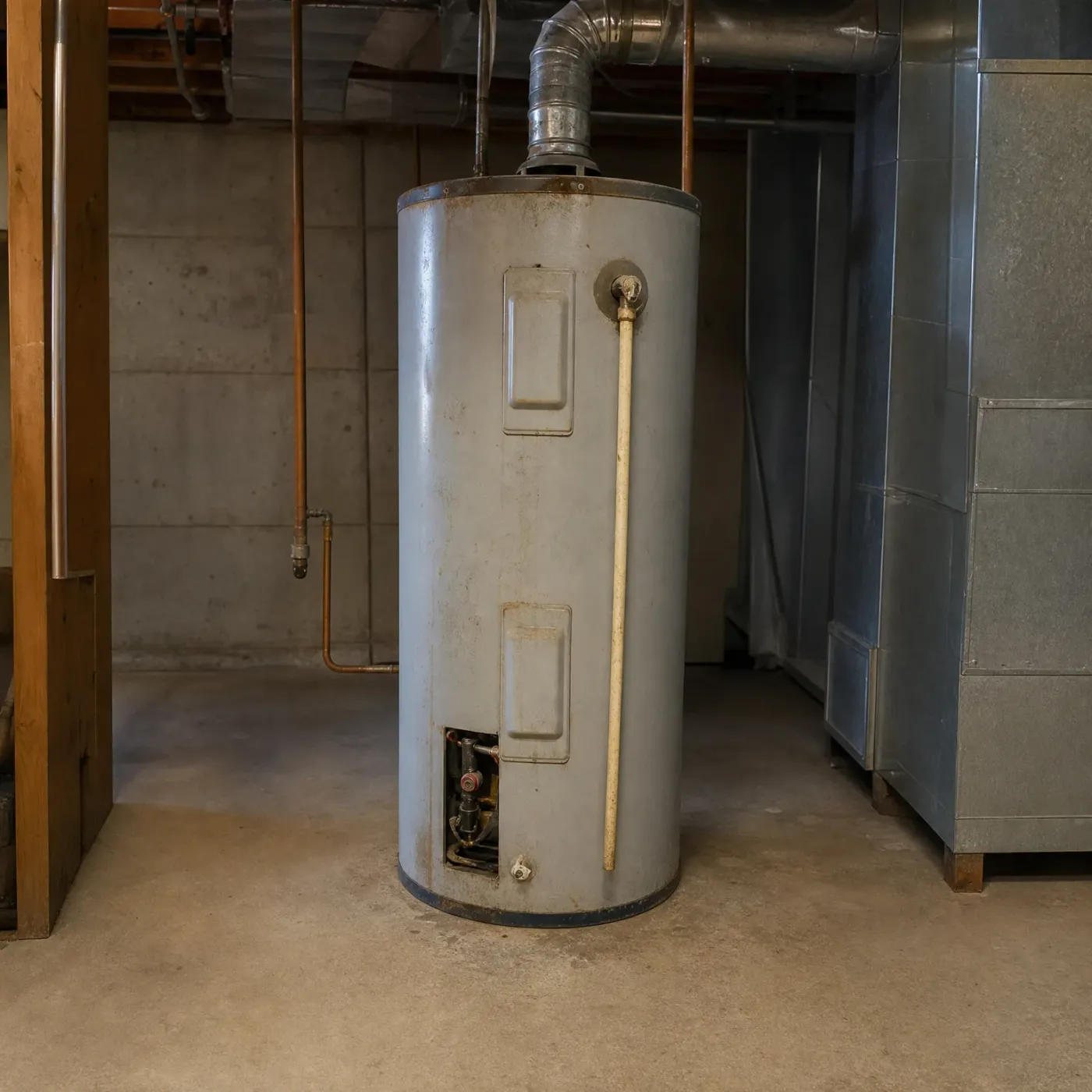
An older gray gas water heater with a metal flue pipe stands on a concrete basement floor beside ductwork and exposed copper piping.
Before you get your water heater installation
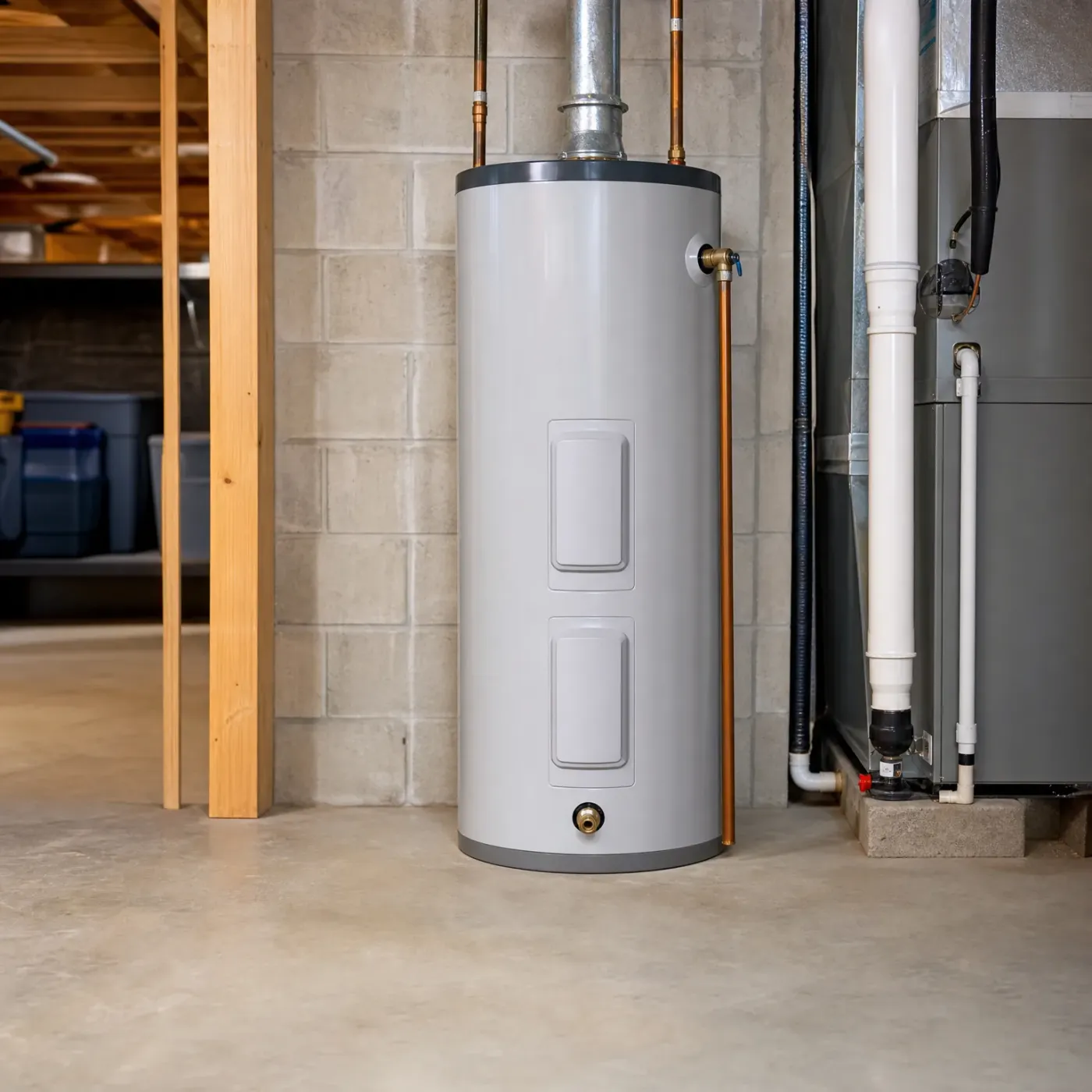
A gray cylindrical water heater with copper pipes stands against a concrete block wall in a basement, next to white PVC piping and a gray furnace, with wood framing and storage bins at left.
After you get your water heater installation

If you're replacing gas with electric

Switching a gas water heater to a heat pump model means you're moving that cost off gas and onto your electric bill, and electric rates here are high enough that the math isn't automatic. A heat pump water heater uses a fraction of the power a resistance tank would, so it tends to hold up better against those rates than a straight electric swap would. It also needs a few hundred cubic feet of air around it to pull heat from, so a cramped closet that worked fine for a gas tank might need a change before the swap makes sense. Worth asking a contractor to walk the space with you before deciding.

If you're replacing electric with electric

If your current water heater is already electric, this is a more straightforward trade. You're not crossing from one fuel to another, just from a resistance element to a compressor that moves heat instead of generating it. Given what power costs here, cutting the electricity a water heater uses works directly in your favor, without the gas-versus-electric question to weigh first. The mild air through a California summer doesn't change how the unit pulls heat indoors, since it's drawing warmth from the air already in that space, not from outside. The main thing to check is still the room: enough air volume around the tank for the heat pump to work the way it's built to.

A woman with long gray hair wrapped in a checked blanket sits on a sofa by a window with yellow autumn foliage outside, with a lamp, framed picture and plant in the background.
An older woman in a cream knit sweater sits on a sofa by a window, looking out at sunlit trees with yellow and orange autumn leaves, with a bookshelf and lamp behind her.
A woman with gray shoulder-length hair in a dark knit sweater sits on a cushioned seat by a window, looking out at yellow autumn foliage, with a living room, armchair, houseplant and framed picture behind her.
An older woman with gray hair in a bun, wearing a cream knit sweater, sits on a sofa with a gray blanket and looks out a large window toward yellow-green autumn trees, with a lit table lamp and dark armchair behind her.

61% of homes statewide heat with gas

Most houses around you heat water with the same gas line that runs the furnace. A heat pump water heater takes that job off gas entirely and puts it on a compressor and a fan, so the tank stops competing with your furnace for gas usage.

ACS 2020-2024 5-year B25040

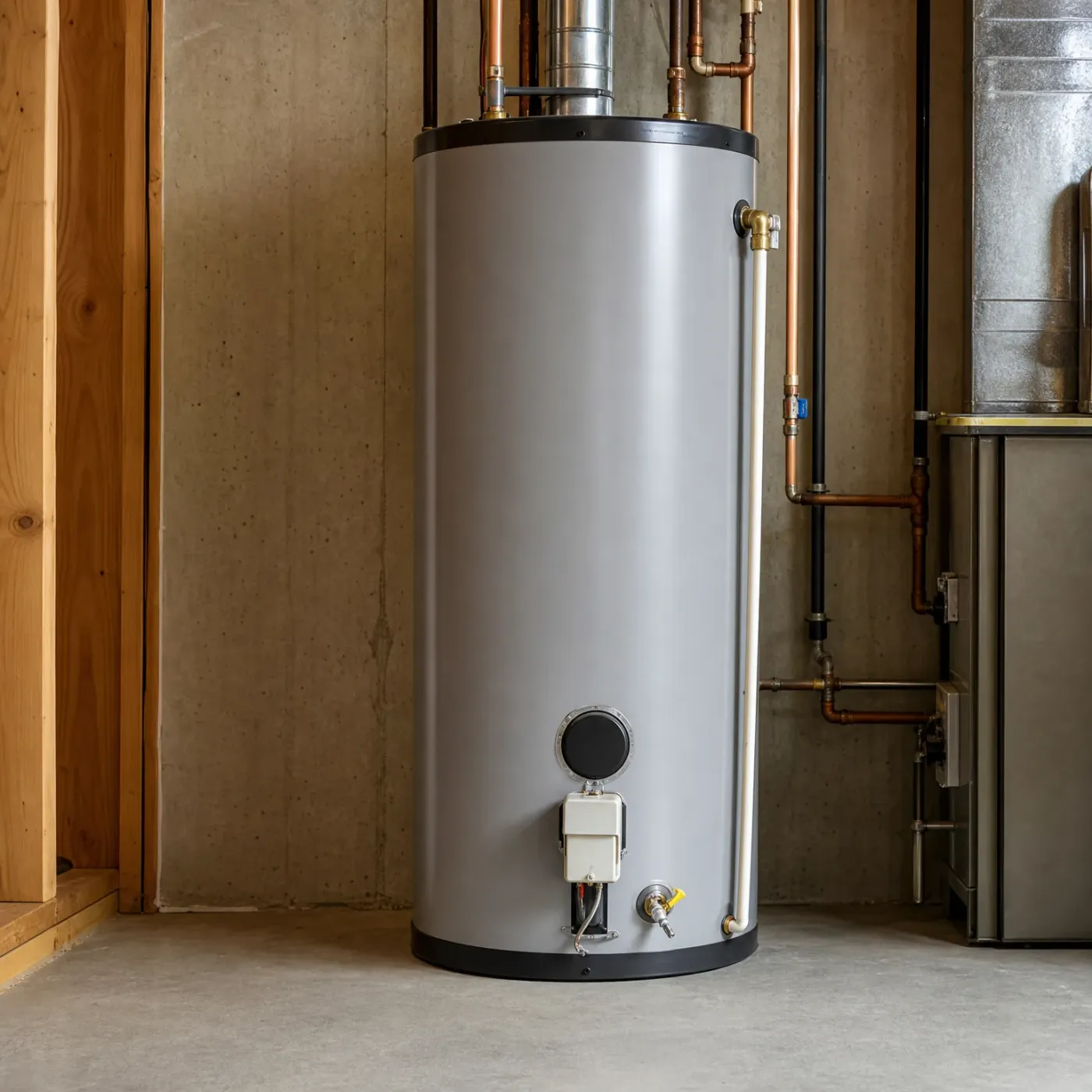
A gray cylindrical water heater stands on a concrete floor against a concrete wall, with copper and black pipes running overhead and a metal duct and dark equipment cabinet to the right.
A working tank like this can usually be converted without tearing out the surrounding space, since the supply lines and flue are already set up to adapt.
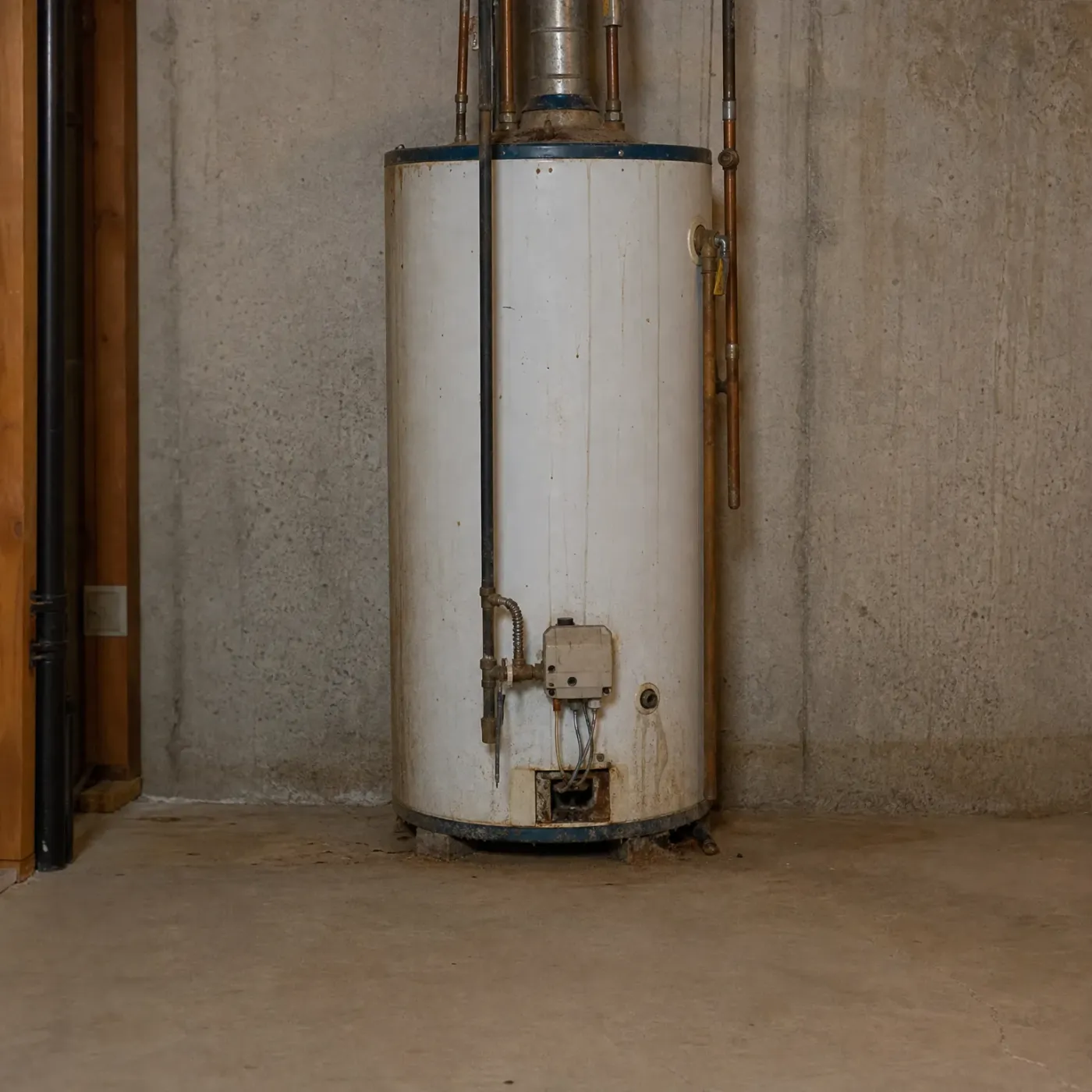
An old white gas water heater with rust stains, copper pipes and a flue stands in the corner of a concrete-walled room with a bare concrete floor and a wooden door frame at left.
Rust at the flue, worn paint, and corrosion like this mean a straight swap won't be as simple, and the install has to account for that first.

A heat pump water heater pays off in California more often than not, because it runs on the resource that costs you the most and uses less of it to do the same job. Where it gets complicated is your own setup: the gas line it would replace, the space the tank sits in, whether a straight swap or a bigger job. That's not something to work out by guessing from a bill. Instead of calling around to a handful of plumbers, describing your tank and your water heater closet to each one, and sorting through quotes that may not even be pricing the same job, you can get matched with a contractor who looks at your situation directly. They'll tell you what your tank and your space actually allow, and what it would take to make the switch. From there it's a conversation about your house, not a guess about averages.

Corner of a house with light horizontal lap siding, a white gutter and downspout, and a window, beside a mulched bed with small shrubs, a lawn, wooden fence and trees in the background.
Close-up of a white gutter along an asphalt-shingle roof edge with dry brown leaves collected in it, a downspout and lap siding below, and blurred autumn trees in the background.
Exterior corner of a house with horizontal lap siding above a stone veneer base and a dark-framed window, with ornamental grasses and shrubs in the foreground and trees in low sunlight behind.
A white horizontal-siding house with a steep gray shingled gable roof, fronted by trimmed shrubs, a brick walkway, and a lawn scattered with fallen autumn leaves.
Corner of a house with cream horizontal lap siding, a black-framed window, asphalt shingle roof with dark fascia, white hydrangea blooms and green shrubs below, and a leafy tree and wood fence to the right.

Get the right pro for your water heater

Skip the round of in-home estimates for a new water heater.

Skip calling around

There's no charge for the request.