Tank or tankless water heater for a California home

Send the form and the search for an installer is over.

Step 1 of 3: Equipment

For most California homes, tankless is the better fit, and gas is why. Nearly every house here already runs gas, and a gas tankless unit can heat water on demand without the standby loss a tank carries day and night. That matters because you're not paying to keep forty gallons hot at 2am when nobody's running water. A tank still makes sense if your gas line or venting can't support a tankless unit without rework, or if you want a straightforward swap at a lower install cost. Tankless also takes up a fraction of the closet or garage space a tank needs, which counts for something in a lot of California homes. Either way, the choice comes down to what your gas line and venting can handle right now, and that's worth having looked at before you decide.

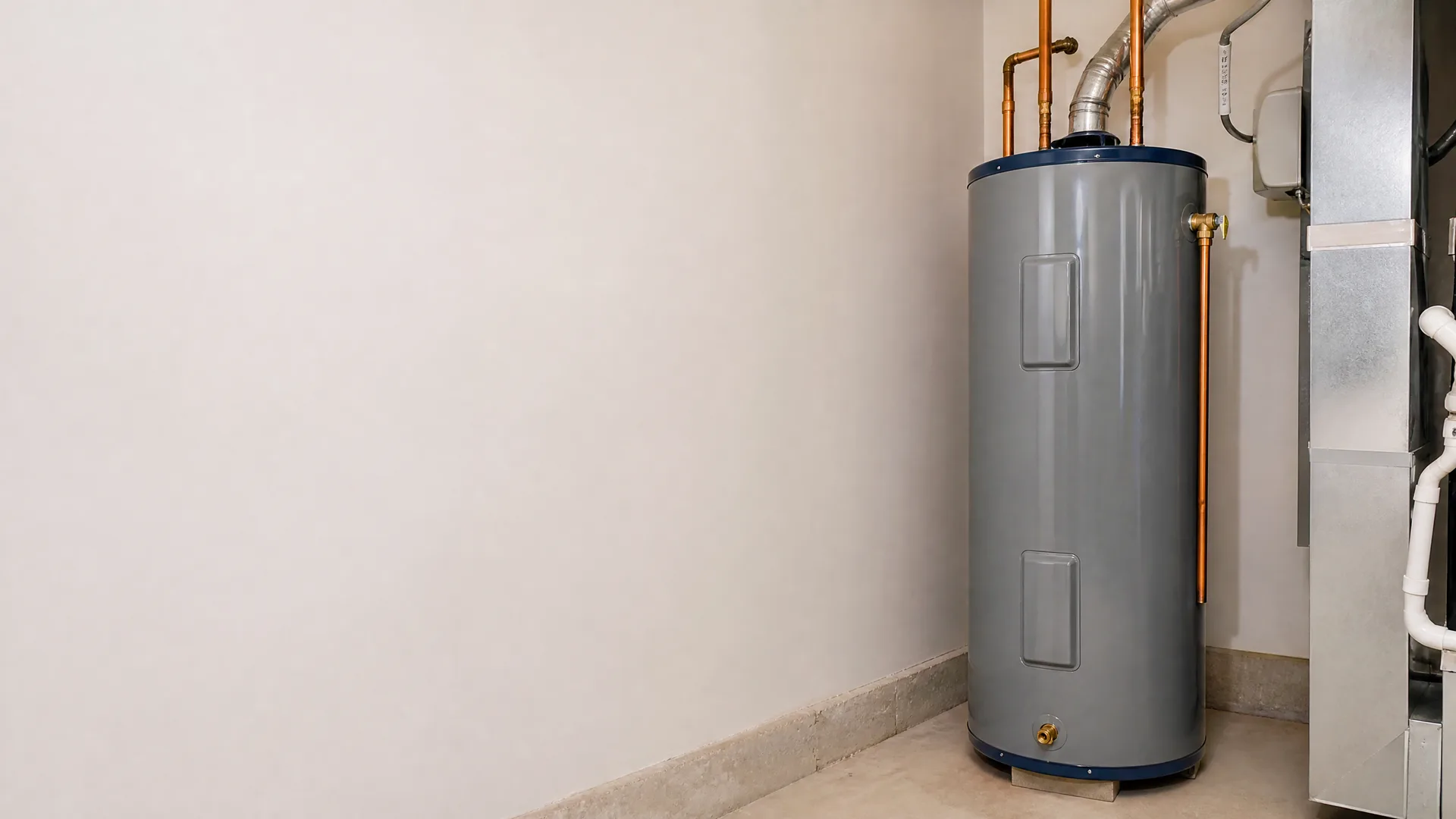
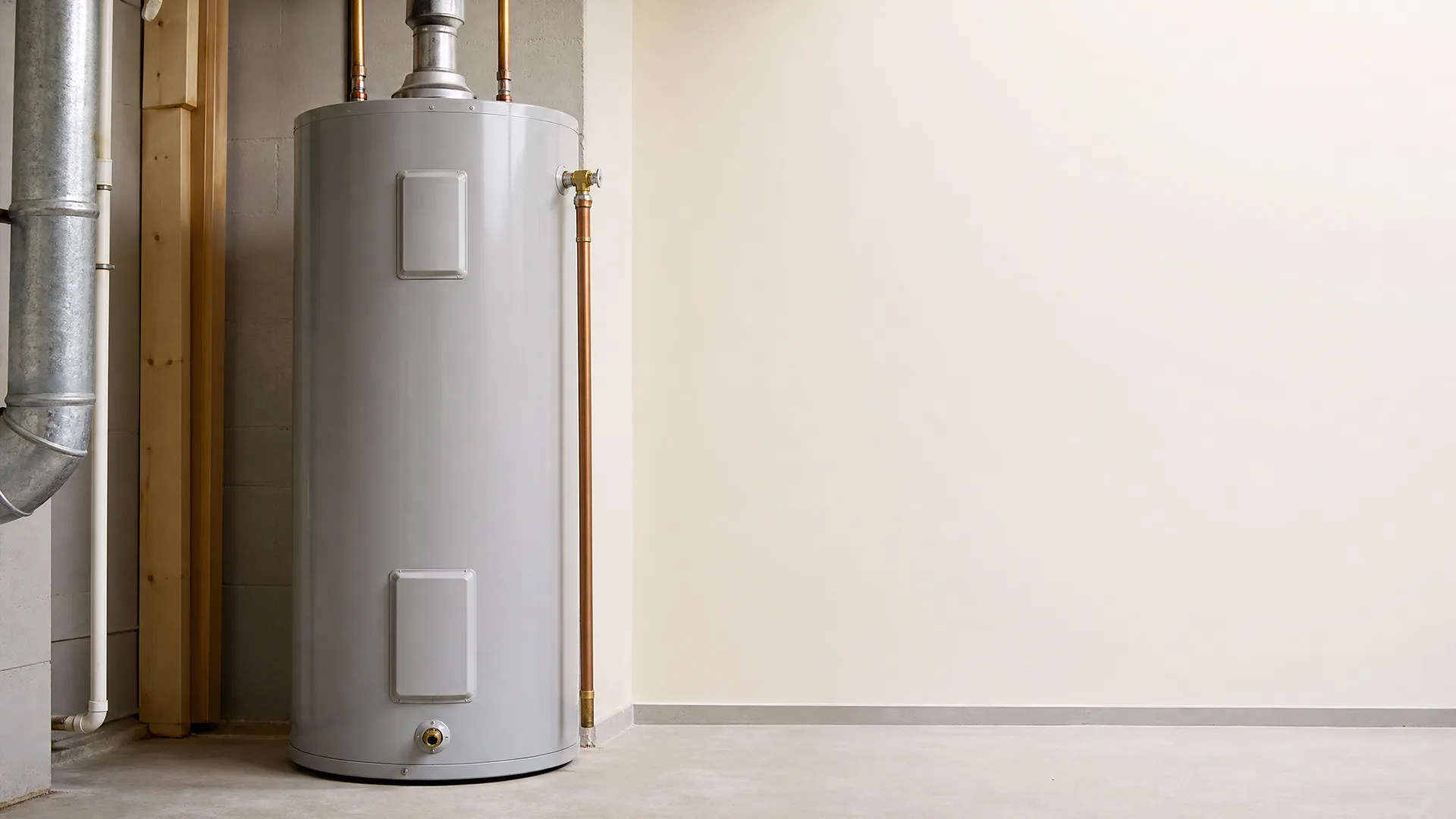
A gray cylindrical water heater with copper pipes stands in a basement corner beside a metal duct and wood framing, next to a plain beige wall and concrete floor.

Why standby loss adds up

A tank holds forty or fifty gallons of hot water around the clock, whether you're home or not. The burner or element cycles on just to make up for heat lost through the tank walls. A tankless unit only fires when you open a tap. Gas here is still the cheaper fuel to run a water heater on, which is part of why skipping that idle burn matters more in a gas household than an electric one.

A gray cylindrical water heater with copper pipes stands in a corner of a basement utility room beside metal ductwork and white PVC piping.

Gas lines already run to most homes

Installing a gas tankless unit is usually simpler here than in a state where electric water heaters are the norm, because the gas line to the water heater is often already there. A tankless install does need venting sized for the unit, and a contractor who works on these every season will know what that run typically requires in a house like yours before anything gets opened up.

Tank or Tankless: Weighing Your Options

Tank

  • A tank unit costs less to install, since it doesn't need the larger gas line or new venting a tankless swap sometimes calls for.
  • It can supply two showers and a dishwasher running at once without the flow limits a smaller tankless unit might hit.
  • If your home's gas line or vent already matches what a tank needs, replacement is usually a straight swap.
  • Recovery time matters more with a tank. Once the stored water runs out, you wait for it to reheat.
  • Parts like the thermostat and anode rod are simple and widely stocked, so repairs tend to be quick.

Tankless

  • It heats water only when a tap is open, so there's no standby loss from a tank sitting full all day.
  • With power here among the most expensive in the country, a gas tankless unit avoids running an electric element to fight that standby loss.
  • Hot water doesn't run out. A tankless unit keeps heating as long as the tap stays open.
  • Installation often means upgrading the gas line or venting to match the unit, which a tank swap usually doesn't require.
  • It takes up a fraction of the space a forty or fifty gallon tank needs, which matters in a tight utility closet or garage.
  • Warm California summers mean less of the year spent fighting cold incoming water, so the unit isn't working as hard to hit temperature.
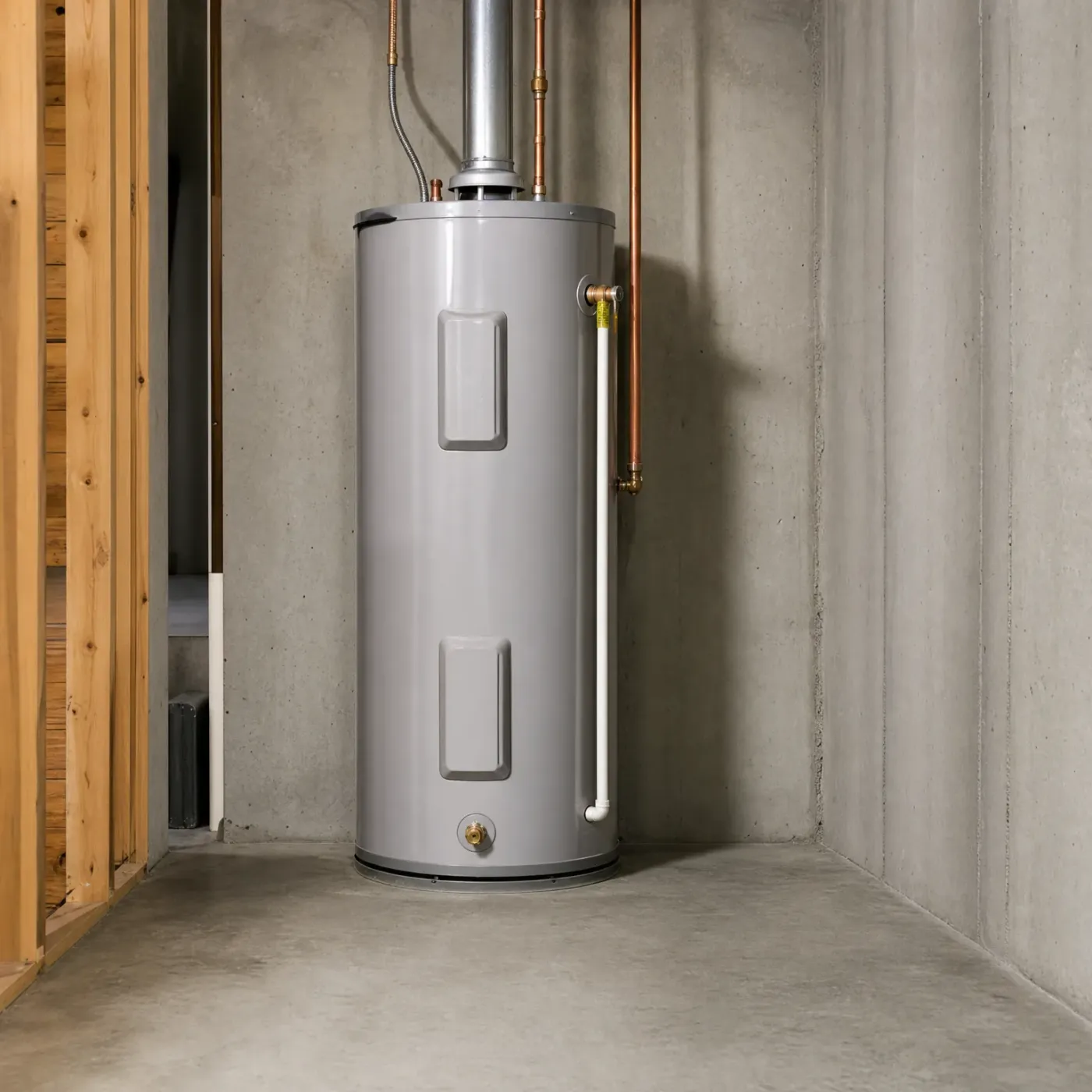
A gray cylindrical water heater standing in a concrete-walled basement corner, with copper and white pipes and a metal flue running up to the ceiling, next to exposed wood framing on the left.

A tank doing its job

This is what a working tank looks like: upright, dry, the fittings tight. The pressure relief pipe runs clean down the side, the flue draws straight up. A gas tank in good shape can run for years without drama, as long as the anode rod and the tank itself are holding up.

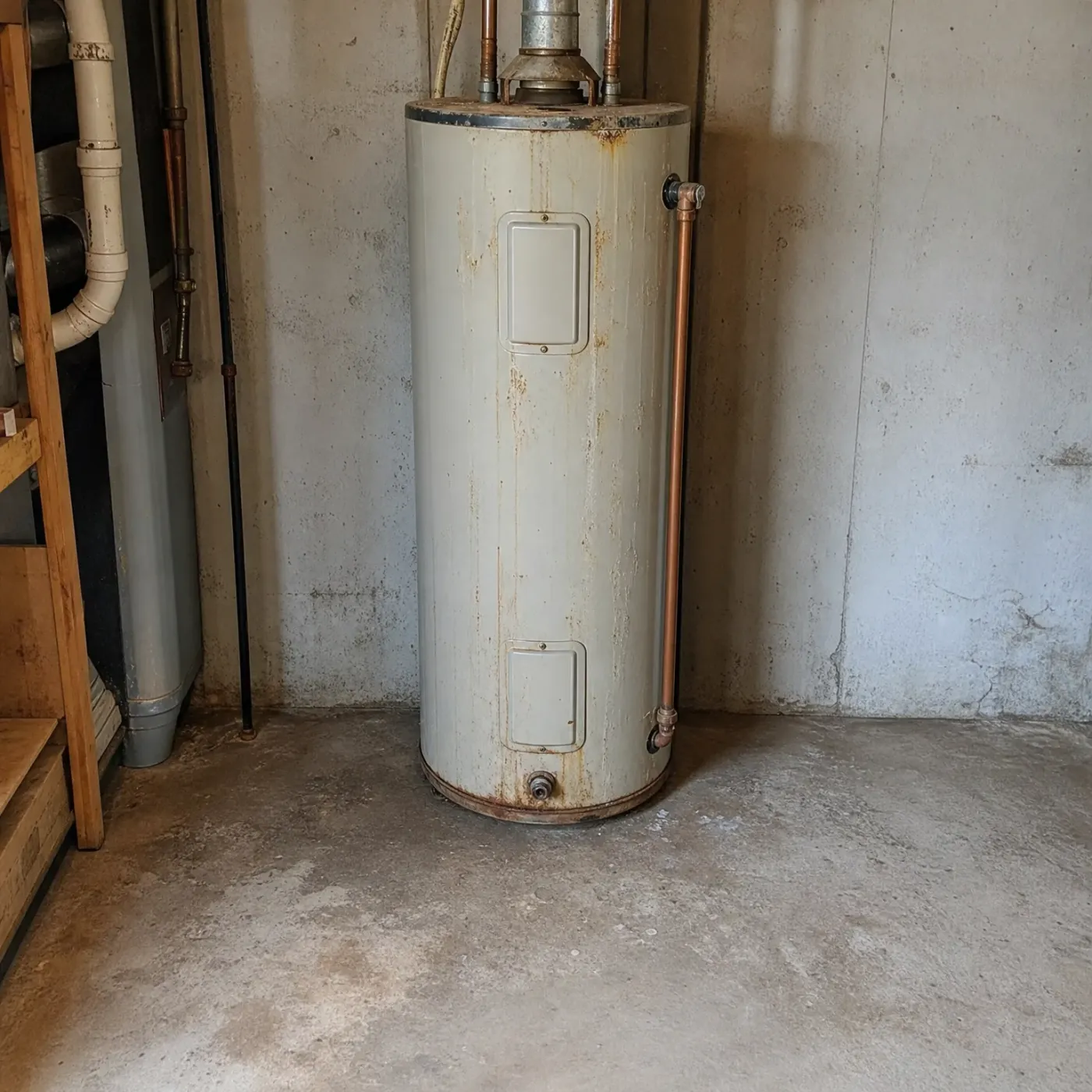
A rusted cream-colored water heater with copper piping and a flue stands in the corner of a concrete-walled basement next to wooden shelving and ductwork.

A tank past its years

Rust like this on the jacket usually means the tank itself is going the same way on the inside. Once corrosion shows on the outside, the steel has been breaking down for a while. A tank in this shape is closer to a leak than a repair, and that's the point at which switching to tankless is worth a real look.

61% of homes statewide heat with gas

If your house is like most in the state, it already has the gas line a tankless unit needs. That's most of the install already done before anyone shows up, whether you stay with a tank or switch.

ACS 2020-2024 5-year B25040

A man in a gray sweater reclines in a brown leather armchair with his eyes closed, beside a wooden side table holding a mug, a folded newspaper and a potted plant, with a bookshelf and sunlit window behind him.
A man with greying hair and a dark sweater leans back on an armchair with his eyes closed and a slight smile, in a living room with a bookshelf, plant, folded newspaper and mug on a wooden table.
A man in a gray fleece jacket sits reclined in a leather chair with his eyes closed, in a room with bookshelves, a table lamp, a window, and a desk holding a folded newspaper and a dark mug.
A bearded man in a gray fleece pullover sits with eyes closed in a brown leather armchair in a living room, with a floor lamp, bookshelf, potted plants, a side table holding newspapers and a dark mug, and a bright window behind him.

It's off your list after this

One installer gets your project, so there's no bidding war over it.

You're not committing to anything by asking.

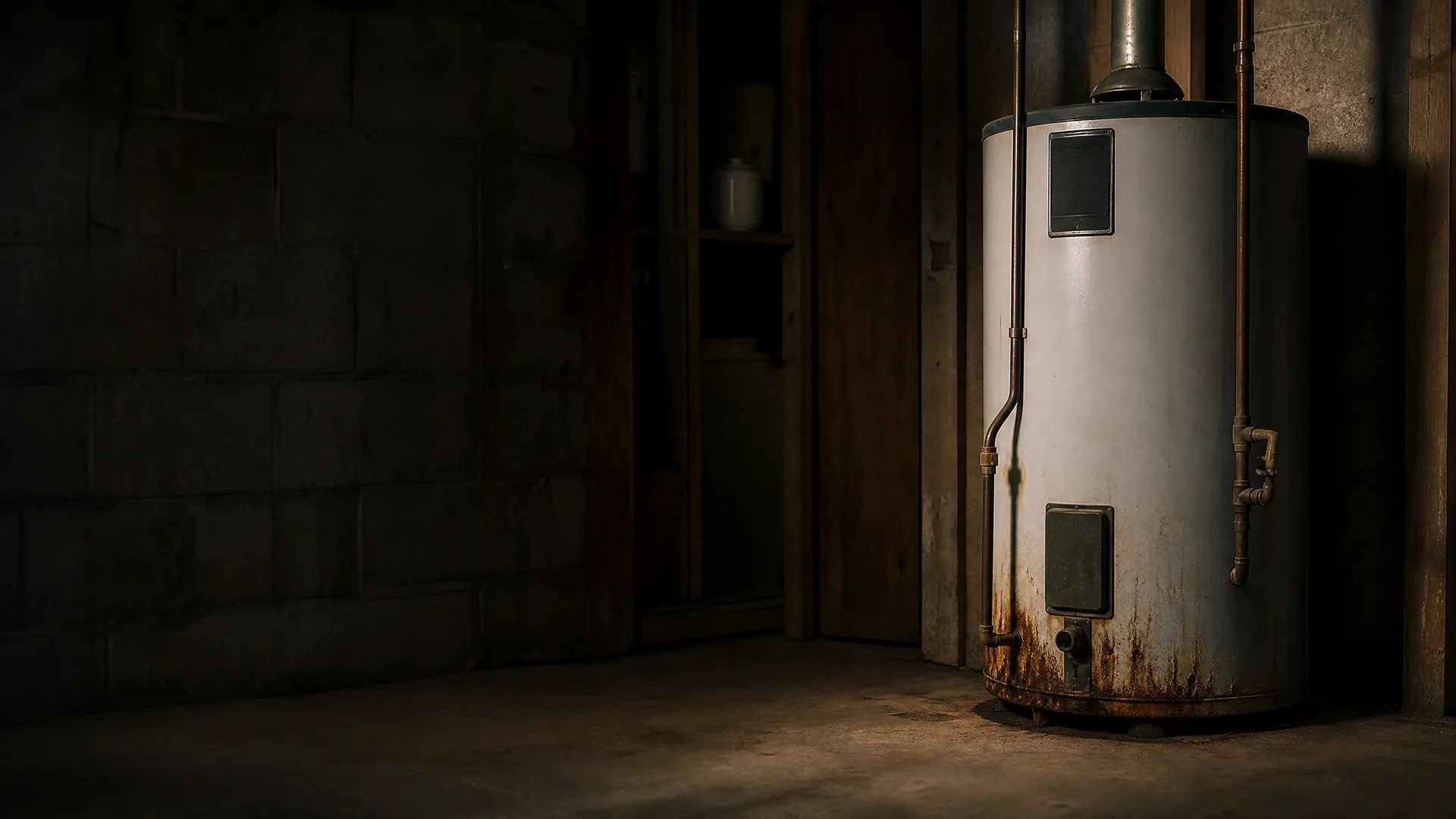
A rusting cylindrical water heater with attached pipes and flue stands in a dim basement corner beside a concrete block wall and a wooden door.

You go down to the utility room after dinner to grab something from the shelf, and the light's still on from earlier. The old tank sits in the corner, and you notice the rust streaks running down one side to the floor, a thin orange line that wasn't there last time you looked, or maybe it was and you didn't look close. The concrete under it is darker than it should be. Outside it's a mild evening, nothing on, no reason to be down here more than a minute. You crouch down and touch the base and it's damp. The tank still runs. It still gets hot. But you've seen enough water heaters go to know what the rust means, and you stand there a second longer than you need to before you head back upstairs.

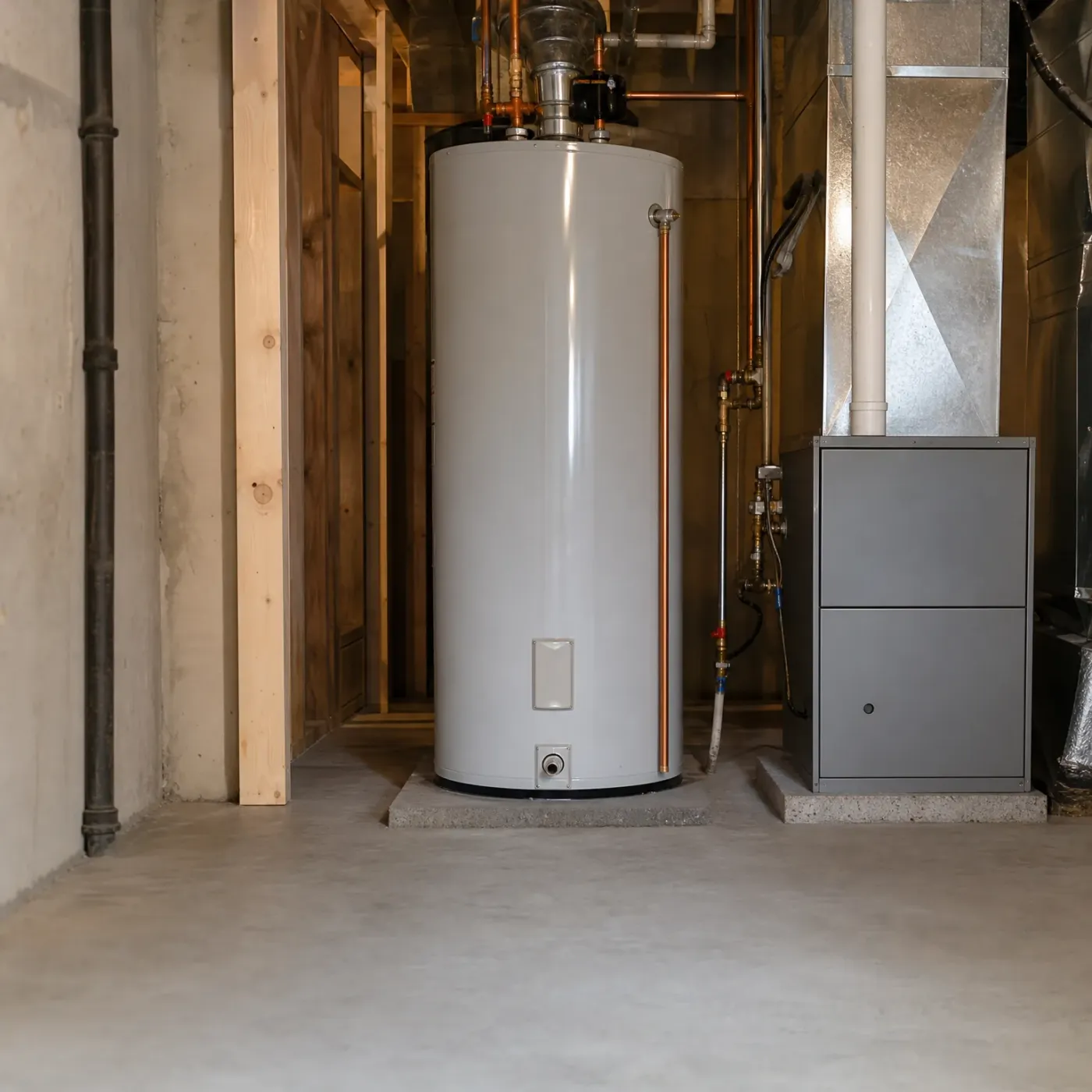
A white cylindrical water heater on a concrete pad in a basement, with copper and metal piping above it and a gray furnace cabinet with ductwork to the right.
A water heater sharing the mechanical room with the furnace, pipes and gas line running clean and tight, doing its job without announcing itself.
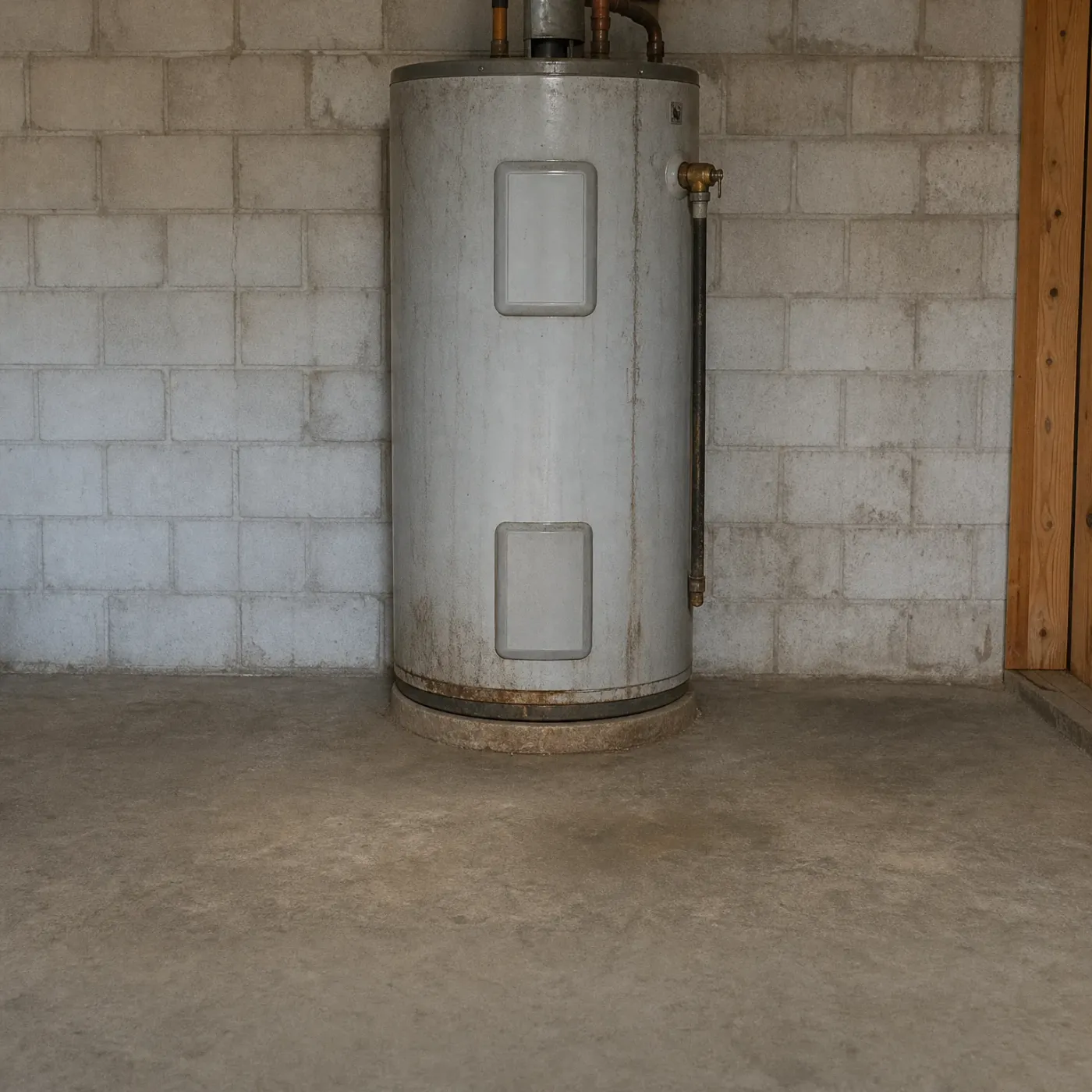
A cylindrical water heater with two access panels and copper pipes stands on a concrete floor against a painted concrete block wall.
An old electric tank against the block wall, rust working down the side and the relief valve the only thing standing between you and a flood.

Nothing happens inside a tankless unit until water actually moves. A flow sensor picks that up and tells the burner to light. From there cold water runs through a coiled heat exchanger, copper or stainless depending on the model, and the burner brings it up to temperature almost immediately. As demand changes, say someone turns on a second tap, the unit adjusts the gas flow to hold that output steady rather than letting the temperature swing. Before any of this is allowed to continue, a flame rod and a vent sensor confirm combustion is happening the way it should. If the flow drops too low, which can happen when a second fixture pulls water partway through a shower, the unit can't stay lit and shuts the burner back off. None of this runs on its own forever without upkeep. Minerals in the water build up inside the heat exchanger over years of use, which is why the manufacturer calls for a flush every year. Skip that and the unit has to work harder to hit the same temperature.

How a tankless unit actually fires

  • A gas tankless unit fires its burner only when a flow sensor detects water moving through the heat exchanger.
  • Cold water passes through a coiled copper or stainless heat exchanger where the burner raises its temperature in seconds, not minutes.
  • The unit modulates gas flow up and down to hold the output temperature steady as demand on the hot side changes.
  • A vent sensor and flame rod confirm proper combustion before the main burner is allowed to stay lit.
  • Opening a second tap partway through a shower can drop the flow rate below the minimum the unit needs to keep firing.
  • Mineral buildup in the heat exchanger over years of use is why manufacturers call for an annual descaling flush.
A gray-haired man with a beard in a blue button-placket shirt reclines on a couch with his eyes closed, beside a sunlit window with a green plant.
A woman in a cream knit sweater sits in an armchair with her eyes closed near a window showing yellow autumn foliage, with a mug on a round wooden side table beside her.

Tank or Tankless, Decided Right

  • Gas tankless fits most California homes because the gas line and venting it needs are usually already there.
  • A tank still makes sense for a house with heavy simultaneous hot water use that a smaller tankless unit can't keep up with.
  • A local contractor who installs and services both types in this area knows which gas lines and venting setups tend to need upgrading first.
  • Working with one licensed installer means a single visit gets you an answer suited to your house, not a stack of competing quotes to sort through.
  • Whichever way you go, the decision comes down to what your house already has and how much hot water it needs at once.
  • Once you send the request, the job of finding the right installer is off your plate.

Most California homes come down on the tankless side, because the gas line is usually already run and the standby loss a tank carries isn't something you have to pay for anymore. A house with a lot of hot water running at once, two showers and a dishwasher at the same time, is the case where a tank still holds its own. Either way, the answer isn't a guess. It's what your gas line, your venting and your actual hot water use add up to.

That's where a contractor who works on both types in California, season after season, earns the call. Someone who installs tankless units regularly knows which vent configurations and gas lines tend to need upgrading before the unit goes in, and which houses already have what they need. That's not something you can tell from a listing or a spec sheet. It takes someone who's been inside the mechanical rooms in this area and seen what usually comes up.

Sending the request connects you with one licensed installer, not several companies working your number at once. That installer looks at your setup and tells you straight whether a tank or a tankless unit fits the house you actually have. From there, finding the right person for the job is no longer something you have to manage. It's handled, and you get a straight answer instead of a pile of quotes to sort through on your own.

A curving paver walkway runs alongside a house with beige lap siding and a white-trimmed window, bordered by low shrubs, grassy plants, and trees in sunlight.
A dark-framed casement window with divided upper panes set in a stucco wall beside a stone-clad section, with hydrangeas, hostas and trimmed shrubs in a mulched bed above a lawn.
White horizontal lap siding wall with a single six-pane double-hung window, above a mulched bed of hydrangea shrubs with browning blooms, bordered by mown grass in low sunlight.
Interior corner with tan plaster walls, a potted olive tree in a large terracotta urn beside a floor-to-ceiling window, and a wooden bench with a beige cushion on a herringbone brick floor partly covered by a woven jute rug.
A wooden bench beneath a window holds a green linen cushion and a fringed cream throw, with a woven basket stored underneath on a wood plank floor.

Stop chasing a water heater pro

Your request stays with one local pro.

Find a local pro

It costs nothing to send, and you don't have to hire anyone.