Tell us about the job
Takes about a minute. No obligation.
Gas-fired water heaters run a combustion cycle every time the tank calls for heat, and the burner assembly, thermocouple, and gas valve accumulate wear in direct proportion to how much of that work falls on them. Utility gas heats more occupied homes in Marin County, California than any other fuel, at 66.6% (2020-2024 ACS 5-year). A contractor diagnosing a failing water heater here checks the gas train first, because the ignition system and burner are what actually cycle, and in a gas-dominant market the replacement parts are matched to that infrastructure. Venting condition follows: a flue that has handled years of combustion exhaust corrodes from the inside, and a compromised vent is what turns a repair call into a safety call.
Venting configuration and supply line condition are what a contractor actually has to settle before the repair scope is clear. Half the homes in Marin County, California were built in 1967 or earlier (2020-2024 ACS 5-year). A house built to that era's plumbing standards may have venting arrangements or draft configurations that a direct repair has to work around, and parts for a unit installed years after the house was built can be scarce depending on the brand and model. What the opened system turns out to need, and whether the parts it takes are still in production, is what drives the final scope.
The Parts of a Water Heater a Contractor Checks First
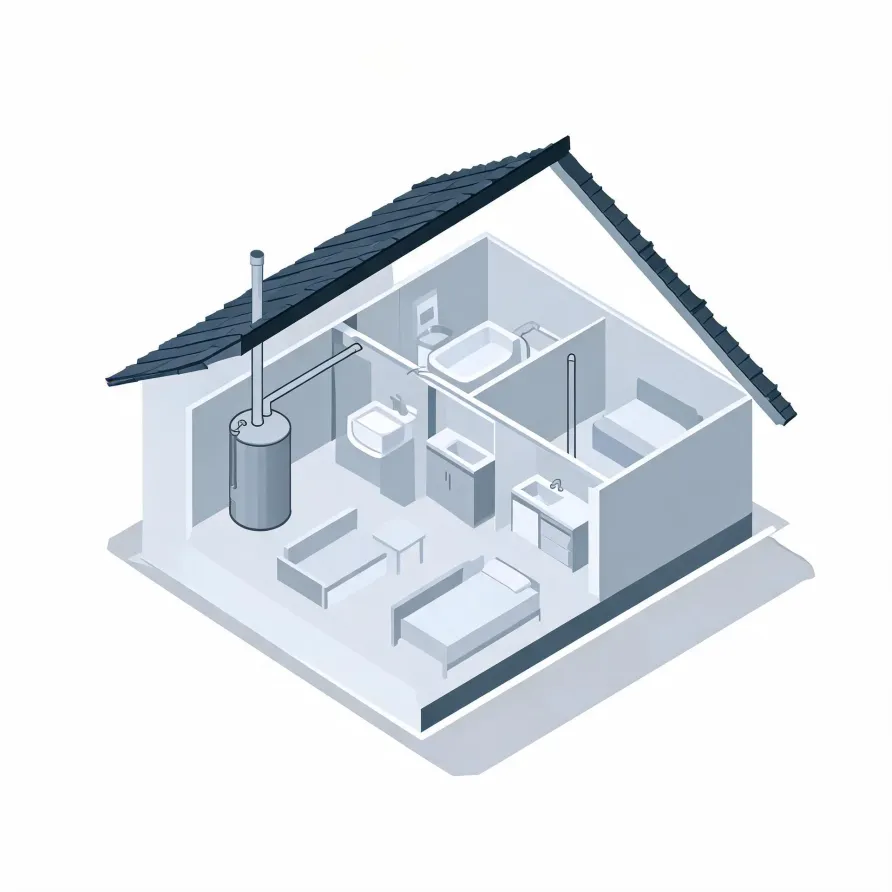
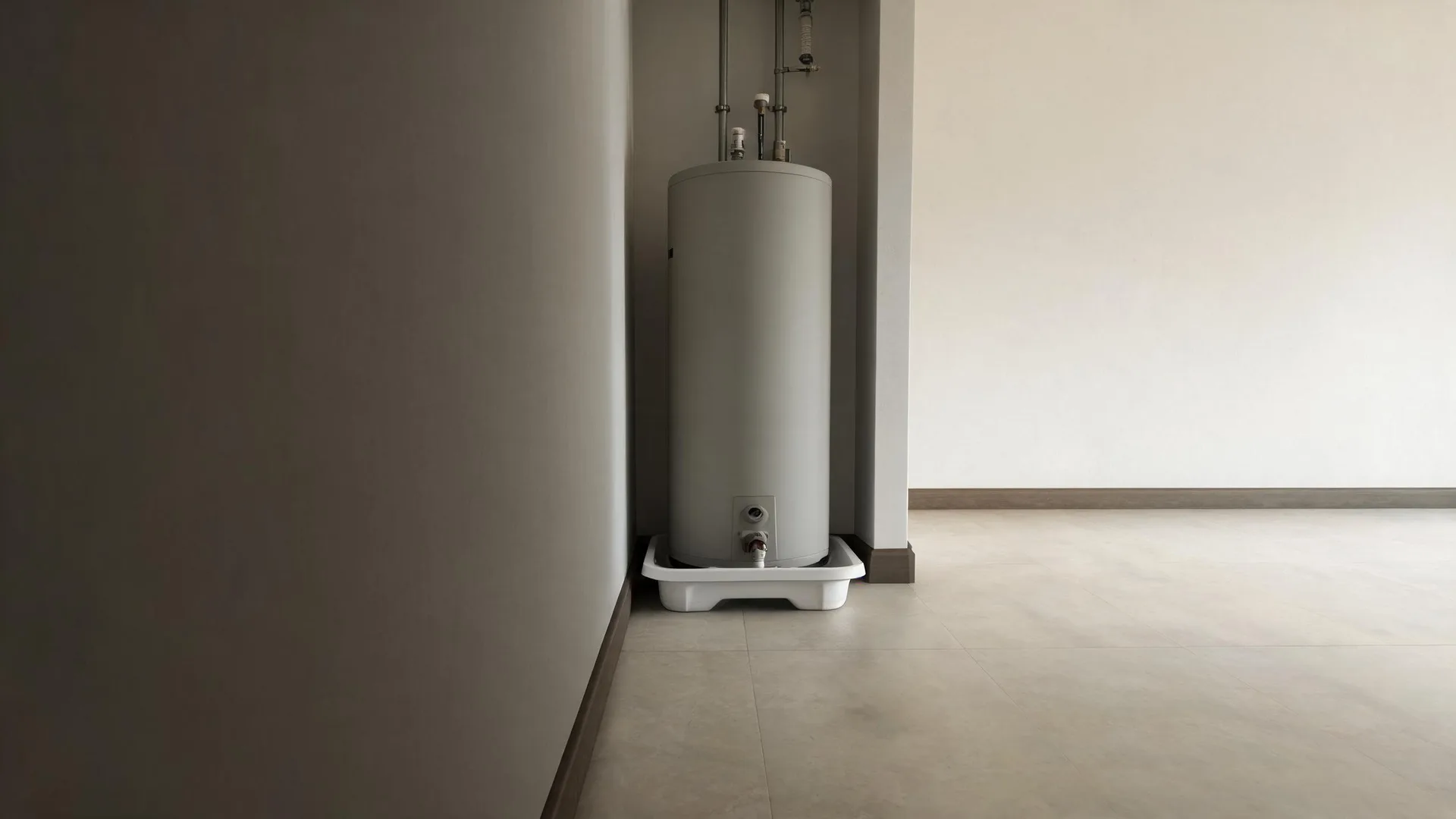
The tank is the piece a homeowner usually sees first, sitting in a utility closet, basement, or garage. It holds and heats the water supply for the house. The burner assembly or heating element sits at the base or inside the tank and is where a contractor looks when heat output has dropped or stopped.
The thermostat controls the target temperature and is checked when water runs too hot, too cold, or inconsistently. The pressure relief valve mounts on the tank's side or top and releases pressure if it builds past a safe point. The anode rod hangs inside the tank and slows corrosion, and the dip tube directs cold water to the bottom so it heats before rising to the outlet.
The drawing shows the general layout of a water heater system, and a licensed contractor determines which parts apply and what condition they are in for your specific home.
Get matched in Marin CountyMarin County, by the numbers
134 severe weather events were recorded in Marin County, California between 2015 and 2024.
NOAA National Centers for Environmental Information, Storm Events Database, bulk CSV export, events 2015-01-01 through 2024-12-31.Half the homes in Marin County, California were built in 1967 or earlier (2020-2024 ACS 5-year).
U.S. Census Bureau, 2020-2024 American Community Survey 5-Year EstimatesMarin County, California holds 112,116 housing units (2020-2024 ACS 5-year).
U.S. Census Bureau, 2020-2024 American Community Survey 5-Year EstimatesOwners occupy 64.7% of the occupied homes in Marin County, California (2020-2024 ACS 5-year).
U.S. Census Bureau, 2020-2024 American Community Survey 5-Year EstimatesRules & Standards Covering Water Heater Repair in Marin County, California1 sourced rules and standards
What Marin County and California Require for HVAC Repair
California requires a state contractor license: it is a misdemeanour to engage in the business of, or act in the capacity of, a contractor in California without one, unless the work is exempt.
Weather Events in Marin County
Stress on a water heater tracks closely with what the weather outside demands of it. How hard that equipment works, and how often it needs repair, is shaped by local conditions in ways a national average will not capture.
134 severe weather events, 2015–2024. Source: NOAA National Centers for Environmental Information, Storm Events Database.