Tell us about the job
Takes about a minute. No obligation.
Gas-fired water heaters run their burners and ignition systems hard, and the venting and combustion-air setup those appliances depend on is dictated by the fuel the house burns. Utility gas heats more occupied homes in Nevada County, California than any other fuel, at 35.0% (2020-2024 ACS 5-year). A contractor diagnosing a failing water heater here starts with the burner orifice, the thermocouple or igniter, and the flue path, because those are the components that accumulate wear on a gas unit. Sediment in the tank is a secondary question. The fuel share across this county also means replacement options are constrained: a new unit has to fit the existing gas supply and venting, so the contractor's quote accounts for that before any fixture is priced.
Water heaters do not sit in isolation. The supply lines, the venting, and the electrical or gas connections around a unit reflect what was standard when the house was built, and in a county where much of the housing is this old, those runs can complicate what first looks like a simple fix. Half the homes in Nevada County, California were built in 1983 or earlier (2020-2024 ACS 5-year). A contractor who opens the unit and finds a failed element or a corroded anode is partway there, but whether the job stays small depends on what the surrounding infrastructure turns out to be, and that is not visible from the outside.
The Parts of a Water Heater a Contractor Checks During a Repair
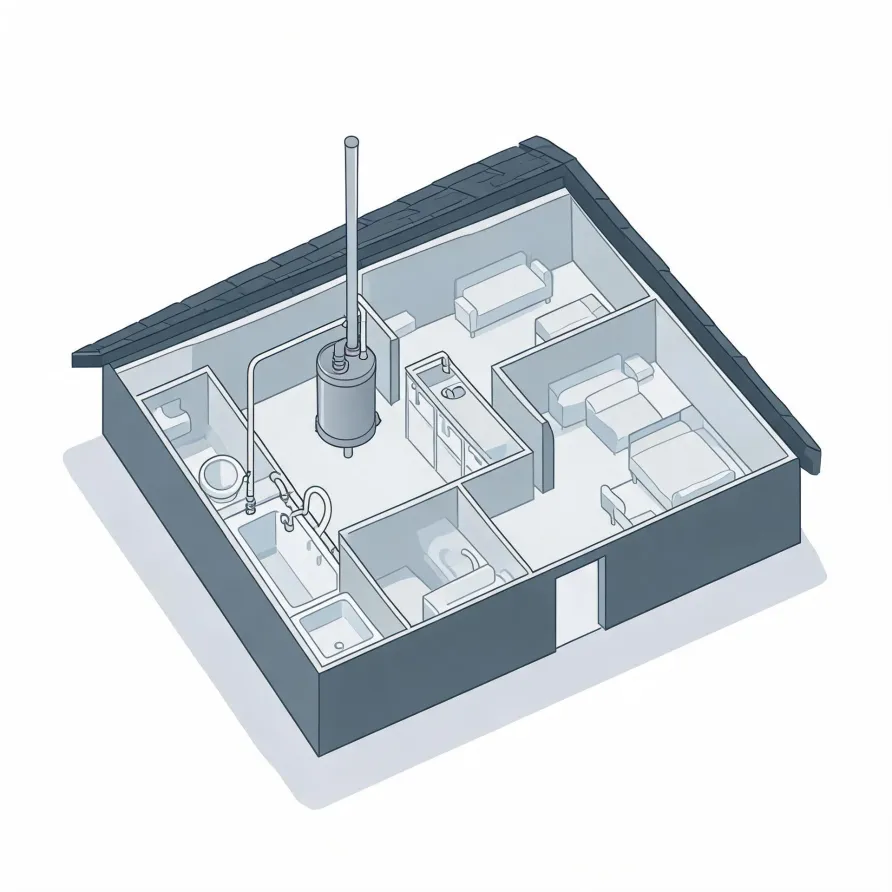
The tank is the piece a homeowner notices first, a large insulated cylinder sitting in a utility closet, garage, or basement, and its job is to hold a supply of heated water ready for the whole house. Attached to it are the inlet and outlet pipes, which carry cold water in and hot water out, and the pressure-relief valve, which opens if pressure inside the tank rises too high.
The heating element or burner assembly sits at the base or interior of the tank depending on whether the unit runs on electricity or gas, and that assembly is where a contractor looks when water runs cold or only reaches a lukewarm temperature. A gas unit also has a thermocouple or flame sensor near the burner, and a contractor will check that piece when the pilot will not stay lit or the burner refuses to fire.
The drawing shows the general layout of a water heater system, and a licensed contractor will determine which components apply and what condition they are in for this specific home.
Get matched in Nevada CountyNevada County by the numbers
643 severe weather events were recorded in Nevada County, California between 2015 and 2024.
NOAA National Centers for Environmental Information, Storm Events Database, bulk CSV export, events 2015-01-01 through 2024-12-31.Half the homes in Nevada County, California were built in 1983 or earlier (2020-2024 ACS 5-year).
U.S. Census Bureau, 2020-2024 American Community Survey 5-Year EstimatesNevada County, California holds 54,309 housing units (2020-2024 ACS 5-year).
U.S. Census Bureau, 2020-2024 American Community Survey 5-Year EstimatesOwners occupy 75.5% of the occupied homes in Nevada County, California (2020-2024 ACS 5-year).
U.S. Census Bureau, 2020-2024 American Community Survey 5-Year EstimatesCodes & Standards Covering Water Heater Repair in Nevada County, California1 sourced rules and standards
Licensing and Legal Requirements in Nevada County, California
California requires a state contractor license: it is a misdemeanour to engage in the business of, or act in the capacity of, a contractor in California without one, unless the work is exempt.
Severe Weather Events in Nevada County
Extreme weather puts real stress on water heaters, pushing them to work harder and wear faster than they would under mild conditions. How much of that pressure a unit faces depends on where it sits, which makes local weather history relevant to any repair or service decision in Nevada County.
643 severe weather events, 2015–2024. Source: NOAA National Centers for Environmental Information, Storm Events Database.