


Still under 8 years old
A single failed part on a younger tank is worth fixing. The thermostat or heating element gets replaced and the tank keeps going.
A water heater rarely picks a convenient time to quit. In Los Angeles, most homes run on gas, and a tank that's starting to rust, leak, or struggle to keep up is one cold shower away from an easy decision. The question is whether you're catching it early enough to choose the replacement, or waiting until it's chosen for you. Either way, the next step is the same: finding someone licensed to look at your actual tank, your actual setup, and tell you straight whether it's worth repairing or time to replace it. That's what this page connects you to. Fill in what's going on with your water heater and you'll be matched with a contractor who handles installations in your part of Los Angeles County. Once you send it, that search is off your plate. No need to call around or compare strangers yourself. Someone who knows the work will have what they need to reach out and take it from here.
Most water heaters last between 8 and 12 years, and in Los Angeles, with mild groundwater temperatures and few hard freezes to stress a tank, plenty make it to the far end of that range. What ends a tank's life is usually rust working through the steel or a leak at a weld seam, not the cold. If yours is in that age range, start paying attention to the signs: water that takes longer to heat, rusty or metallic-tasting water, a tank that's noisy, or any moisture at the base. A gas tank that's still lighting fine but is past 10 years is worth having looked at before it fails on its own schedule, usually a weekend morning with a house full of people wanting a shower. Replacing it on your terms means picking the unit and the day. Waiting for it to fail means taking whatever's available, fast, after a leak has already reached your floor.
2.81 people per household on average
With 2.81 people in the average household here, a tank sized for one or two can leave someone taking a cold shower on a busy morning.
Half the homes here were built by 1965
A home built around 1965, which is half of them, has had decades of mineral buildup working on whatever tank is in there now.
62.6% of homes heat with gas
At 62.6% gas, most tanks in the county vent through a flue, and a corroded vent is as much a reason to replace as a leaking tank.
ACS 2020-2024
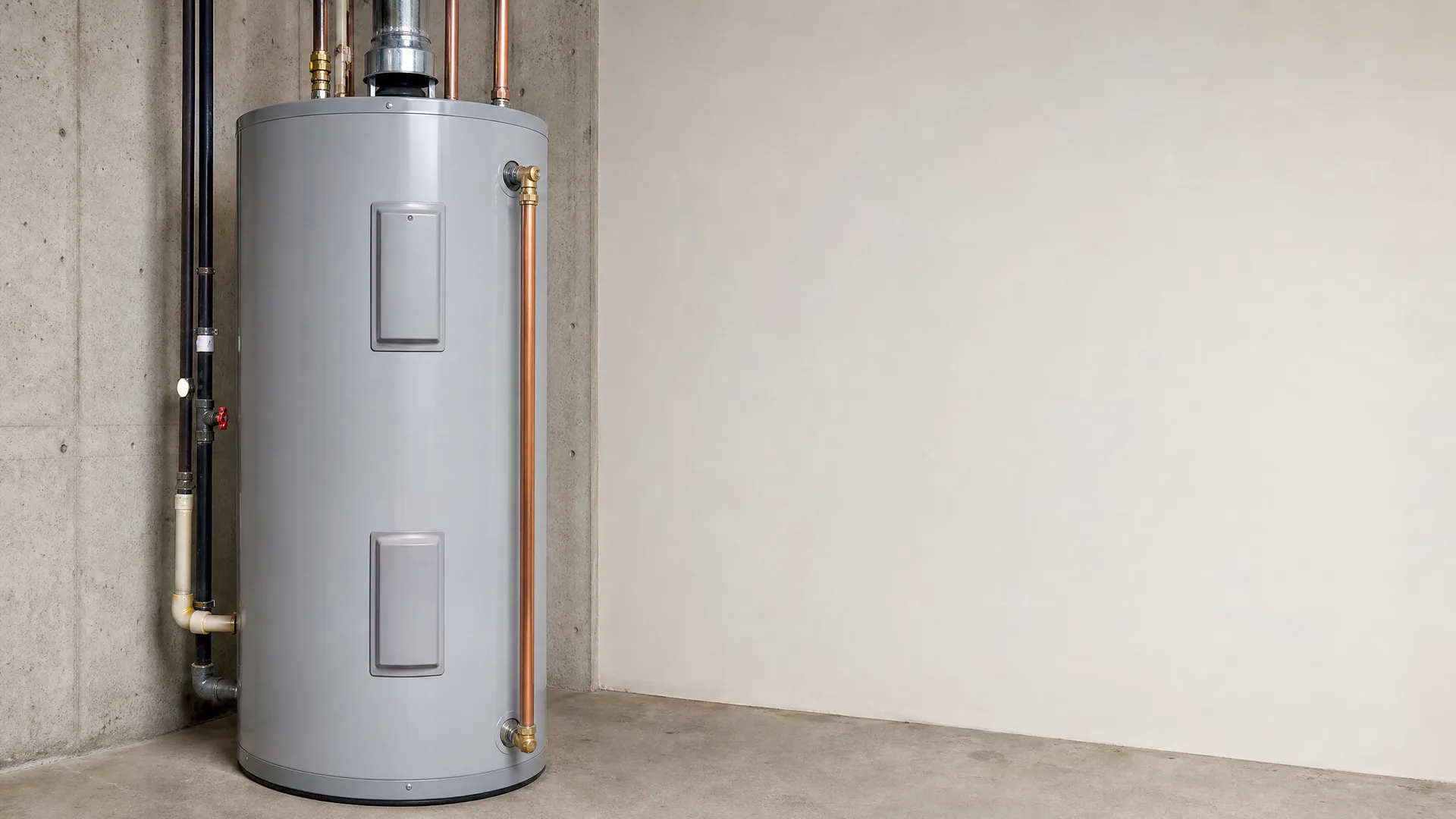
The tank is under 8 years old and the problem is a single part. A thermocouple, a heating element, a thermostat. These fail on their own and get swapped out without touching the tank itself. If it's still under warranty, a repair costs you little beyond the visit. A gas valve or a leaking fitting is worth fixing on a tank that otherwise has years left in it.
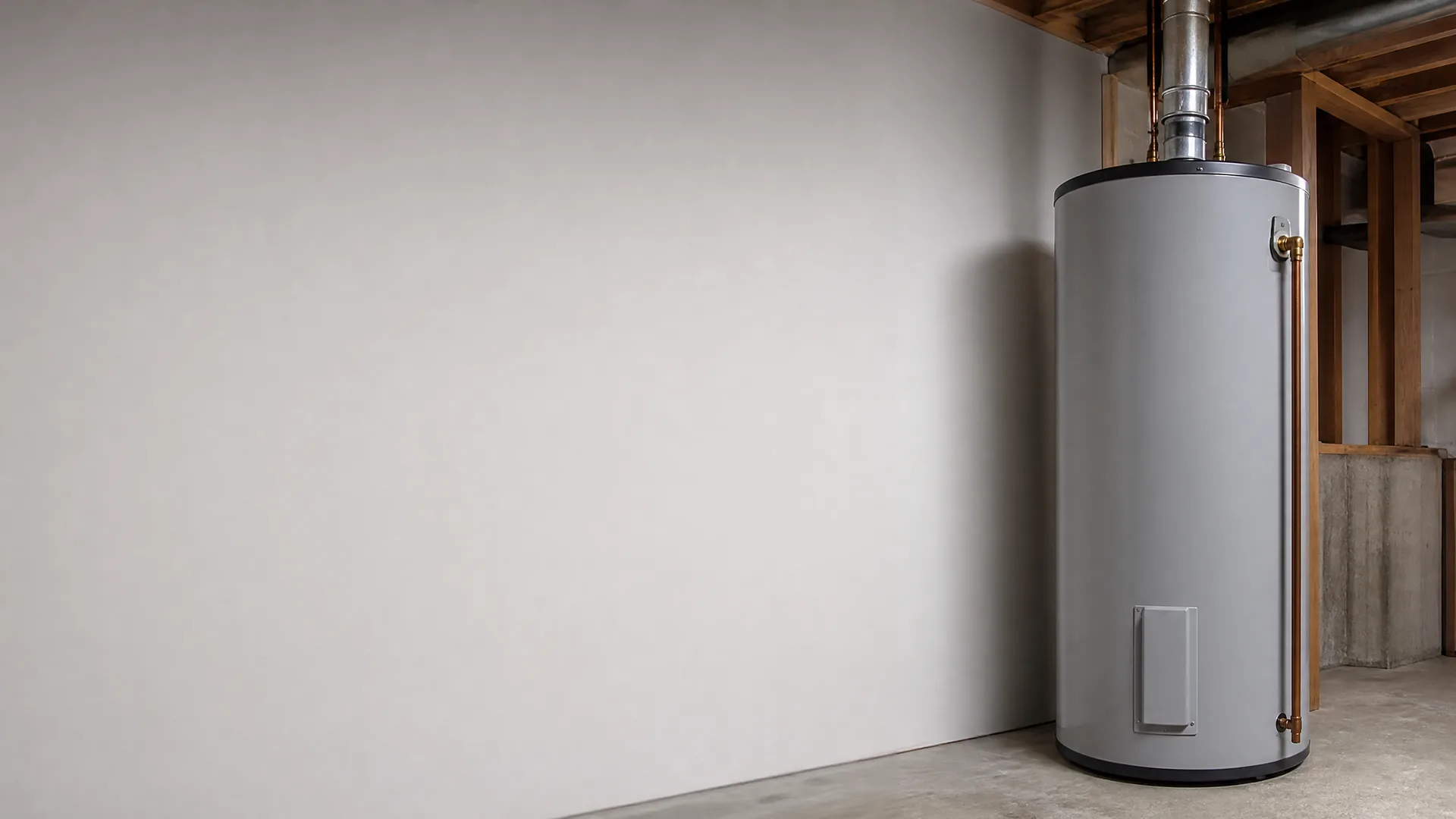
The tank itself is leaking. Water pooling at the base means the steel has rusted through, and no part swap fixes that. Past 10 years, a second repair on the same unit is money spent holding off the inevitable. If the tank can't keep up with the house anymore, or the pilot won't stay lit on an older unit, replacing it ends the pattern of repeat calls instead of extending it.
You're not looking for a reason to replace it. You want to know if yours is already telling you. A water heater gives off signals before it quits, and most of them show up around the tank itself, not just in the water coming out of the faucet. Knowing what to check saves you from guessing.
Rust-colored hot water, even just at the start of a shower, usually means the tank itself is corroding from the inside, not the pipes. A popping or rumbling sound means sediment has built up on the bottom and is hardening under the burner, which makes the tank work harder to heat the same amount of water. Any water around the base, even a small damp patch, means the tank has a crack or a seam that's failed, and that doesn't seal itself back up. None of these call for a wait-and-see. A tank that's rusting or leaking is past the point a part swap fixes, and the next failure is usually water on the floor instead of a warning sign.
Sediment settles to the tank bottom and starts to insulate the burner
The burner works harder and longer to heat the same water
Heat stress thins the glass lining that protects the steel tank
Exposed steel starts to rust from the inside out
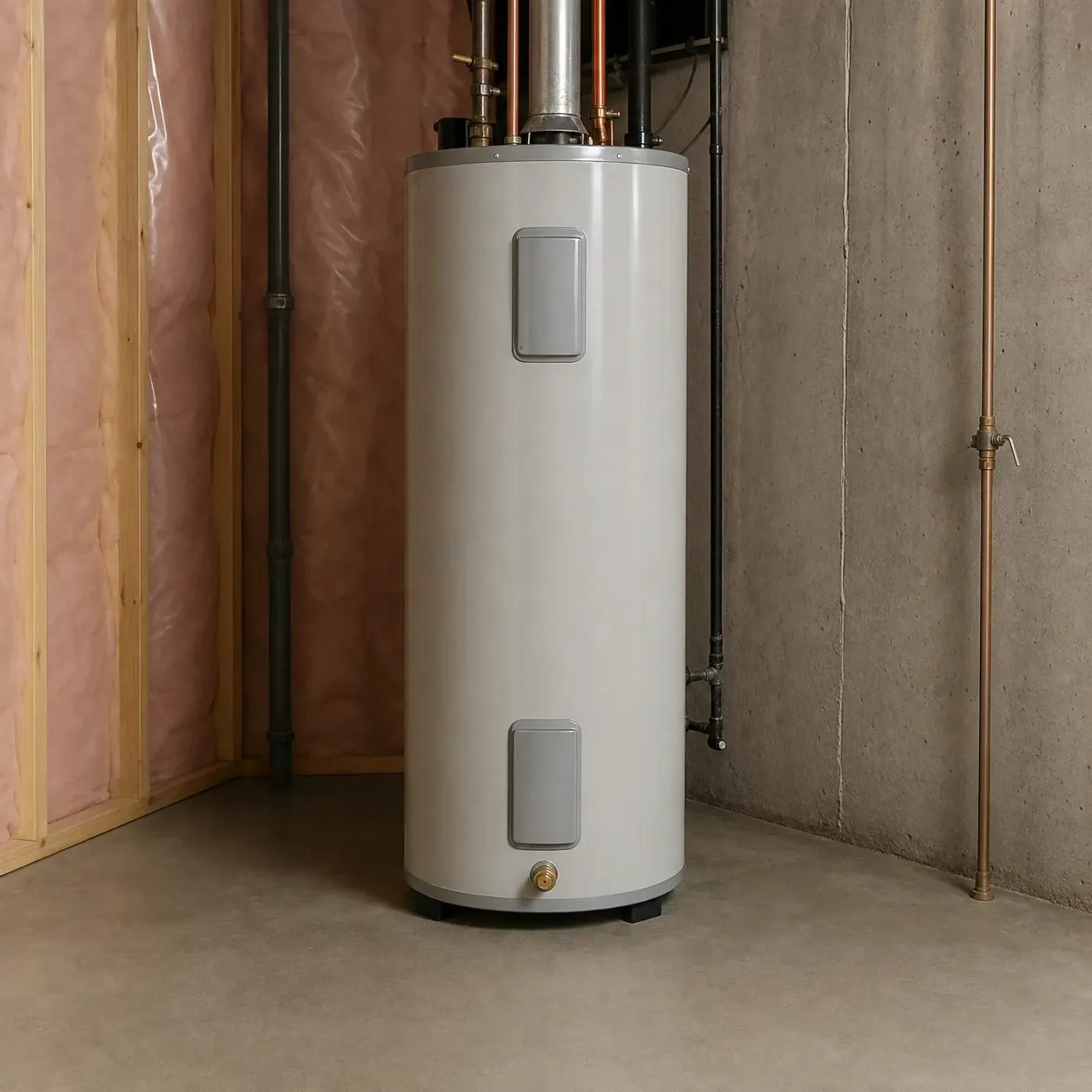
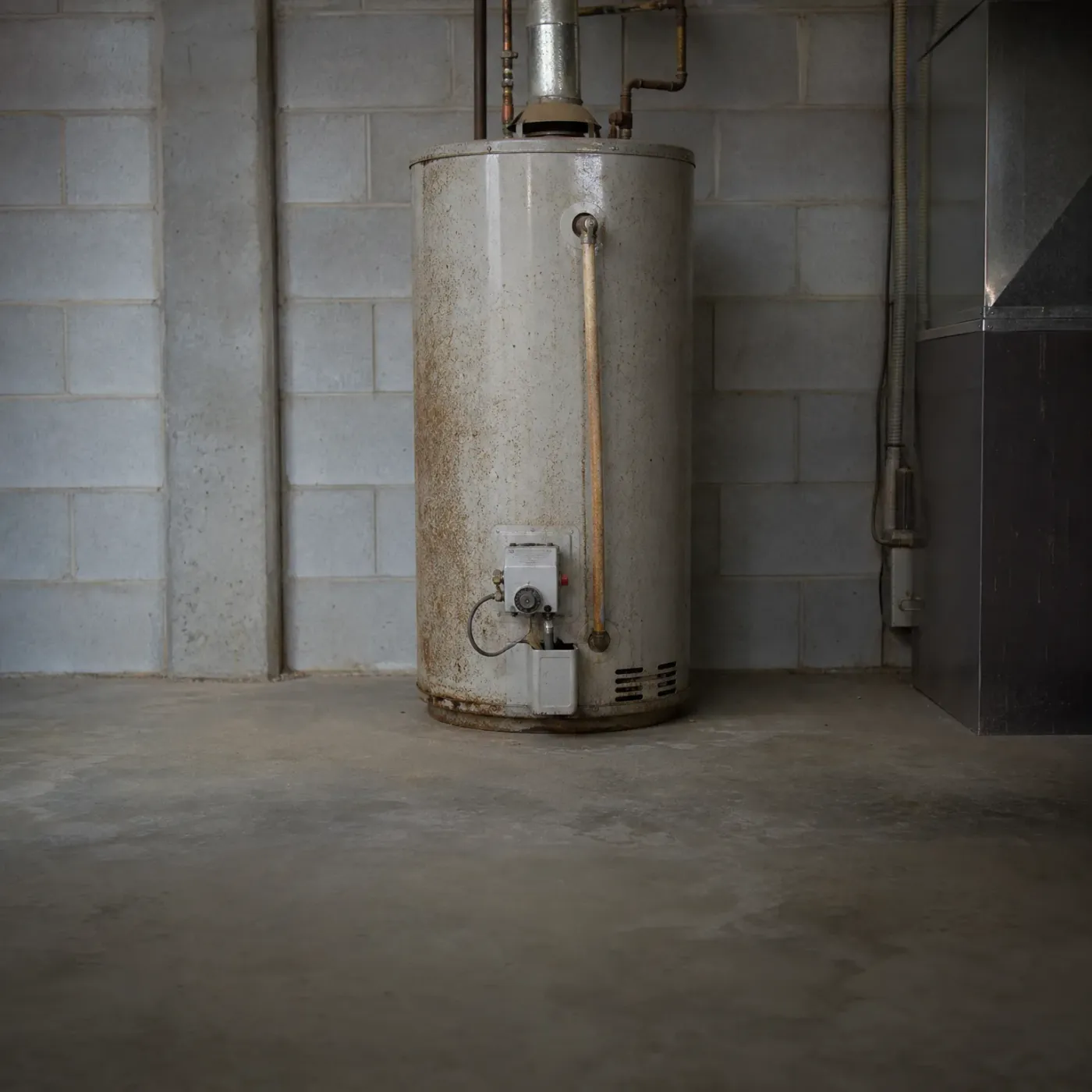
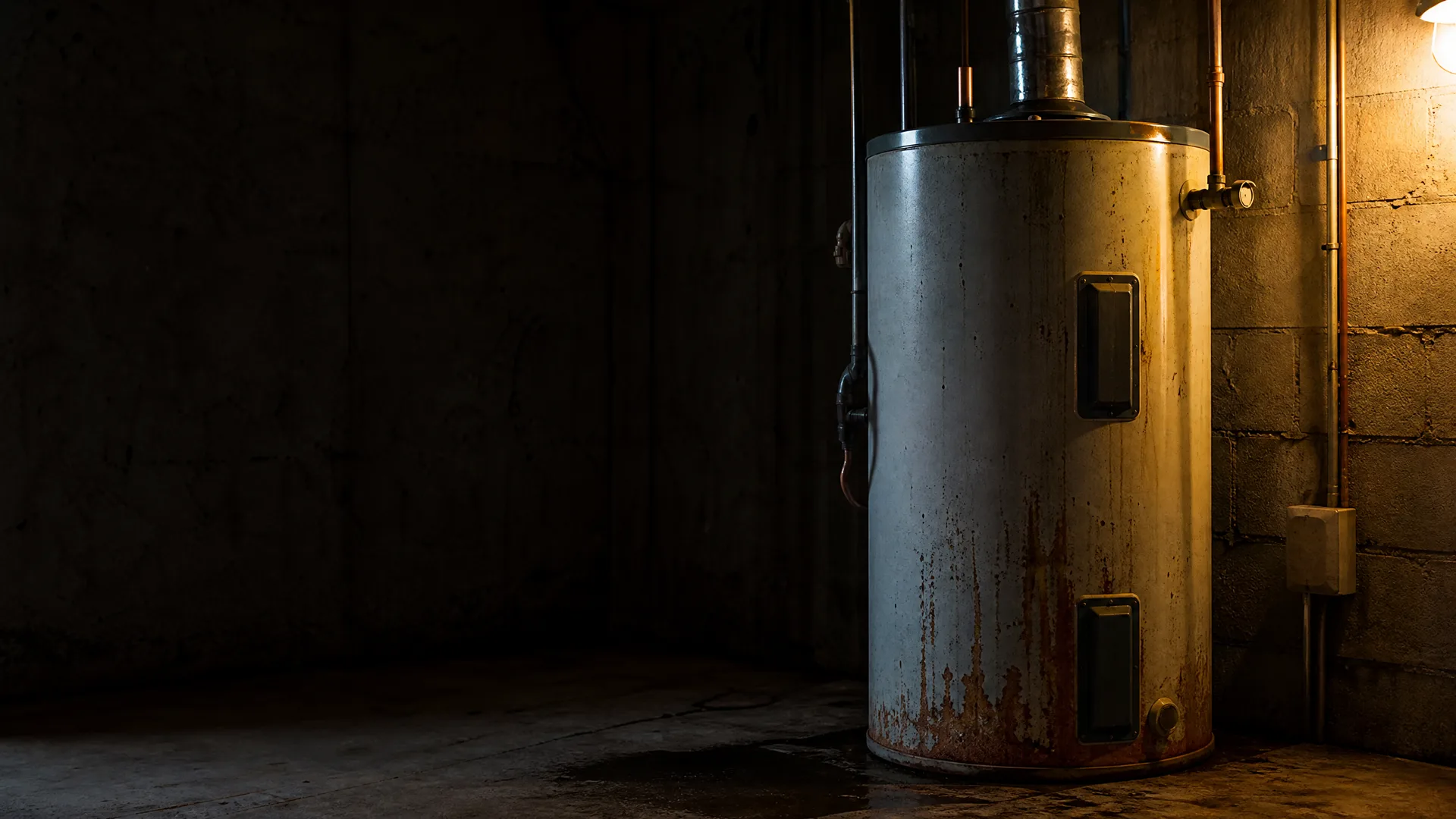
It's past eight and you're down in the utility room because the dryer buzzed and you went to get it. The bulb overhead is the bare kind, a little yellow. On your way past the water heater you see it, low on the tank where the steel meets the base: a dark stain, rust, with a thin crust where it's dried and re-wet more than once. You crouch and touch it. Damp. Not dripping, just damp, the kind of damp that's been there a while and you're only now the one who noticed. You stand there a second longer than you need to, working out how long it's actually been.
Send the form and stop researching installers for the new water heater.
You're not committing to anything by asking.
A gas water heater doesn't depend on the power grid to keep working, and that matters in a county where electricity costs more than almost anywhere else in the country. The burner underneath the tank fires on gas alone, so the only electrical part in most units is a thermocouple or control valve that takes almost nothing to run. That's part of why a well-maintained gas tank in Los Angeles can reach the back half of its 8 to 12 year range without strain. The failure point is rarely the gas supply or the burner itself. It's the tank. Steel corrodes from the inside once the glass lining wears through, and no fuel type changes that.
Tap water here carries dissolved minerals that settle out as sediment once they sit in a hot tank. Left alone, that layer builds on the tank floor and sits between the burner and the water above it, so the burner runs longer to do the same job. A flush once a year clears that layer out and lets the burner heat water directly again instead of through a buffer of sediment. It won't undo rust that's already started, and it won't extend the life of a tank with a failing lining. But on a tank that's still sound, it's the one piece of upkeep that slows down the clock instead of just watching it run.


A single failed part on a younger tank is worth fixing. The thermostat or heating element gets replaced and the tank keeps going.
A tank this old is closer to the point where the steel itself gives out. Replacing it now means choosing the timing instead of a leak choosing it for you.

A tank that fails doesn't always announce itself first. Sometimes the bottom seam lets go overnight, and the water goes wherever the floor slopes, usually toward drywall, baseboards, or whatever's stored nearby in the garage or utility closet. In a lot of Los Angeles homes that's a straight shot to a finished space, not a drain. Even a slow weep over a few weeks can soften subfloor or warp a cabinet base before anyone notices the smell.
If your tank is past the 8 to 12 year range and you've seen rust at the fittings or water pooling at the base, it's worth getting someone to look at it before it decides the timing for you. Once you fill out a form, the work of finding a plumber stops being yours. A contractor who covers your part of the county gets your information and reaches out, and you take it from there.

If your water heater runs on electricity, that rate shows up fast, since a tank has to keep reheating water all day long. It's a bigger reason to fix a dying electric tank now instead of waiting for it to fail on its own.
EIA-861 2025
Age and condition tell you almost everything. A tank under 8 years old that's lost a thermostat or a heating element is still worth fixing, since the steel itself is sound and the part is a small piece of the whole. Past the 8 to 12 year mark, the math changes, because what's failing by then is usually the tank wall, not a part you can swap out. Rust at the base, a popping sound from the burner, water pooling where there shouldn't be any: these point to a tank closer to the end than the middle, no matter what the calendar says. Gas works in the household's favor here. Without grid power or a hard freeze pulling against it, a gas tank in Los Angeles County tends to use the years it's built for instead of losing them early. The one thing age won't show you is whether the tank ever fit the household using it. A unit sized for one or two people will run short with more than that drawing from it, and that shows up as a cold shower, not a stain on the floor. None of this calls for guesswork. Look at the tank, note what you see, and you'll know which side of the line it's on. If it's time to replace it, sending the form is the last thing you have to do yourself. From there, finding someone to take the job on is no longer something you're carrying.
Matched to your water heater job