Why your hot water is lukewarm in California

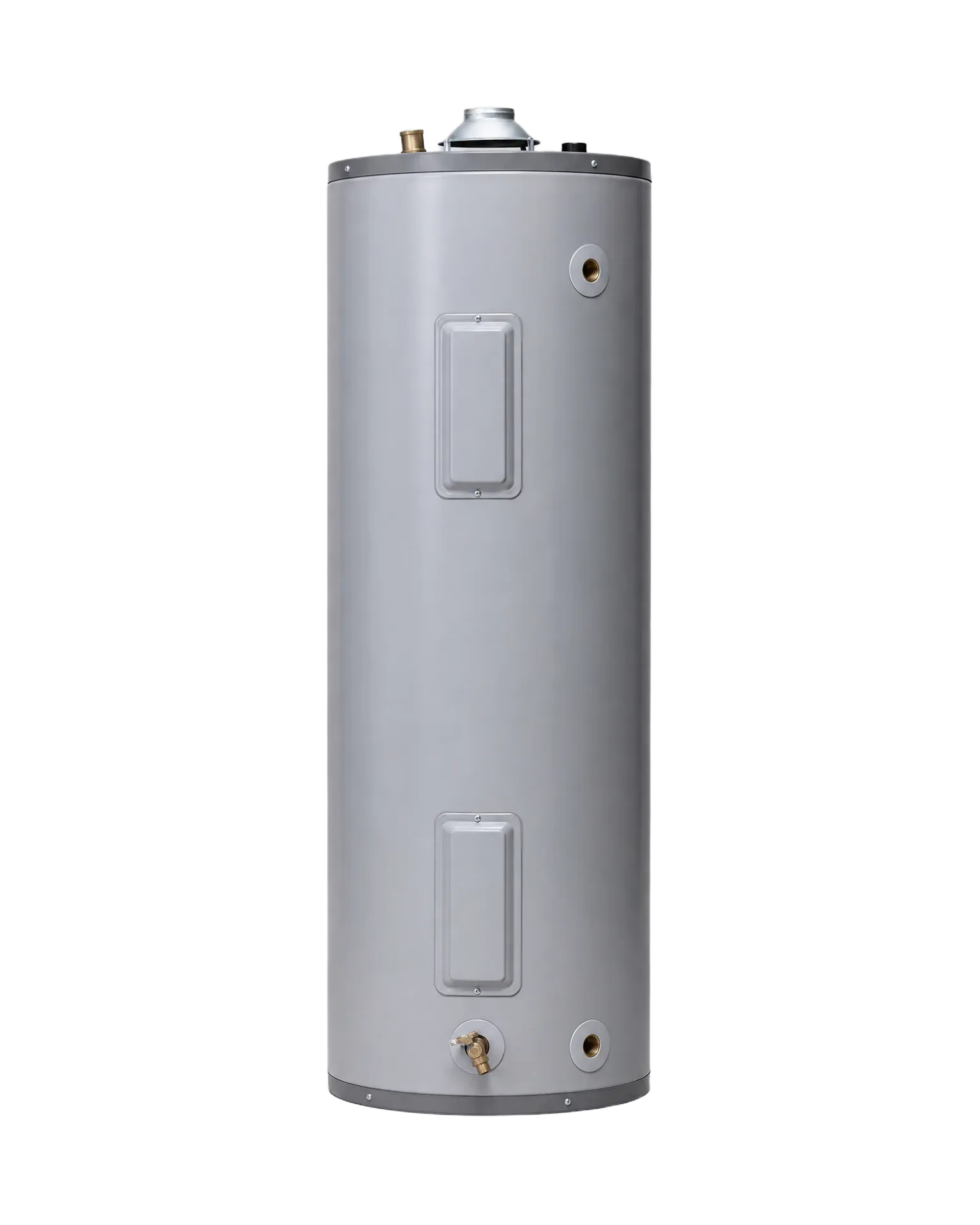
A tall cylindrical gray water heater with two access panels, brass fittings and a drain valve, standing against a plain light gray background.
Send it today

Why is my hot water lukewarm instead of hot?

You turn on the tap expecting hot water and get something in between, not cold enough to complain about but not what you want for a shower or the dishes. It's not shutting off completely, which almost makes it more confusing. You've checked that the burner or element is running. Something is keeping it from finishing the job, and you want to know what before you decide whether this is worth calling someone about.

Something inside the tank is limiting how hot the water gets before it reaches the tap

Lukewarm water almost always means the heater is working, just not all the way. On a gas unit, a thermocouple or sensor that's reading wrong can hold the flame low even when the thermostat calls for more heat. On an electric unit, one of the two heating elements can fail while the other still runs, which gets you warm water instead of hot. A thermostat set lower than it reads, or sediment built up at the bottom of the tank, can do the same thing. Since most homes in California heat water with gas, a gas control or thermocouple issue is the more likely cause here. Either way, the fix is inside the tank, not something you can tell from the tap.

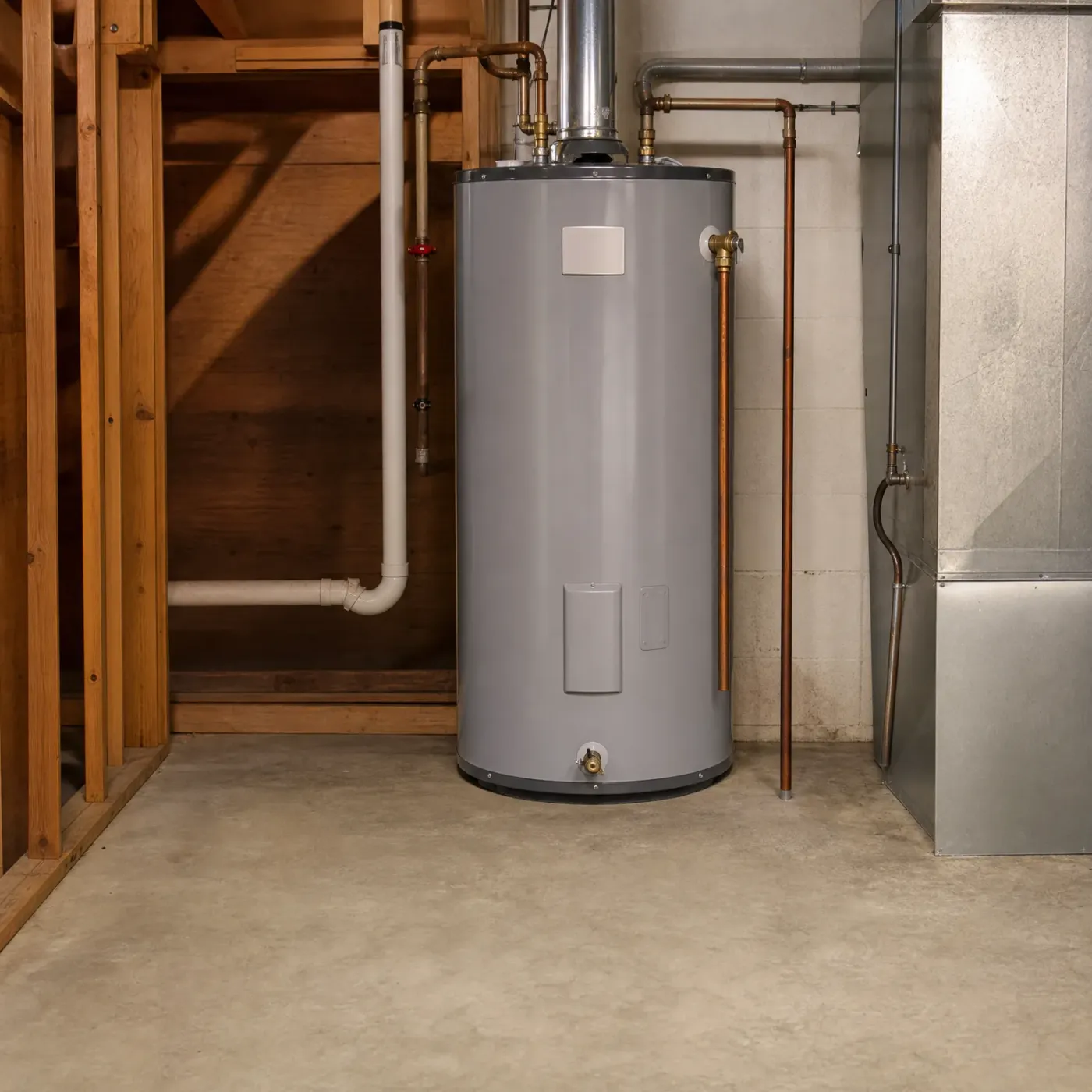
A gray cylindrical water heater stands on a concrete basement floor between an unfinished wood stud wall and a metal furnace duct, with copper and PVC pipes running along the concrete block wall.

Working as it should

A gas water heater that's heating properly gives you a steady supply of hot water, tap after tap, without the temperature drifting down partway through. The burner lights, runs its cycle, and the tank holds that heat until you draw on it again.
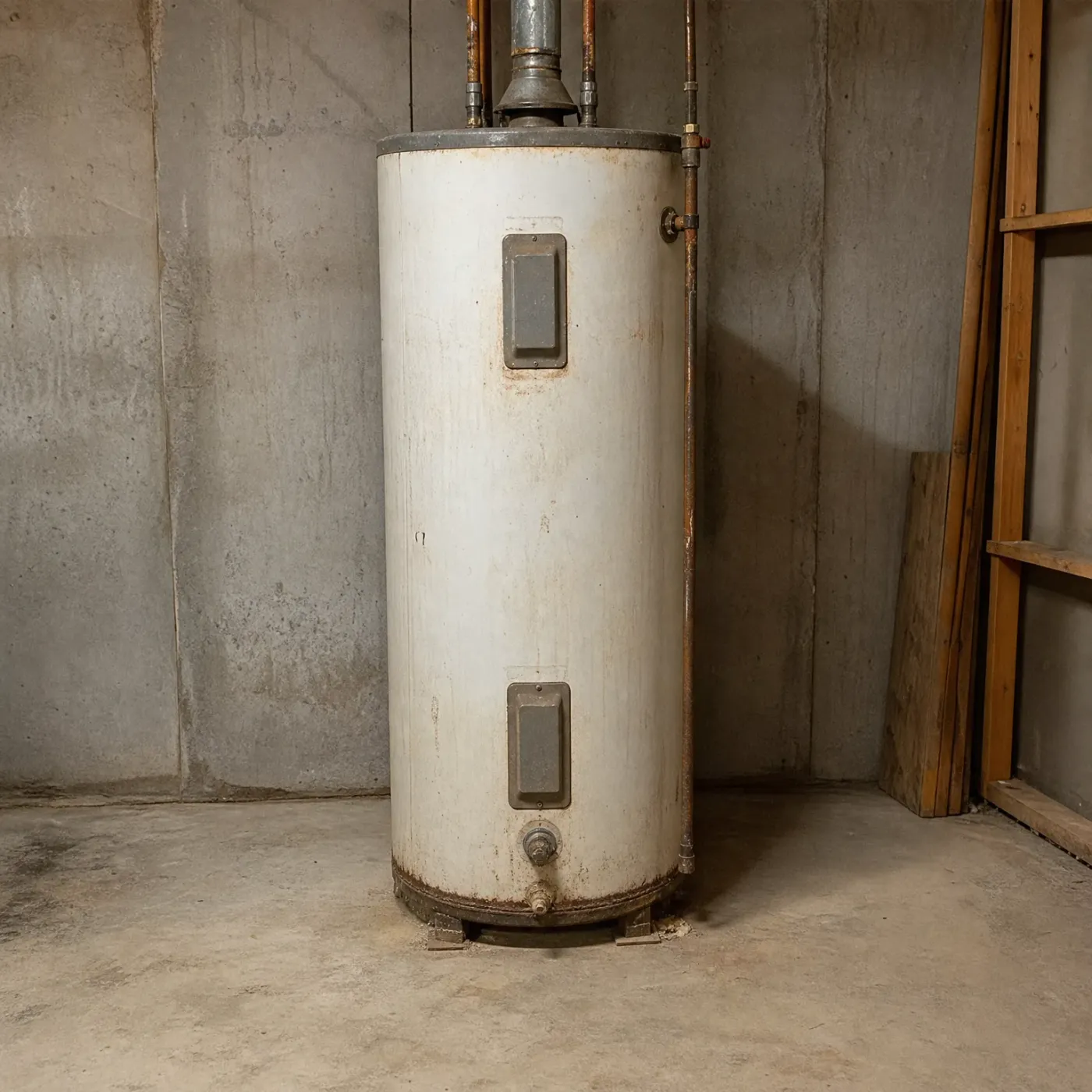
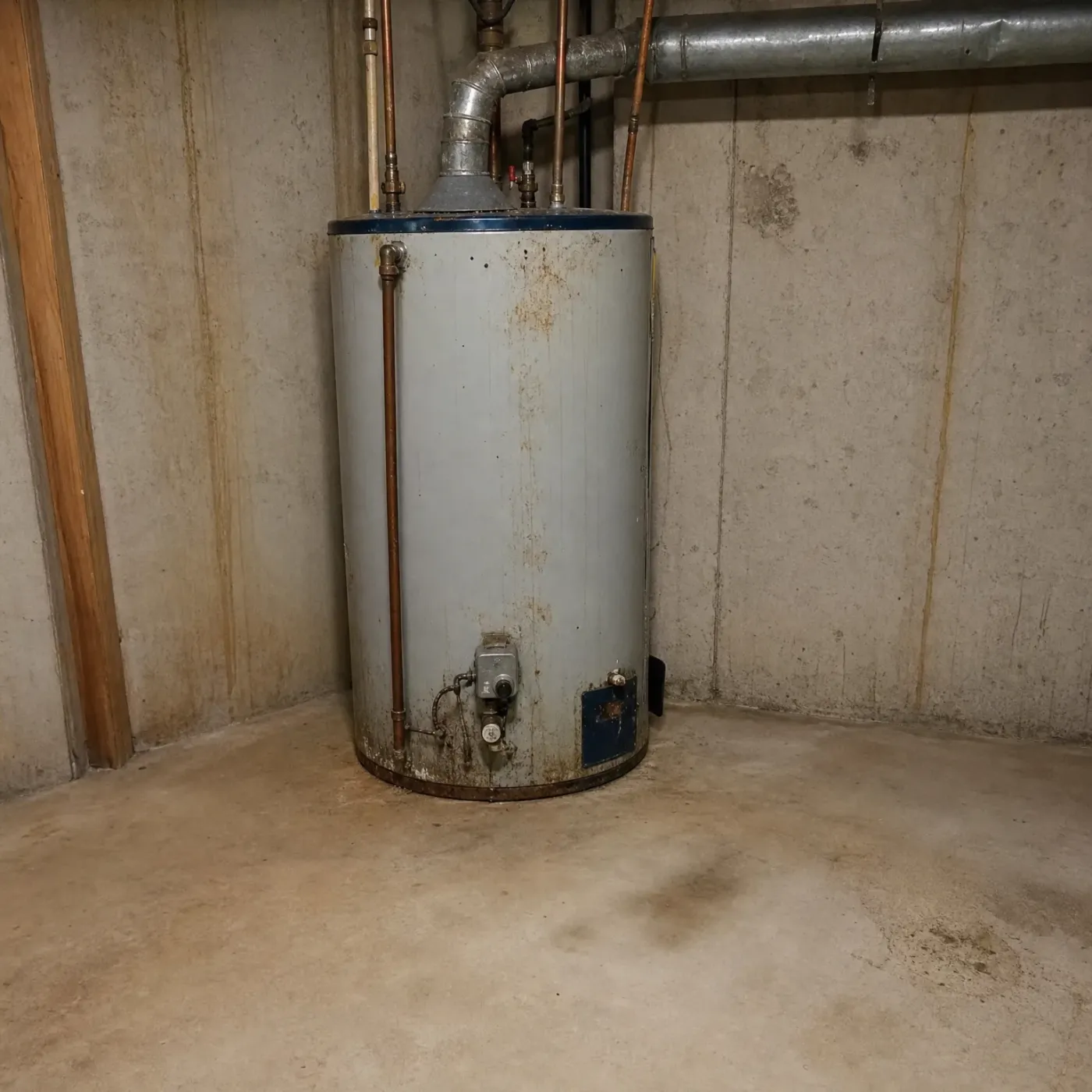
A rusted white cylindrical water heater with two access panels stands in a concrete-walled basement corner, with pipes rising from its top and wooden boards leaning against the wall at right.

Failing gradually

Rust on the tank and corroded thermostat panels point to a unit on its way out, not one that quit all at once. One element or thermostat can fail while the other still works, which is why you get lukewarm water instead of none. Left alone, that second one usually follows.

Sediment or Dip Tube

Sediment buildup

  • Minerals in the water settle at the bottom of the tank and build a layer that sits between the burner and the water above it.
  • That layer has to heat through before the water does, so the burner runs longer and still hands you less hot water than it used to.
  • Homes on well water or with harder supply lines see this build up faster than homes that don't.
  • A tank that's been fine for years can start doing this gradually, so the drop in temperature feels sudden even though the cause wasn't.
  • Flushing the tank clears it out, but if it's gone on long enough the sediment can have already scorched the bottom of the tank.

Failing dip tube

  • The dip tube sends cold water down to the bottom of the tank where the burner heats it, keeping it separate from the hot water waiting at the top.
  • When it cracks or breaks, incoming cold water mixes straight into the hot water near the outlet instead of going where the burner can reach it.
  • You get lukewarm water right away, even on a tank that's otherwise heating fine and has no sediment problem at all.
  • Older dip tubes made from certain plastics are known to break down over years of exposure to hot water.
  • A technician can check this by pulling the cold inlet fitting and inspecting the tube directly, which rules it in or out fast.
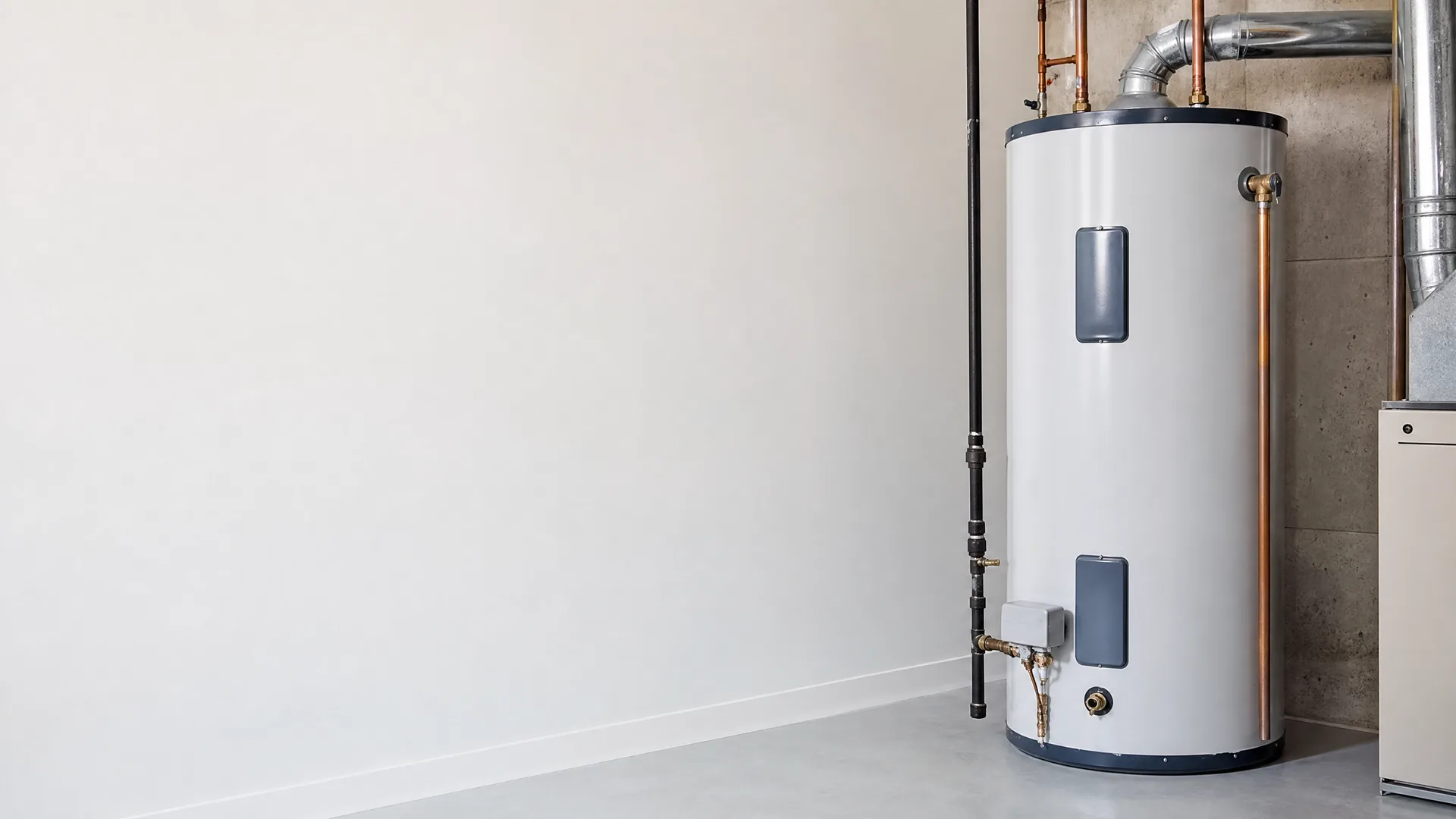
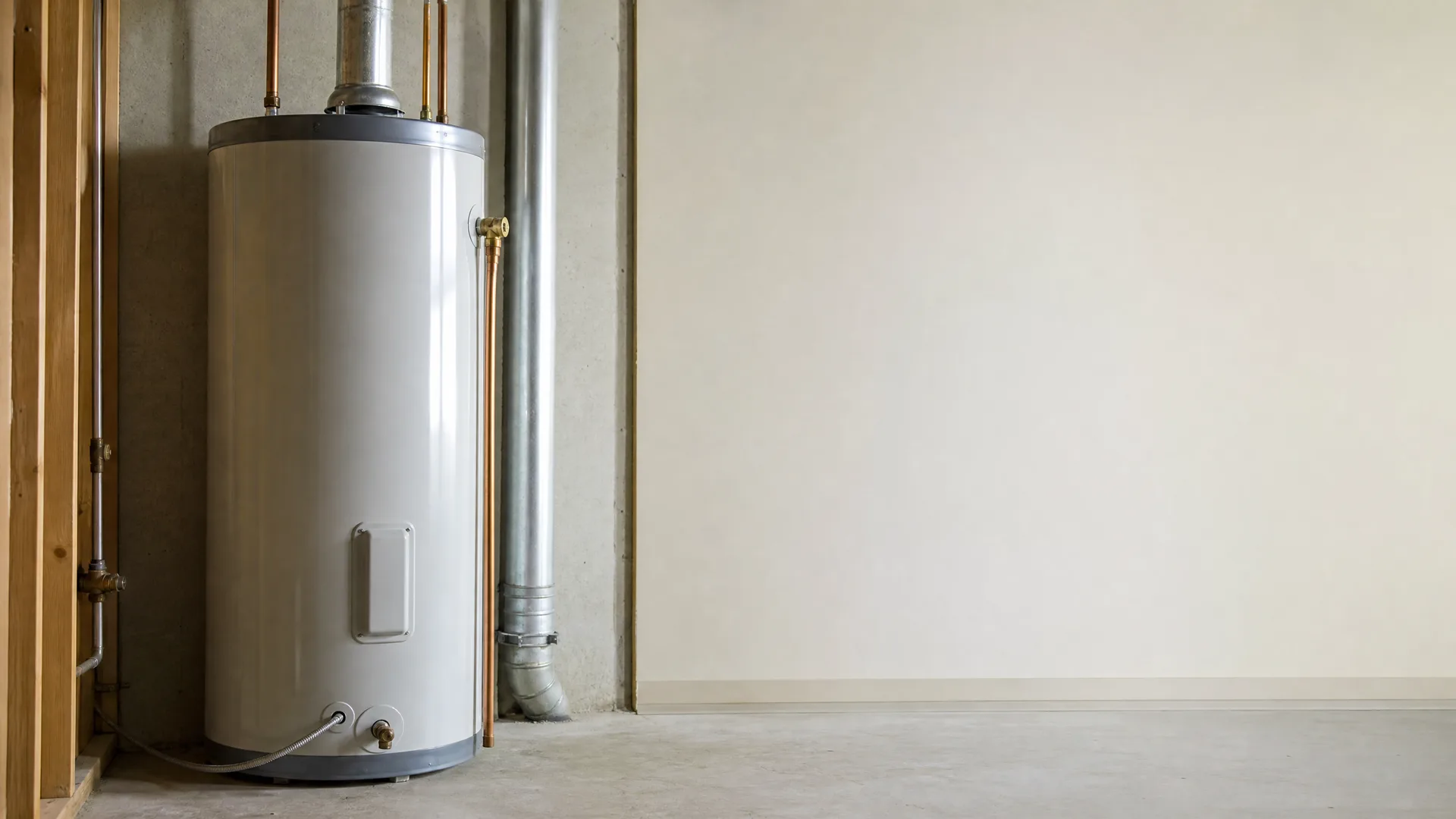
A white cylindrical water heater with copper pipes and a metal flue stands in the corner of an empty room with bare concrete floor, wood framing at left, and a plain light-colored wall.

The thermostat lies to you

The dial on a gas water heater is a guess, not a readout. It's set to a number, but the water coming out of the tap can run ten or fifteen degrees below that if the thermocouple is misreading the flame or the gas valve itself is wearing out. You can turn the dial up all you want. If the valve isn't sending the signal it should, the burner won't run long enough to catch up, and the water stays in that in-between range no matter where you set it.

A white cylindrical water heater with copper and black pipes stands against a plain white wall on a gray floor, beside a concrete wall and metal ductwork.

Cold water mixes in faster

A full tank keeps hot water on top and lets you draw from it before the cold water coming in underneath has a chance to mix. Sediment and a weak burner both shrink that usable layer, so incoming cold water reaches the outlet pipe sooner than it should. That's why the problem often shows up partway through a shower rather than right away. The first gallon or two can feel fine, then it drops, because the tank ran out of properly heated water faster than it used to.

61% of homes statewide heat with gas

Most houses around you run on gas for hot water, same as yours probably does. That means the fix for lukewarm taps is usually in the burner, the thermocouple, or the gas valve, not an electric element.

ACS 2020-2024 5-year B25040

A smiling bearded man in a dark green hooded jacket and blue t-shirt sits on a couch in a living room with shelves, a potted plant, and a bowl of popcorn on a wooden table.
A smiling man in a green long-sleeved shirt sits on a beige sofa in a living room, with a bowl of popcorn in the foreground, a large potted plant and shelving behind him.
A smiling man in a dark blue T-shirt sits on a couch in a dimly lit living room with a bowl of popcorn and a remote on a wooden table, a lit floor lamp and bookshelves behind him, and windows showing greenery.
A smiling bearded man in a dark green long-sleeved shirt sits on a leather couch in a living room, with a bowl of popcorn and a remote control on a wooden table in the foreground.

Hand off the search today

Describe what your water heater is doing once, in one form.

No fee to send it, and nothing to sign.

What you'll notice first

It shows up at the end of a shower, not the start. The first few minutes run fine, then the water drifts down while you're still rinsing. Dishes come out greasy because the water never got hot enough to cut through anything. Your gas bill doesn't drop even though the water's worse, since the burner is working just as hard, maybe harder, to get you less heat than before. You might catch a faint gas smell near the tank, or notice the pilot looks weaker than it used to.

What it puts at risk

A tank that's struggling to hold temperature is usually working harder to do it, and a burner that runs longer than it should wears out the parts around it faster, the thermocouple, the gas valve. Left alone, lukewarm can turn into cold, often without much warning. There's also the gas itself to think about. A valve or thermocouple that's misreading the flame isn't just a comfort problem, it's worth having someone look at before it becomes a bigger repair or a safety issue in the house.

An aging gas water heater with rust streaks stands in the corner of a concrete-walled basement, with copper pipes and a metal flue duct running overhead.
Before you get your water heater repair
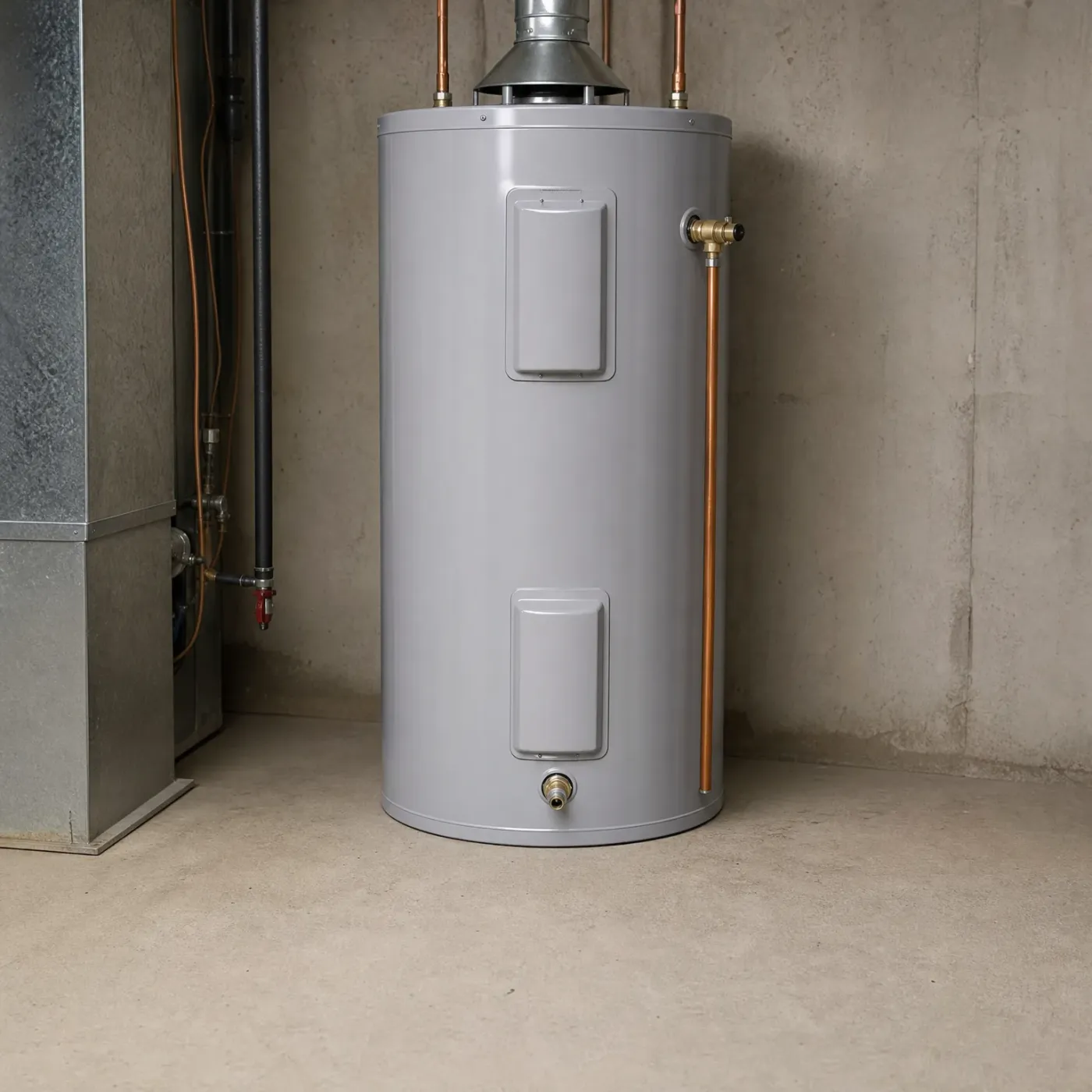
A gray cylindrical water heater with copper piping and a flue stands on a concrete floor in a basement corner beside ductwork and metal equipment.
After you get your water heater repair

What's Behind Your Lukewarm Tap

  • Lukewarm water almost always traces back to the burner, the thermocouple, or the gas valve, not an electric part.
  • Sediment at the bottom of the tank sits between the burner and the water, so the burner runs longer and still delivers less heat.
  • A thermostat set correctly can still hand you water ten or fifteen degrees cooler if the thermocouple misreads the flame.
  • The problem usually shows up partway through a shower, once the first few minutes of hot water run out.
  • A gas water heater working right holds its temperature tap after tap without drifting down mid-use.
  • Fixing this means a licensed plumber checking the burner, thermocouple, and gas valve in person, not guessing from the dial.

Lukewarm water from a gas water heater comes down to three places: the burner, the thermocouple, and the gas valve. Sediment sitting at the bottom of the tank makes the burner work harder and still fall short, because that layer has to heat through before the water above it does. The dial on the tank can read correctly and the water still comes out ten or fifteen degrees cooler than it should, because the dial only sets a target. It doesn't measure what's actually coming out of the tap. The thermocouple does that job, and when it misreads the flame, the gas valve backs off too soon.

You'll likely notice it the same way each time. The first few minutes run hot, then it drifts down while you're still mid-shower. A working heater doesn't do that. It holds its temperature from the first tap to the last, whether that's a quick rinse or a full load of dishes.

None of this gets sorted out by adjusting the dial or waiting it out. A licensed plumber needs to look at the burner, the thermocouple, and the gas valve directly, since all three can cause the same symptom for different reasons. Once you send the request, you're done with the part that usually eats the evening: searching for someone licensed, calling a few numbers, explaining the problem again on each call, and sorting through quotes that don't tell you much. Someone else takes that on from here.

A woman in a dark gray sweater reclines on a couch with her eyes closed and a knit blanket over her lap, an open book resting face-down in front of her, with a lit table lamp and shelving blurred in the background.
A bearded man in a dark navy sweater over a collared shirt smiles and looks off to the side while seated at a dinner table with a glass of red wine, a lit candle, and a plate of food in the foreground of a dimly lit room.

Water Heater Repair

Hand off the water heater problem

Fill out one short form instead of calling around.

A black smartphone standing upright against a plain light gray background, its screen filled with solid green.
Step 1 of 3: Equipment