



Profile view of a bearded man wearing a black baseball cap and a dark gray T-shirt against a plain light background.

Why your water heater is slow to recover in California

Step 1 of 3: Equipment

A slow-to-recover water heater usually means the burner can't keep up with the water coming in, or it's not getting the gas or heat it needs to. In a gas water heater, that points to a burner that isn't reaching full flame, a dip tube that's broken so cold water mixes straight into the hot, or sediment built up on the bottom of the tank acting like a blanket between the flame and the water. Most homes in California heat with gas, so it's usually one of these rather than a wiring or breaker problem. If your showers used to run hot for fifteen minutes and now turn lukewarm in five, something in that chain has changed, and it's worth having a contractor check the burner, the dip tube, and the tank itself before you assume the whole unit needs replacing.

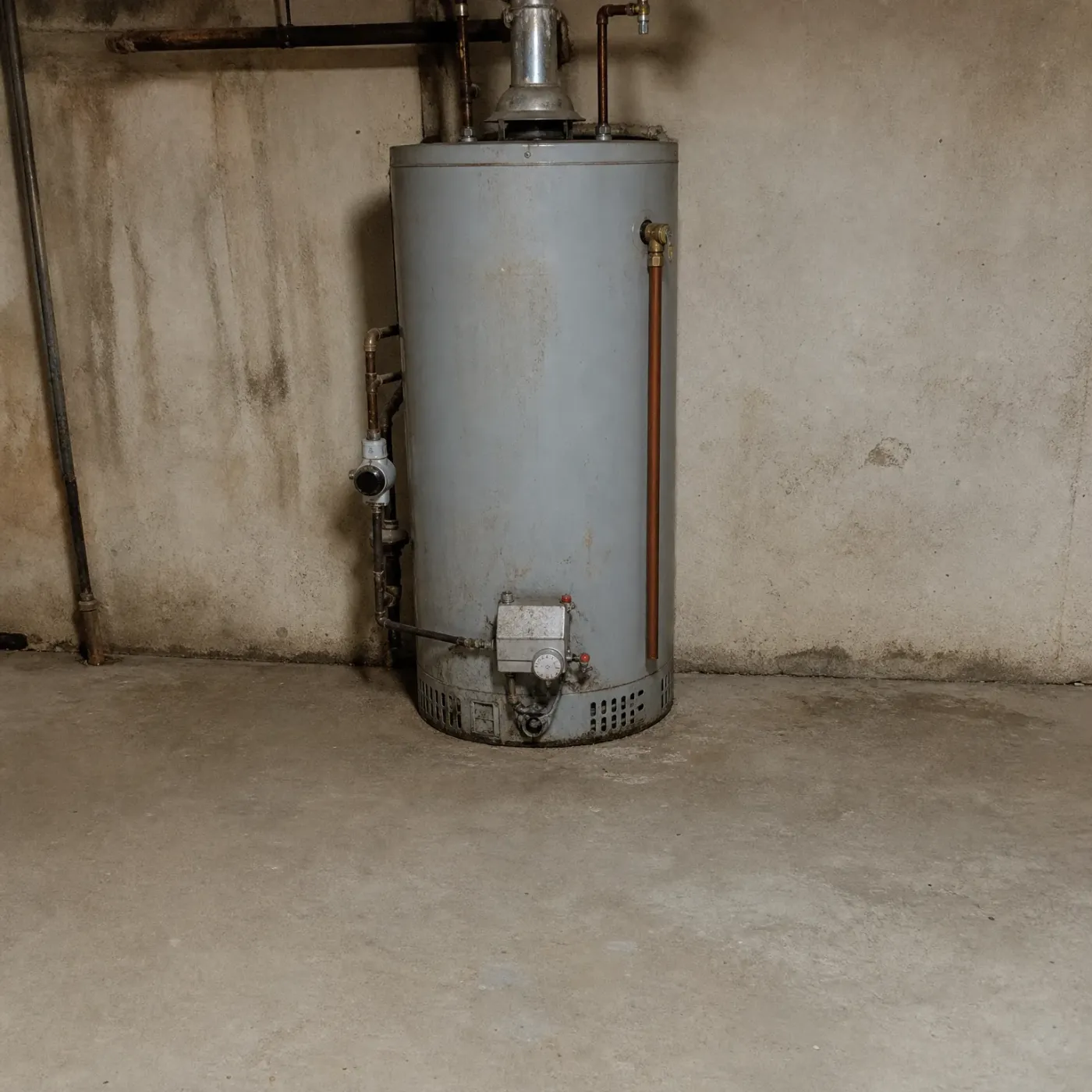
An older gray cylindrical gas water heater with copper and steel piping and a flue, standing on a concrete floor against a stained concrete wall.
Before you get your water heater repair
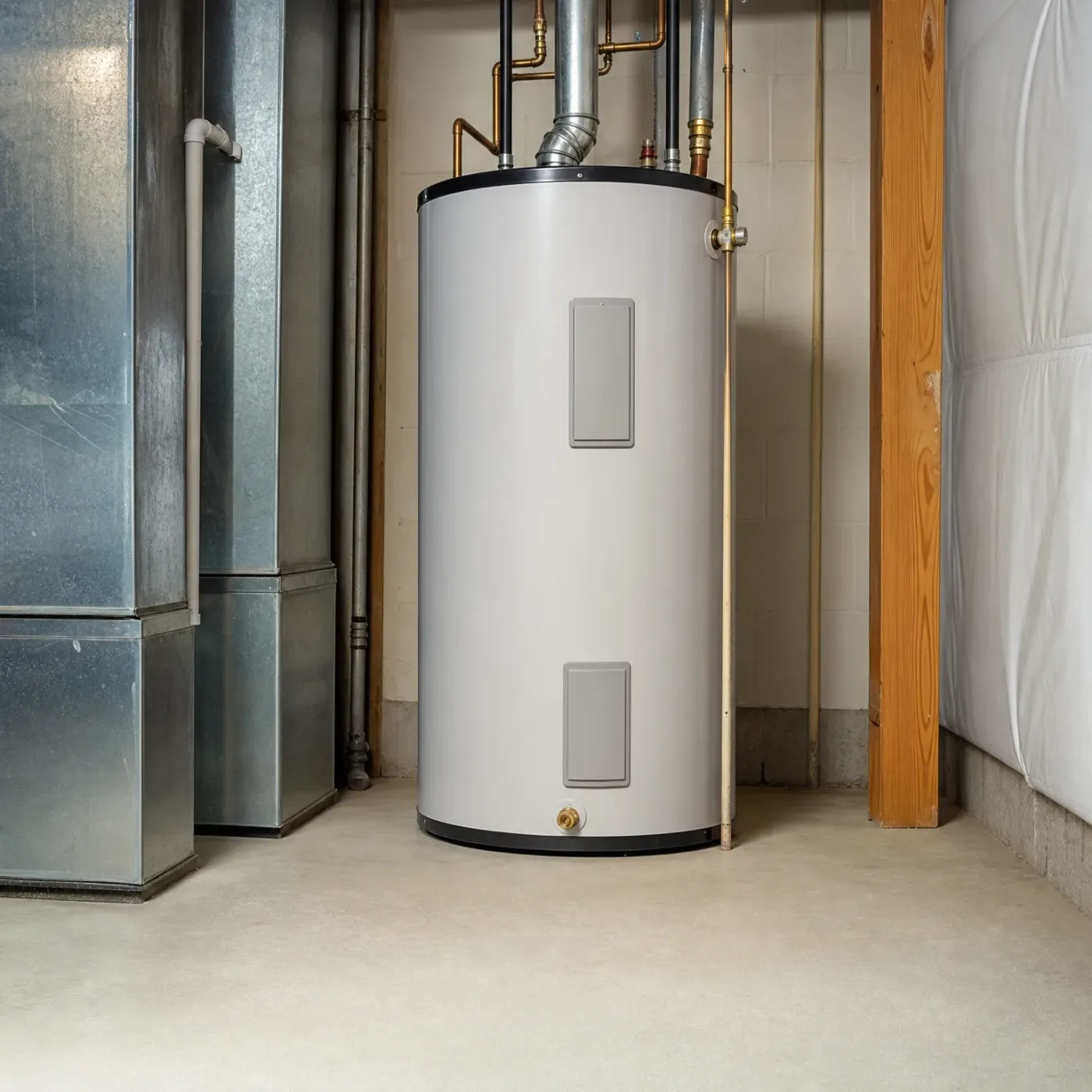
A white cylindrical water heater with two access panels stands on a concrete floor in a basement corner, beside galvanized ductwork, copper and metal pipes, a wooden post, and a concrete block wall.
After you get your water heater repair

A gas water heater recovers by running the burner long enough to heat the incoming cold water back up to your set temperature. If the burner is firing low, or sediment on the tank bottom is blocking heat from reaching the water, recovery slows down no matter how large the tank is.

Sediment buildup is common in areas with harder water, and a thick enough layer acts like insulation between the burner and the water above it. Once it's cleared and the burner is firing at full flame, recovery time goes back to what the tank was built to do.

A gray-haired man in a dark sweater sits on a light gray sofa in a living room, looking toward a sunlit window with trees outside.
A gray-haired man in a dark blue sweater sits on a light gray sofa in a sunlit living room, looking off to the side, with a potted plant, shelving unit, and large glass doors behind him.
A bearded man with graying hair in a dark green sweater sits on a sofa in a living room, looking off to the side, with a sliding glass door and a dim kitchen doorway behind him.
A gray-haired man in a dark knit sweater sits on a light gray sofa in a living room, looking toward a sunlit window, with houseplants, a lamp, and framed art in the background.

What you notice first

It usually shows up at the same point every day. The shower runs cold halfway through, or the dishwasher gets water that was never really hot. If you run a load of laundry on hot right after someone showers, the washer may not get hot water at all. A tank that used to keep up with the household now runs out partway, and refilling it takes longer than it used to. None of this means the tank is empty of water, it means the burner isn't putting heat into the water fast enough to keep pace with what you're using.

What it costs you to wait

A burner running low or blocked by sediment doesn't fix itself, and it keeps burning gas the whole time it's trying to catch up. Since power costs so much in California, a gas water heater working harder than it should is still cheaper to run than switching to electric heat, but it's burning more gas than a water heater that's recovering properly. Left alone, a dip tube that's broken keeps mixing cold water into the hot, and sediment keeps building on the tank bottom. Both get worse on their own, not better, and both are easier to deal with before the tank is struggling on every cycle.

61% of homes statewide heat with gas

Odds are your water heater runs on gas, like most homes in the state. That means slow recovery almost always traces back to the burner itself, not an electric element. A technician who works on gas units regularly knows where to look first.

ACS 2020-2024 5-year B25040

Living with slow recovery

You work around it. Showers get scheduled so nobody runs hot water back to back. Laundry waits until the tank has had time to recover. A bigger household means someone goes without, and the gas bill doesn't drop just because the burner is underperforming. It still runs, just longer and less effectively, to make the same amount of hot water. None of this tells you which part has failed, and guessing wrong means paying for a part that wasn't the problem.


After a proper diagnosis

A technician who works on gas water heaters checks the burner flame, the thermocouple, the dip tube and the sediment at the bottom of the tank, in that order, until the actual cause turns up. Once that's fixed, recovery goes back to matching your tank's rating instead of lagging behind it. You stop timing showers around the water heater. The fix is specific to what failed in your unit, not a guess at what might be wrong.

A middle-aged woman with shoulder-length dark hair, wearing a gray cardigan over a cream top, sits in an upholstered armchair and looks toward a sunlit window, with a shelf holding framed pictures and a plant behind her.
A woman and a child wrapped together in a knitted gray blanket on a couch, with the child's head resting on her shoulder and a lit table lamp and houseplant in the background.

Skip calling around

A burner that won't fire to full flame or a tank full of sediment isn't something you fix by waiting it out, and with gas prices and power costs both high here, a water heater running below par costs you either way. What it takes is someone who can look at the burner, the gas supply and the tank itself and tell you which one is actually failing. Finding that person is usually the slow part. You'd normally be searching for gas water heater repair, calling a few places, describing the same cold-shower problem three or four times, then weighing quotes against each other without knowing enough to judge them. Here, the request goes to one licensed contractor local to you, someone who works on gas water heaters all year and has seen this exact kind of recovery problem plenty of times. No explaining it over and over, no juggling calls from competing companies. Just one person who already knows what to check first.

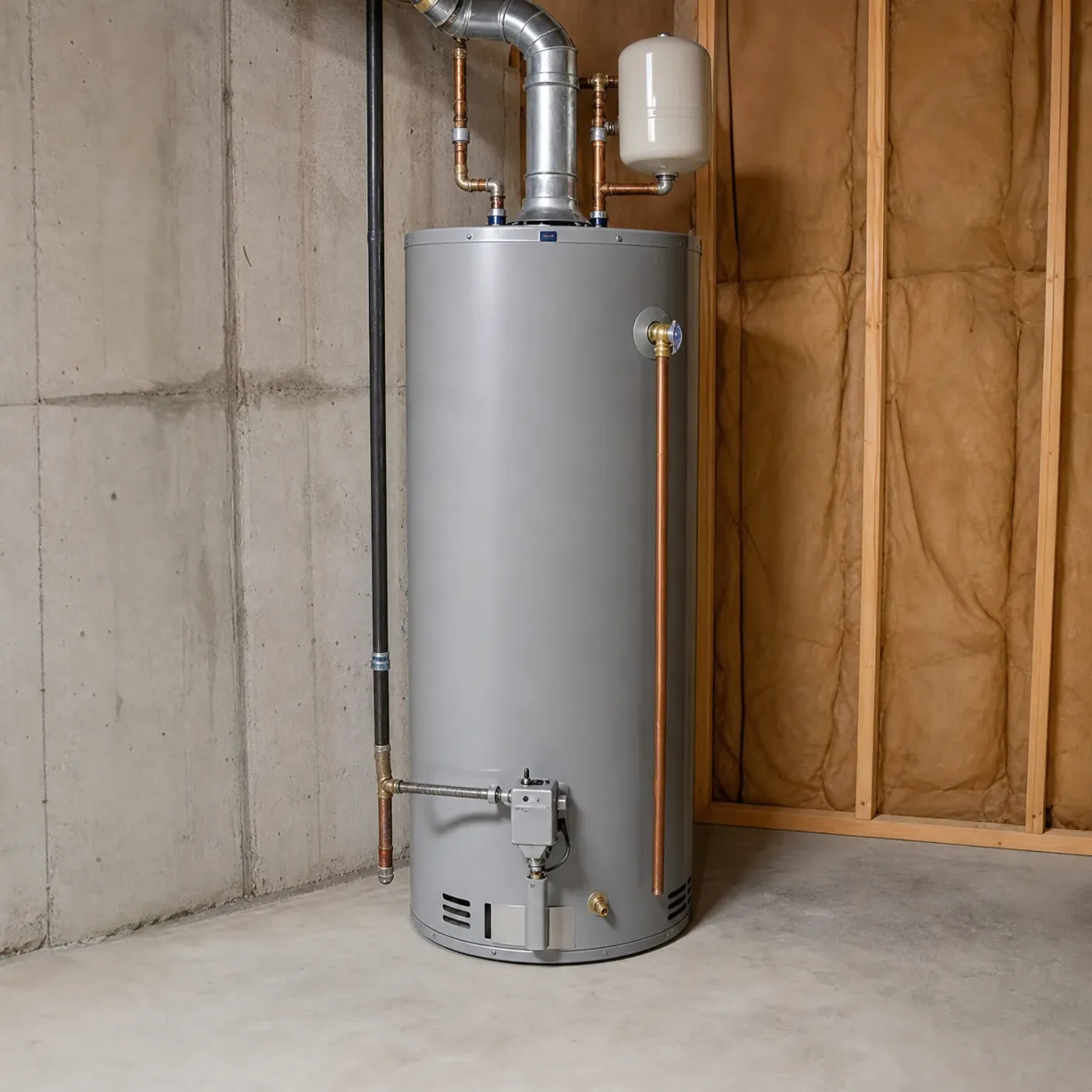
A gray cylindrical gas water heater with copper piping, flue vent, and a small expansion tank stands in a basement corner between a concrete wall and an insulated stud wall.

Working the way it should

The burner lights, reaches full flame, and heats the incoming water on schedule. The flue draws properly and the expansion tank handles pressure changes. Recovery time stays consistent, shower after shower, load after load.

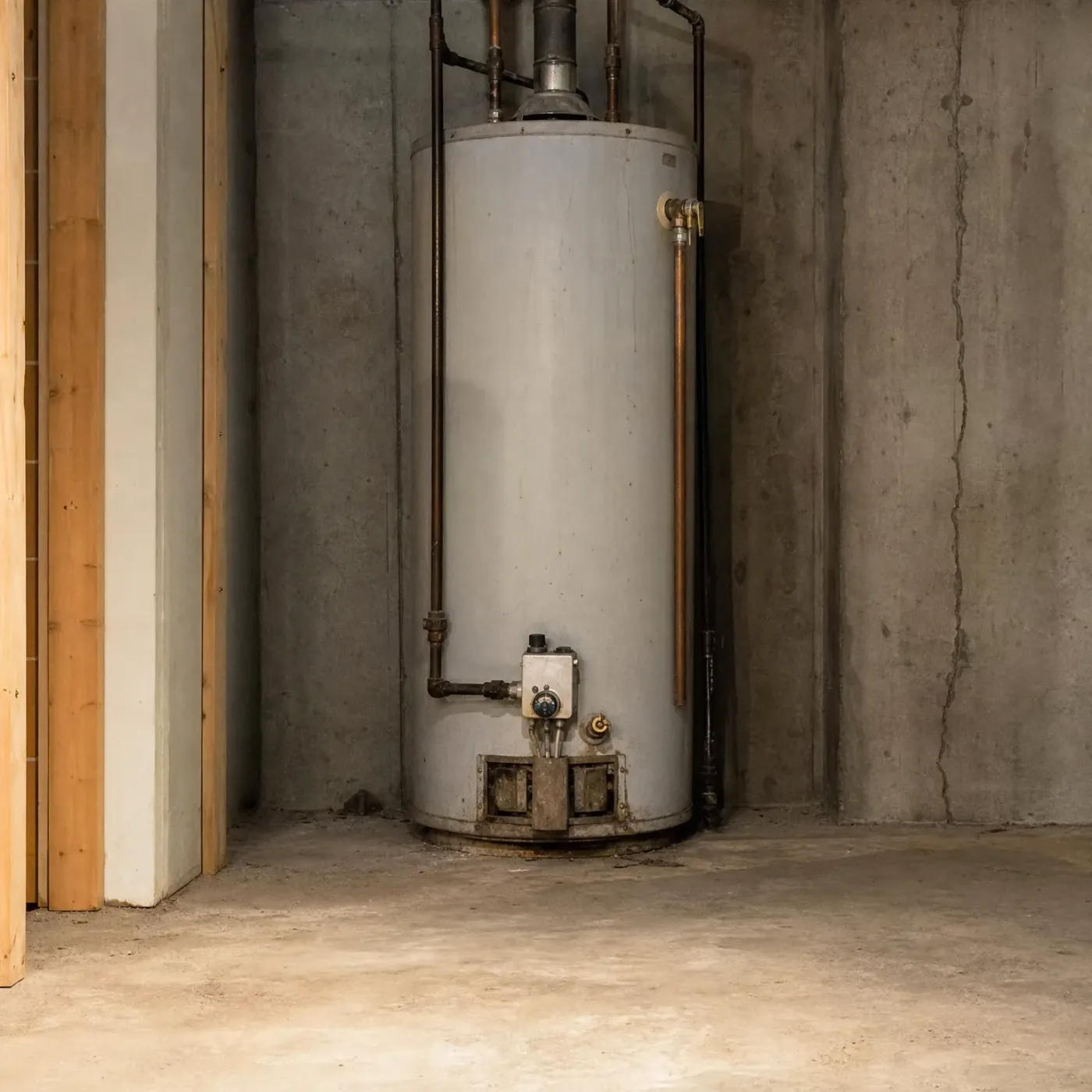
An older gas water heater with copper and black pipes stands in the corner of a bare concrete basement next to a wood-framed partition wall.

Falling behind

Sediment has built up on the tank bottom, and the gas control valve may be firing lower than it should. The burner struggles to keep pace with water moving through the tank, and recovery stretches out longer each week.

Why does my hot water keep running out faster than it used to

You notice it in small ways at first. The water takes longer to get hot at the tap, or it never quite reaches the temperature you set. Someone showers and the next person gets lukewarm water instead of hot. The tank might make a low rumbling or popping sound as it heats, which usually means sediment sitting between the burner and the water. Left alone, a burner struggling to reach full flame tends to get worse, not better, and a tank running hotter than it should at the bottom can shorten its life. None of this means the water heater is done. It means something specific inside it needs attention.

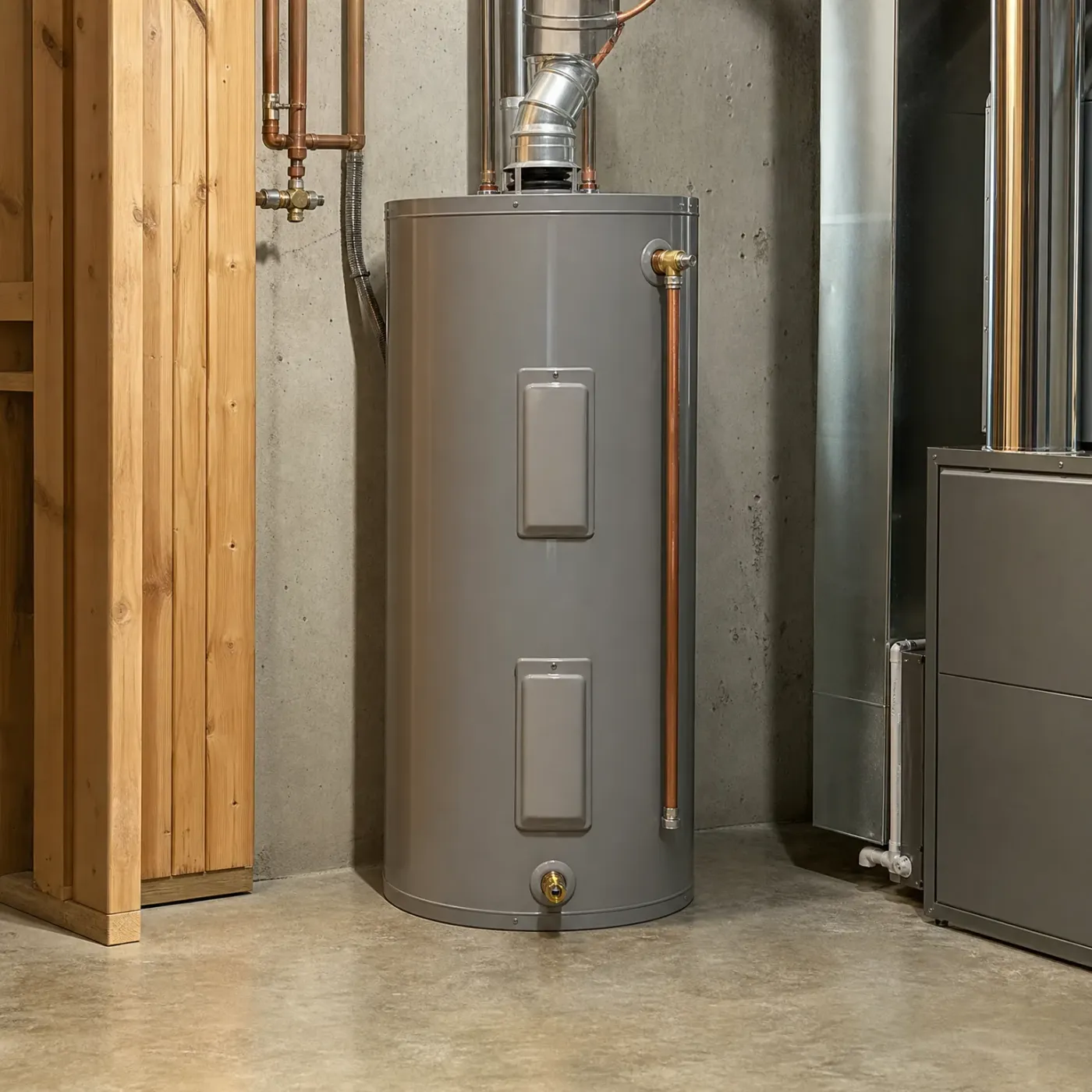
A gray cylindrical water heater with two access panels and copper piping stands against a concrete wall in a basement, beside wood framing and metal ductwork.

A tank that's holding up

This one's clean, properly vented, and plumbed in with room to service it. The flue runs straight up, the pressure relief valve is clear, and nothing on the outside hints at trouble underneath. A water heater in this shape recovers on schedule because nothing's standing in the burner's way.

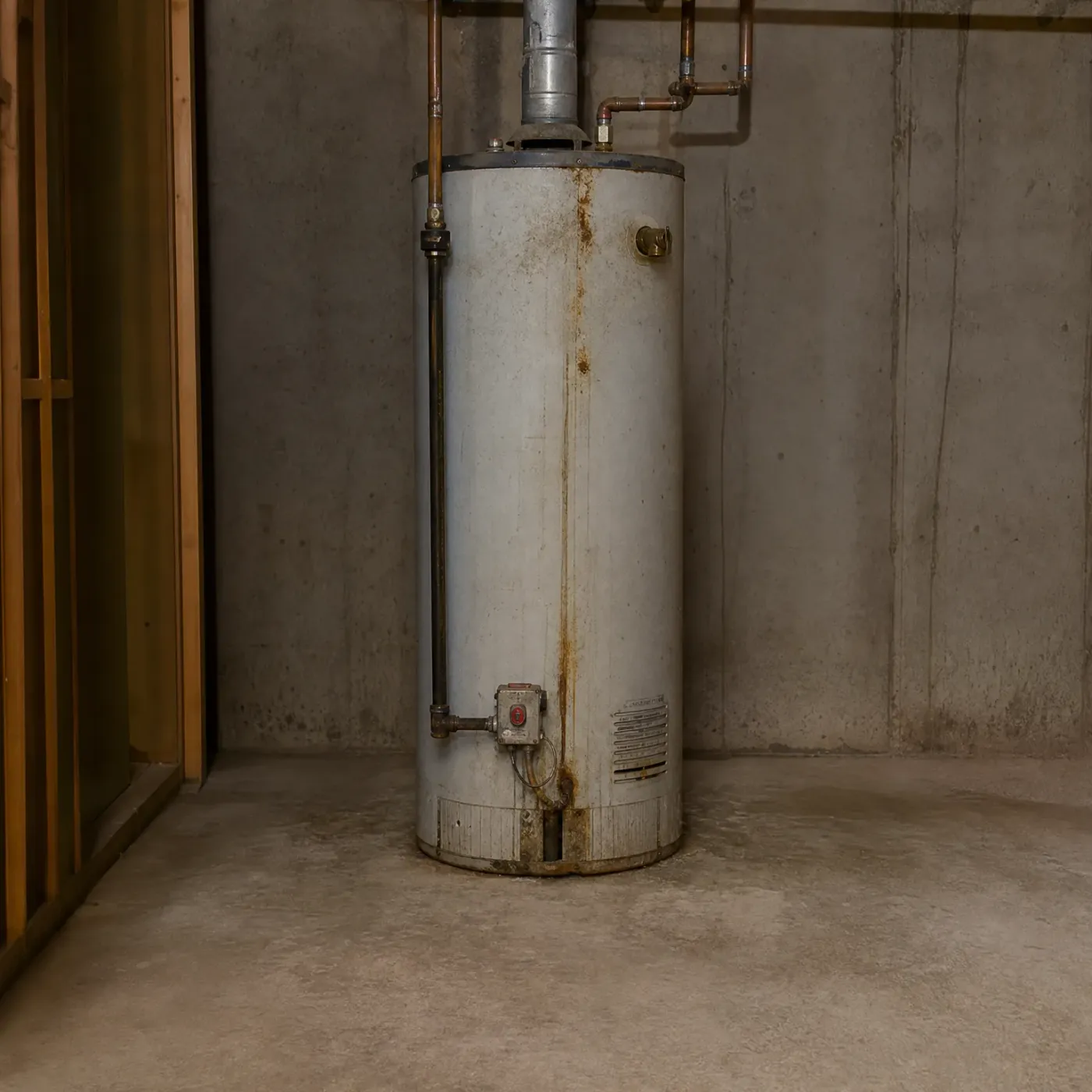
An aging rust-streaked gas water heater with copper and galvanized pipes stands against a bare concrete basement wall beside wooden stud framing.

A tank past its prime

Rust has worked its way across the whole jacket, and that kind of corrosion doesn't stay on the surface. Inside, sediment builds up the same way over years, insulating the tank bottom from the burner's heat. By the time it looks like this outside, slow recovery is the least of what's going wrong.

A closed laptop and a cream mug of coffee on a coaster sit on a dark wooden table, with a potted plant at left and a kitchen counter, tiled backsplash and shelf of ceramics in the background.

A slow water heater has a reason behind it

Slow recovery comes down to the burner. Either it's not reaching full flame, or sediment on the tank bottom is keeping the heat from getting to the water. A gas technician who works on these tanks every week knows which one it is within a few minutes of looking.

Instead of searching around for someone to call, getting quotes from a few companies, and explaining the same problem over and over, you're matched with one licensed plumber local to your area. Someone who sees this exact failure on gas water heaters all the time, and can tell you straight what's wrong and what it takes to fix it.

A living room corner with a light beige sofa holding a textured taupe cushion, a large ceramic vase of olive branches by a window, a framed neutral artwork on the wall, and a dark bowl with stacked books in the foreground.
Kitchen corner with cream upper cabinets, oak lower cabinets, white marble-look countertop, beige tile backsplash, a ceramic vase of greenery, a wooden cutting board and bowl, and a black-framed window at right.
Interior corner of a room with a white-framed window and wide sill, beige walls with panel molding, a wooden cabinet holding a ceramic vase with a green leafy plant, and blurred shrubs and trees outside.
A wood-framed armchair with beige cushions and a woven lumbar pillow sits in a corner beside a large window overlooking green trees, with a tall ceramic vase holding leafy branches on the left and plaster walls and wood flooring.
Interior corner with a white-framed window above a sill, beige walls with baseboard molding, a greige shaker-style cabinet with brass knobs and a potted plant on top, light wood flooring and a woven jute rug.
A dark-framed six-pane window with white trim and sill set in gray horizontal lap siding, with hydrangea shrubs below and a white column and shingled roof section at left.

Describe it once

The pro who reaches out is licensed in California.

Describe it once

It costs nothing to send, and you don't have to hire anyone.