Golden dry grass-covered rolling hills dotted with scattered dark oak trees, with distant hazy ridgelines and a clear pale blue sky.Find a water heater pro

Why your water heater makes popping noises in California

Tell a local repair pro what your water heater is doing.

That popping sound is coming from inside the tank. Water heaters in most California homes run on gas, and the burner sits under a steel tank that collects sediment over time. As that layer builds up, water gets trapped underneath it. When the burner fires, that trapped water boils before the rest of the tank does, and the steam bubbles push up through the sediment. That's the popping or knocking you're hearing.

It's not dangerous in the next five minutes, but it's not nothing either. Sediment sitting between the burner and the water makes the heater work harder to get the same water hot. With power costs in California running as high as they do, that shows up on the bill whether you notice it or not. Left alone long enough, that same layer can wear on the tank itself.

This isn't something to figure out by guessing. A plumber can look at your specific unit, tell you how much sediment has built up, and flush it out if that's what it needs. Some tanks clear right up. Others have gone long enough that flushing isn't enough anymore, and a straight answer about that is worth more than another few months of wondering.

You don't have to track down who handles this. Once you send the form below, the work of finding someone is off your plate. You'll be matched with a plumber who works on water heaters like yours, and they'll reach out to you directly. No more searching, no more calling around. Just send it off and let someone who does this for a living take it from here.

Why does my water heater make popping noises?

You hear it most when the burner is running, a series of knocks or pops coming from somewhere inside the tank, like something is trapped in there trying to get out. It's not dangerous in the sense of something about to break right now, but it does not happen in a tank that's clean inside, and it will not go away on its own.

Sediment is trapping water under it, and the popping is that water turning to steam

Most tap water in California carries enough minerals that a tank builds up a layer of sediment on the bottom within a few years. Gas water heaters put their burner right under the tank, so that layer sits directly over the heat. Water underneath it gets hot enough to turn to steam, and the steam pushes up through the sediment in small bursts. Each burst is a pop. The more sediment there is, the more water gets trapped and the louder and more frequent the popping gets. Left alone, the sediment layer keeps growing, the burner has to run longer to heat the same amount of water, and the tank itself takes more stress at the bottom where the metal is exposed to the direct heat.

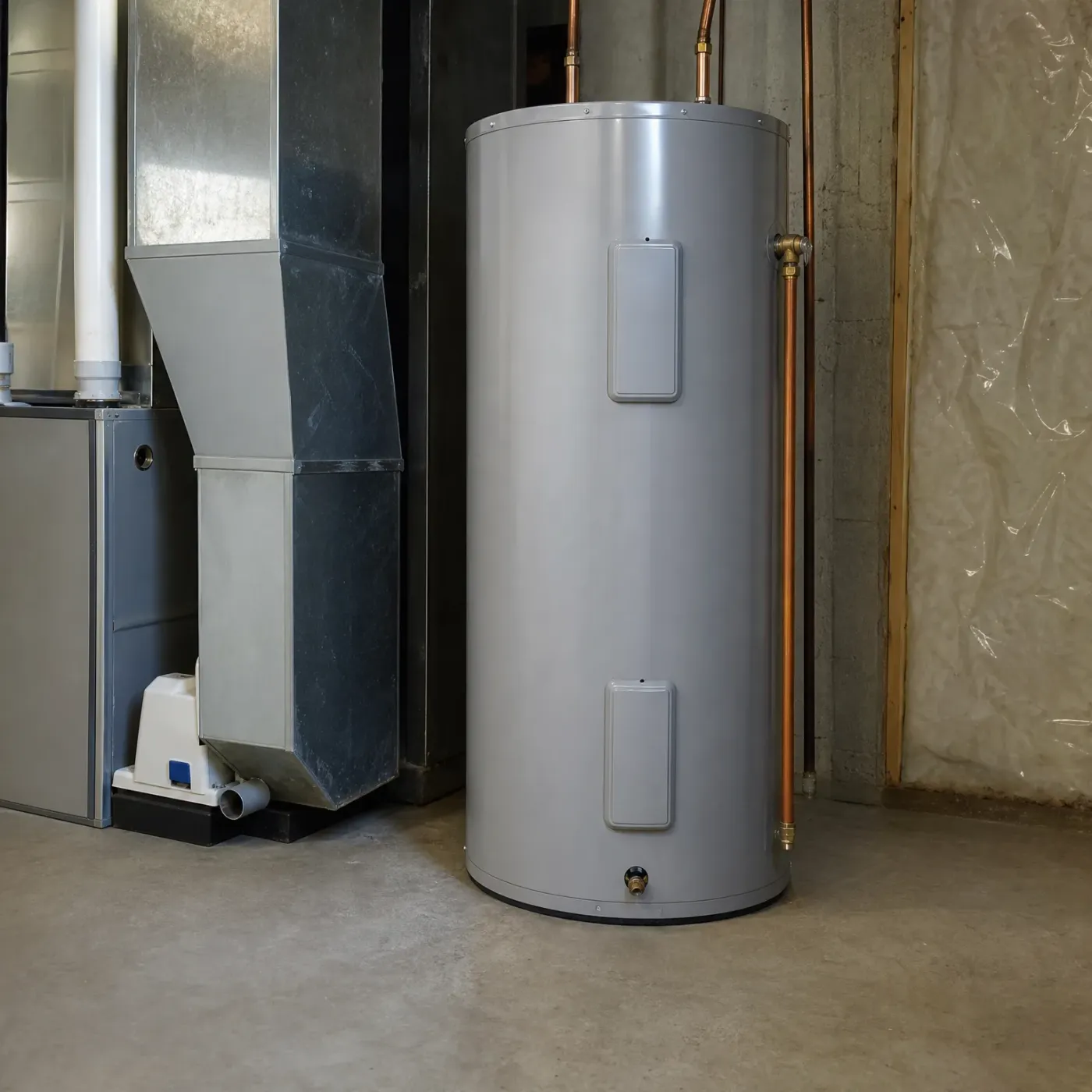
A gray cylindrical electric water heater with two access panels stands on a concrete floor in a basement, with copper pipes above and behind it, sheet-metal ductwork and a furnace to the left, and a plastic-covered insulated wall to the right.

Sediment that hasn't built up much yet

A tank in good shape sits quiet while the burner runs. Water moves freely around the bottom, heat passes straight into it, and there's no layer underneath trapping steam. Flushing the tank once a year keeps it this way.

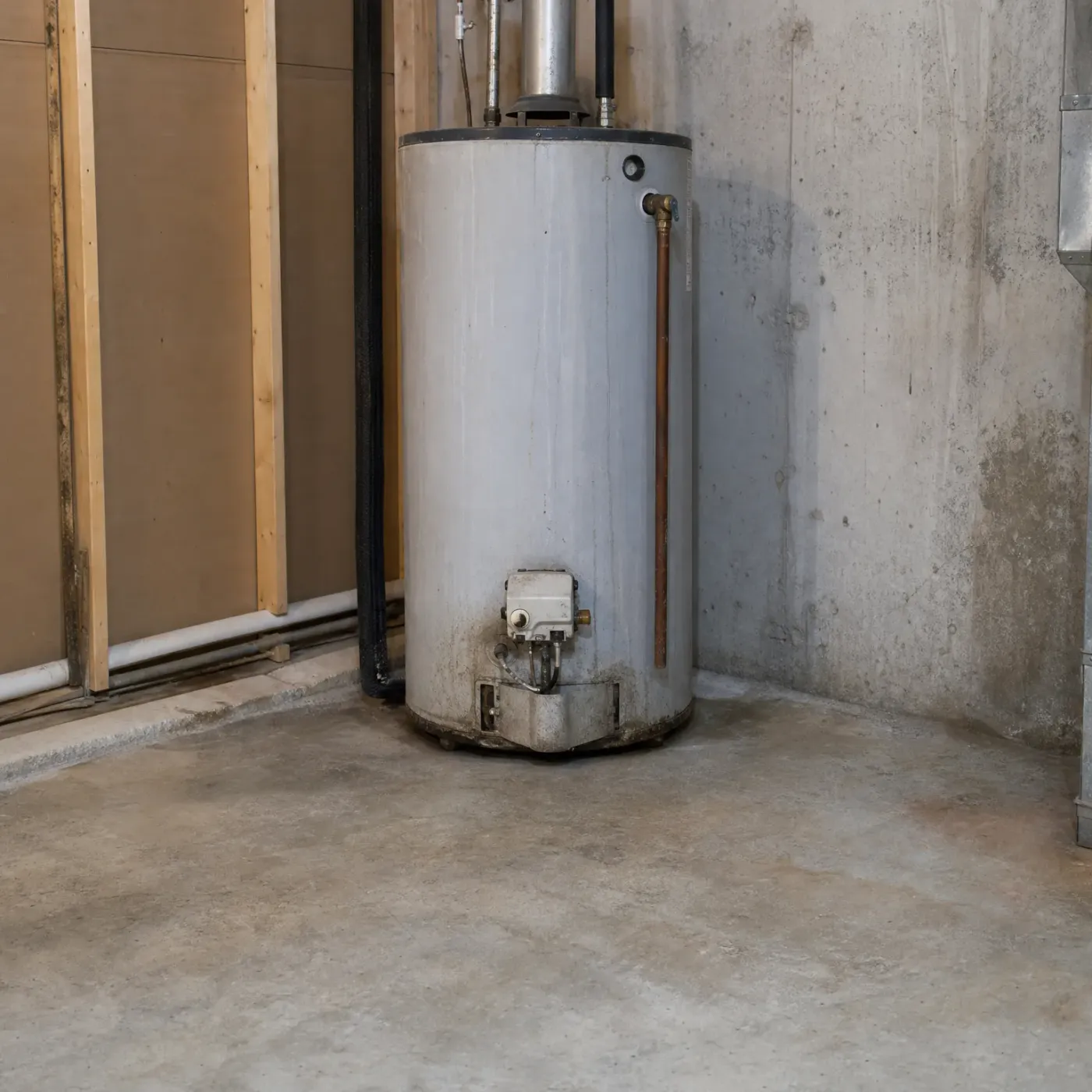
An older gas water heater with a copper pipe and flue stands on a concrete floor in a basement corner between a bare concrete wall and an unfinished wood-framed wall.

A tank that's gone a long time without a flush

Rust and grime collect around the base, and inside, sediment has packed down hard over the burner. Older gas units like this one pop louder and more often, since the buildup has had years to settle in.

A woman in a cream cowl-neck sweater sits by a window with snow outside, in a dimly lit living room with a sofa, lit lamp, mirror, candles and a fireplace.
A woman in a gray turtleneck sweater sits beside a large window looking out at snow-covered evergreen trees, in a dimly lit living room with a lit fireplace, lamps, couch and houseplant.
A woman in a cream turtleneck sweater stands beside a large window with snow-covered ground and bare trees outside, in a dimly lit living room with lamps, a sofa and framed art.
A woman in a grey cowl-neck sweater stands indoors near a window, looking out at falling snow, with a lamp, framed picture and couch in the warmly lit room behind her.

Once a year

Flushing the tank on that kind of schedule clears sediment before it packs down hard, which is why the popping tends to show up in tanks that haven't been flushed in a while.

I'm done searching

Gas, not electric

Most California homes heat water with gas, so the burner sits directly under the tank. That's what traps steam under the sediment layer and makes the popping sound loud enough to hear from another room.

I'm done searching
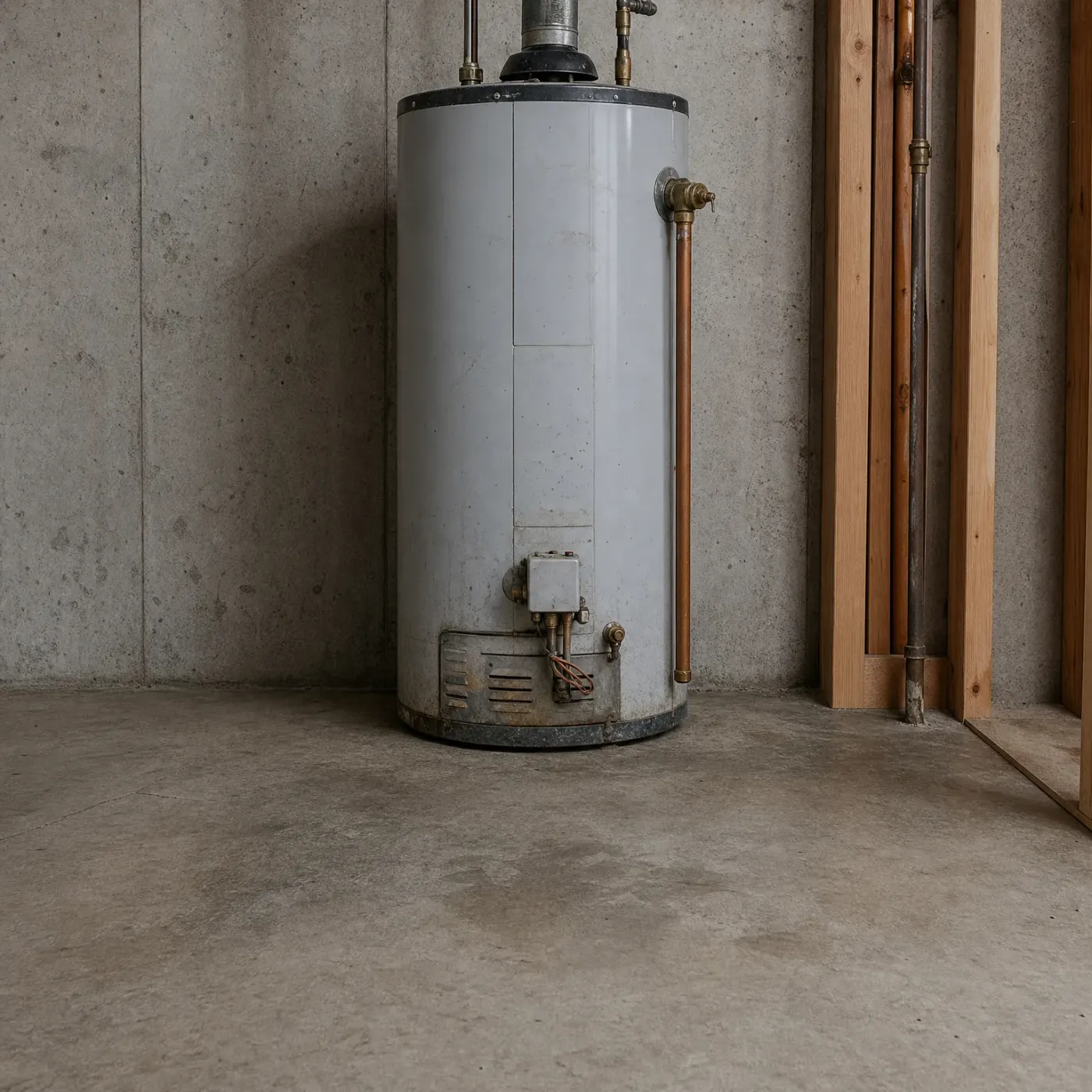
An older gray gas water heater with copper and brass piping stands on a concrete floor against a concrete wall, beside exposed wooden wall framing and vertical pipes.
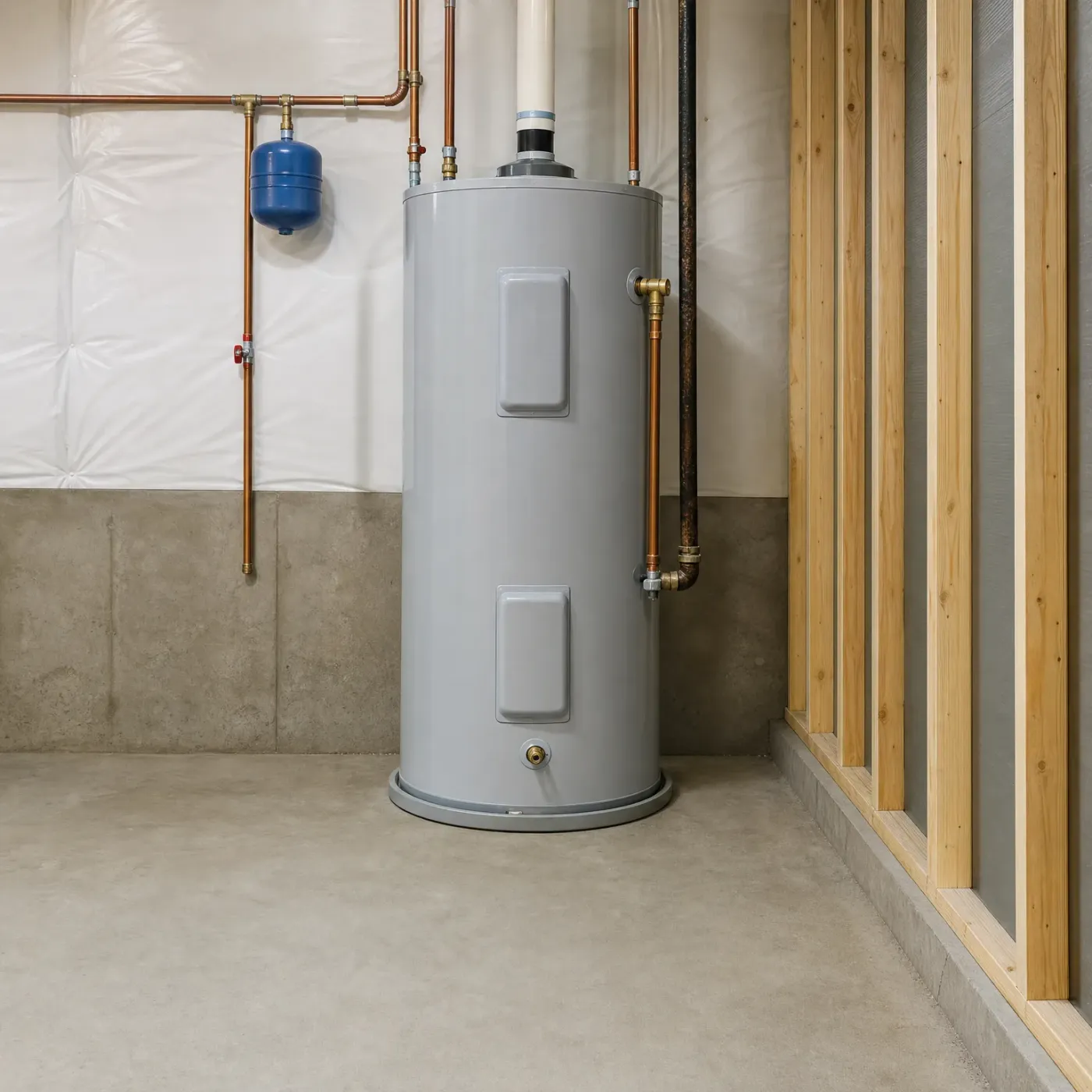
Before you get your water heater repair
A gray cylindrical water heater stands on a concrete basement floor against a plastic-sheeted insulated wall, with copper supply pipes, a blue expansion tank, a black vertical pipe, and exposed wood wall framing at right.
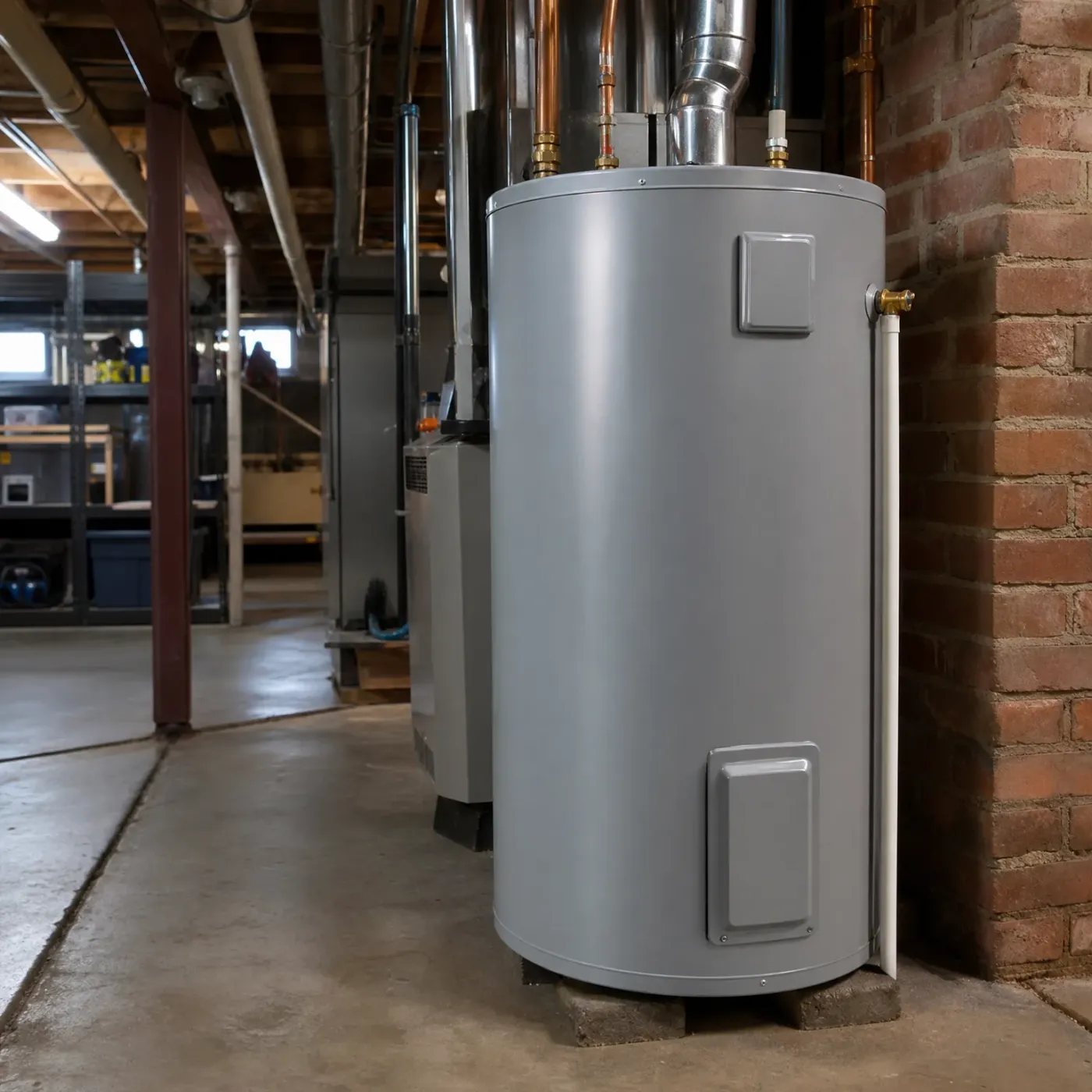
After you get your water heater repair
A gray cylindrical water heater with two access panels stands on concrete blocks beside a brick wall in a basement, with copper and metal pipes above and shelving visible in the background.

Matched to your water heater job

Send the request today and stop worrying about who to call.

A local pro who knows water heaters gets your details and gets in touch.

Hand it over

You're not committing to anything by asking.

Leave It or Get It Checked

Leave it

  • The popping usually gets louder over time as more sediment collects under the burner.
  • A tank working harder to push heat through that layer uses more gas to do the same job.
  • The trapped water under the sediment keeps turning to steam and collapsing, which is what's knocking against the tank wall.
  • Hard water in a lot of California means that layer builds up faster than it would somewhere with softer water.
  • Sediment sitting against the steel long enough can wear a spot thin, and that's where tanks start to leak.
  • Power here costs enough that a few extra minutes of burner time every day adds up on the bill.

Get it looked at

  • A plumber can flush the tank and clear the sediment causing the noise before it packs down any harder.
  • Clearing the layer lets the burner heat the water directly again instead of working through buildup.
  • If the tank's already thin in spots, a technician can tell you now instead of after it starts leaking.
  • Once it's flushed and running quiet, you're back to checking in on it once a year instead of wondering what that sound is.
  • Getting matched with someone who knows gas water heaters means the right person looks at it instead of guessing.
  • You send the request once and the contractor reaches out to you, so you're not the one tracking down who's available.
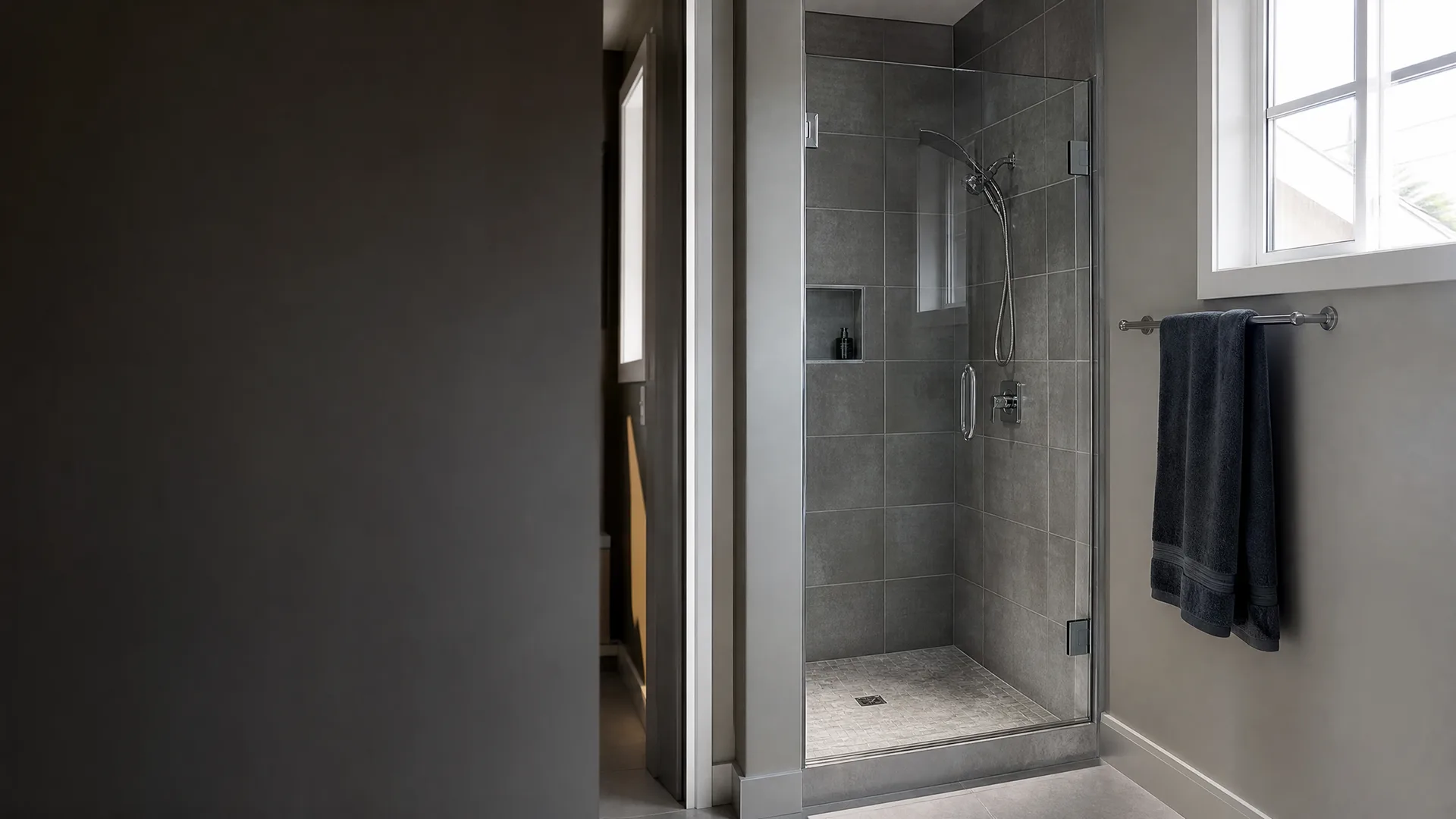
A bathroom corner with a gray tiled walk-in shower with a glass door, a recessed niche, and a dark towel hanging on a rail beneath a window.

You're in the upstairs bathroom a little before work, towel on the rail, waiting for the water to turn over. No steam yet. You turn the shower up, step back, and listen instead of looking, because you heard it again this morning before you even got in here. A knock, then another, down below somewhere in the water heater, through the floor. It's the same sound from last week, maybe a little louder. You still have to get in and get the day going, so you do, but you catch yourself thinking about it again while you're getting dressed, the way you do with something you know you should call about before it's one more thing on a worse morning.

61% of homes statewide heat with gas

With gas heating most homes across the state, the burner under your tank is almost certainly doing the heating, not an electric element inside the water itself. That matters here because sediment sits right over that flame, and it's what turns into the popping you hear.

ACS 2020-2024 5-year B25040

Call someone now, with the popping already happening

A contractor can flush the tank or check how much sediment has packed in, and tell you whether it's worth flushing or time to think about the tank itself. Wait, and the only thing that changes is how much sediment is down there when someone finally looks.

A bearded man in a plaid flannel shirt stands in a kitchen looking out a window toward snow-covered shrubs, with a steaming mug on the windowsill and potted plants on a shelf behind him.
A smiling man with dark curly hair in a navy t-shirt sits on a gray couch indoors, with a large-leafed plant and a window in the background.

The popping is sediment sitting between the burner and the water, and it doesn't go away on its own. Left alone, it packs down harder, the tank works more to heat the same amount of water, and the noise gets louder as the months go on. A contractor can flush it out or check how much has built up and tell you straight whether flushing solves it or the tank's getting close to the end of its life. You don't have to figure out who to call or sit with it another week while the sound gets worse. Send the form and that search is over, someone who does this for a living takes it from here and reaches out to you. The tank keeps heating water either way. What changes is whether you're still the one listening for it every morning or you've handed that off to someone who knows exactly what's under that steel and what to do about it.

A single-story stucco house at dusk with a lit paver walkway lined by low path lights, desert plants and boulders in front, and distant mountains under an orange and blue sky.

Water Heater Repair

A water heater pro near you

Step 1 of 3: Equipment
  • A ceramic vase holding leafy green branches and a shallow wooden bowl sit on a wooden window ledge beside a sunlit window, with a cream upholstered chair and knit throw in the foreground.
    • Sunlit living room corner with a beige upholstered sofa, a round wooden side table holding a ceramic vase of olive branches, linen curtains at a window, a floor vent in the baseboard, and a woven jute rug on hardwood flooring.
      • After this form, you can stop searching for a water heater pro.
      • One request and the search for a pro is handled.
    • A wooden side table with a single drawer holds a shallow carved wood bowl and a white ceramic vase of green eucalyptus stems, beside a window and an upholstered chair draped with a cream knit throw.
      • Explain the job once and skip repeating it on every call.
      • Skip searching for a water heater pro and answer a few questions instead.
    • Corner of a house with horizontal siding, a white-framed window and stone veneer base, beside a covered entry with wooden steps, a potted plant, mulched beds of green shrubs and a flagstone path.
      • Only one pro gets your request, so you hear from one company.
      • Your request stays with one local pro.