Tell us about the job
Takes about a minute. No obligation.
Gas line capacity, venting, and combustion air are the first things a contractor checks before quoting a water heater replacement here. Utility gas heats more occupied homes in Napa County, California than any other fuel, at 63.5% (2020-2024 ACS 5-year). That share means most replacements go gas-to-gas, and a contractor who skips the flue inspection or assumes the existing gas line is adequate will leave the new unit running outside its design range. Flue diameter, draft, and gas pressure all have to match the new heater's input rating, and those numbers change when you move from one generation of equipment to the next.
The electrical panel is where many water heater installs stall in Napa County. Half the homes in Napa County, California were built in 1976 or earlier (2020-2024 ACS 5-year). A house built that long ago was wired for the appliances of its time, and a modern water heater, particularly a heat pump unit, can draw more than that original service was sized to carry. A contractor pricing the job has to look at the panel before quoting the equipment, because an undersized service turns a straightforward swap into an electrical upgrade first.
What a Water Heater Installation Covers
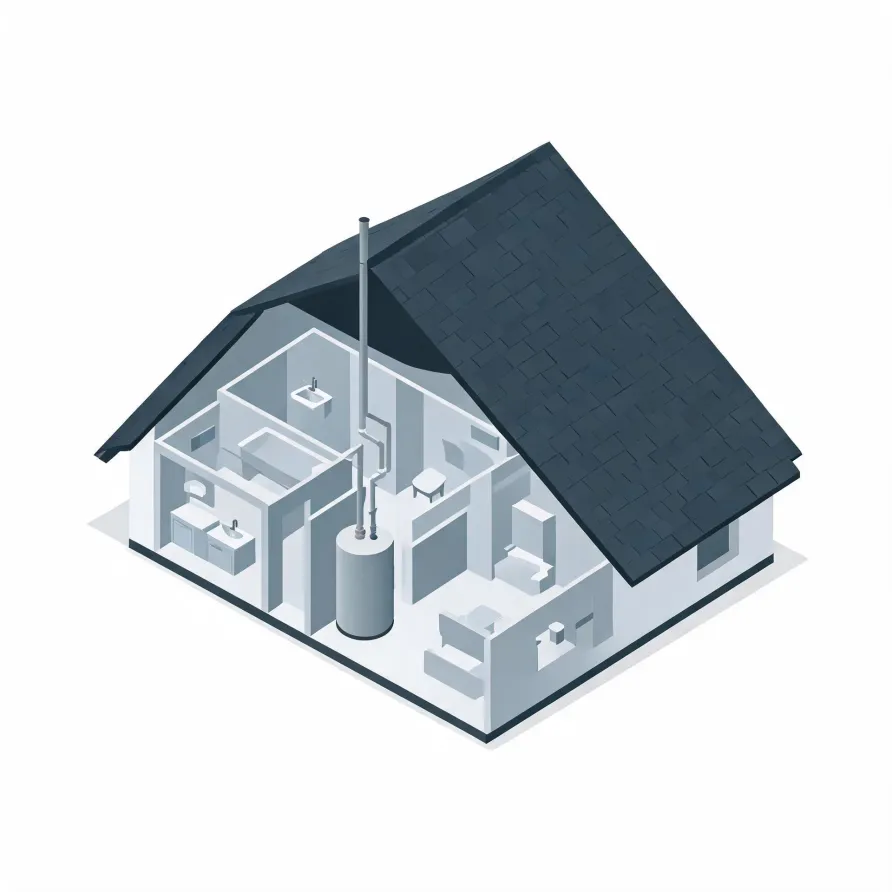
The tank or tankless unit is the center of the system. A storage tank sits in a utility closet, basement, or garage and holds a supply of heated water ready for use. A tankless unit mounts to a wall and heats water as it passes through, taking up far less floor space.
Connected to the unit are cold-water supply lines bringing water in and hot-water lines carrying it out to every fixture in the house. A pressure relief valve mounts directly on the unit as a safety device, and a drain pan sits beneath it to catch any discharge or condensation.
The drawing shows a typical layout, and a licensed contractor determines what applies to your specific home and existing plumbing configuration.
Get matched in Napa CountyNapa County, by the numbers
75 severe weather events were recorded in Napa County, California between 2015 and 2024.
NOAA National Centers for Environmental Information, Storm Events Database, bulk CSV export, events 2015-01-01 through 2024-12-31.Half the homes in Napa County, California were built in 1976 or earlier (2020-2024 ACS 5-year).
U.S. Census Bureau, 2020-2024 American Community Survey 5-Year EstimatesNapa County, California holds 55,817 housing units (2020-2024 ACS 5-year).
U.S. Census Bureau, 2020-2024 American Community Survey 5-Year EstimatesOwners occupy 63.4% of the occupied homes in Napa County, California (2020-2024 ACS 5-year).
U.S. Census Bureau, 2020-2024 American Community Survey 5-Year EstimatesCodes & Standards Governing Water Heater Installation in Napa County, California1 sourced rules and standards
Licensing Rules for Contractors in Napa County, California
California requires a state contractor license: it is a misdemeanour to engage in the business of, or act in the capacity of, a contractor in California without one, unless the work is exempt.
Severe Weather Events in Napa County
Weather puts a demand on water heating equipment that specs alone don't capture. Knowing what conditions a unit has to hold up against here shapes what a contractor puts in and how they size it.
75 severe weather events, 2015–2024. Source: NOAA National Centers for Environmental Information, Storm Events Database.