Tell us about the job
Takes about a minute. No obligation.
Gas water heaters run their burners and ignition systems every time the tank calls for heat, and in a county where nearly every occupied home burns utility gas, that wear pattern is consistent across the neighborhood. Utility gas heats more occupied homes in San Bernardino County, California than any other fuel, at 70.8% (2020-2024 ACS 5-year). A contractor diagnosing a failed unit here checks the thermocouple, the burner orifice, and the gas valve before looking elsewhere, because those are the parts that cycle with every draw of hot water over the life of the tank. Venting condition matters too: gas appliances in tight or older installations accumulate combustion byproducts that degrade flue connections over time.
Water heaters sitting in houses of this vintage have been running long enough that what a contractor finds inside the tank routinely diverges from what the unit looks like from the outside. Sediment layers at the base, a spent anode rod, corroded fittings on supply lines installed in a different decade: these are the conditions that decide whether a repair is straightforward or turns into a replacement conversation. Half the homes in San Bernardino County, California were built in 1983 or earlier (2020-2024 ACS 5-year). A unit that looks serviceable can open up to a tank lining that has been quietly degrading, and the repair scope follows from that, not from the age printed on the label.
The Parts of a Water Heater a Contractor Checks First
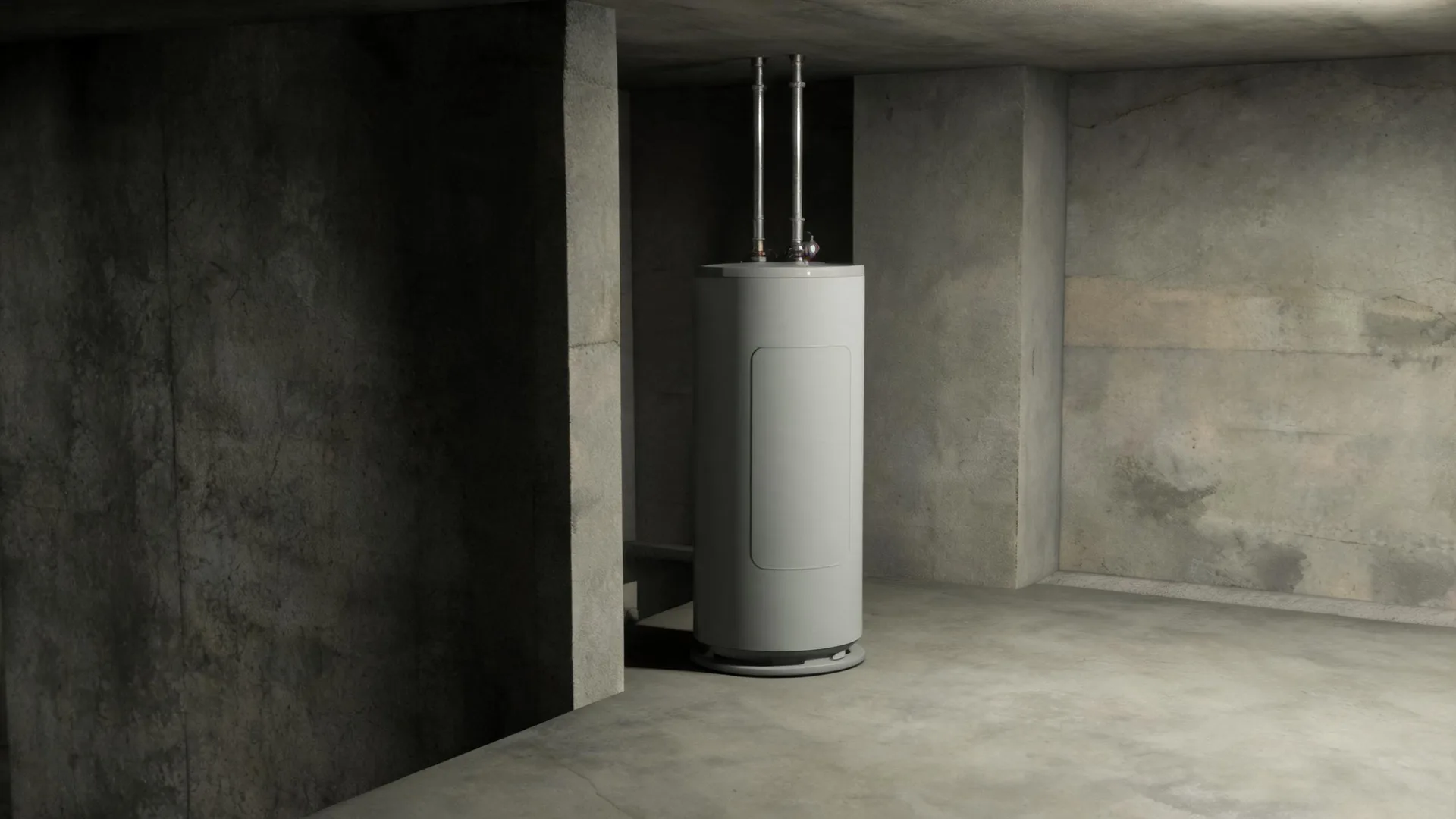
The tank is the most visible piece, usually standing in a utility closet, garage, or basement. It holds and heats the water your household draws on. When a repair call comes in, the tank itself is where a contractor starts, looking for corrosion, sediment buildup at the bottom, or signs the liner has been compromised.
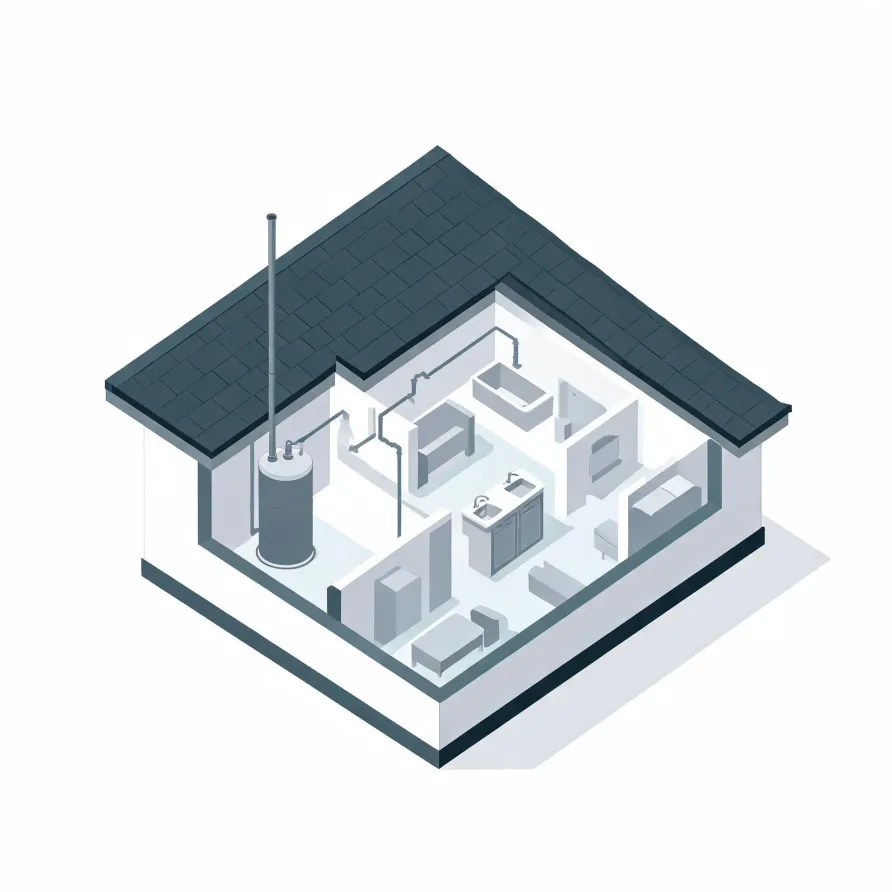
The burner assembly or heating element sits inside or beneath the tank depending on whether the unit runs on gas or electricity, and the thermostat rides alongside it controlling the target temperature. The pressure relief valve mounts to the tank's side and opens automatically if pressure climbs too high. The dip tube, the anode rod, and the flue or exhaust vent round out what a contractor traces when the first checks come back clean.
The drawing shows the general layout of these components, and a licensed contractor determines what applies to the specific unit and setup in your home.
Find a contractor in San Bernardino CountySan Bernardino County, by the numbers
557 severe weather events were recorded in San Bernardino County, California between 2015 and 2024.
NOAA National Centers for Environmental Information, Storm Events Database, bulk CSV export, events 2015-01-01 through 2024-12-31.Half the homes in San Bernardino County, California were built in 1983 or earlier (2020-2024 ACS 5-year).
U.S. Census Bureau, 2020-2024 American Community Survey 5-Year EstimatesSan Bernardino County, California holds 743,886 housing units (2020-2024 ACS 5-year).
U.S. Census Bureau, 2020-2024 American Community Survey 5-Year EstimatesOwners occupy 62.1% of the occupied homes in San Bernardino County, California (2020-2024 ACS 5-year).
U.S. Census Bureau, 2020-2024 American Community Survey 5-Year EstimatesSevere Weather Events in San Bernardino County
Extreme weather puts stress on water heaters: power surges, hard freezes, and rapid temperature swings push tanks and components past their design limits. Repair demand in San Bernardino County follows the local climate, which is why contractors here see patterns that are specific to this area.
557 severe weather events, 2015–2024. Source: NOAA National Centers for Environmental Information, Storm Events Database.